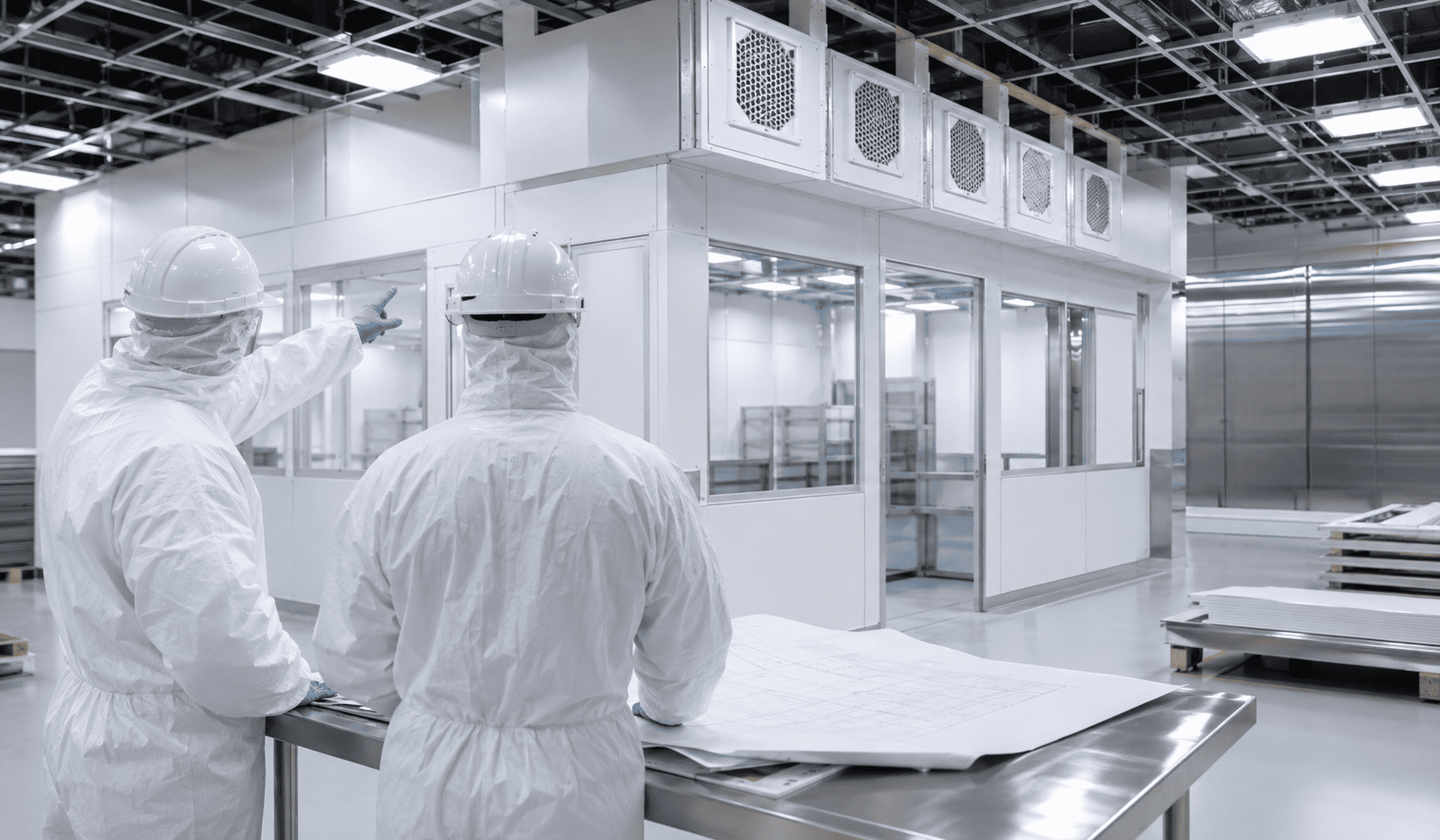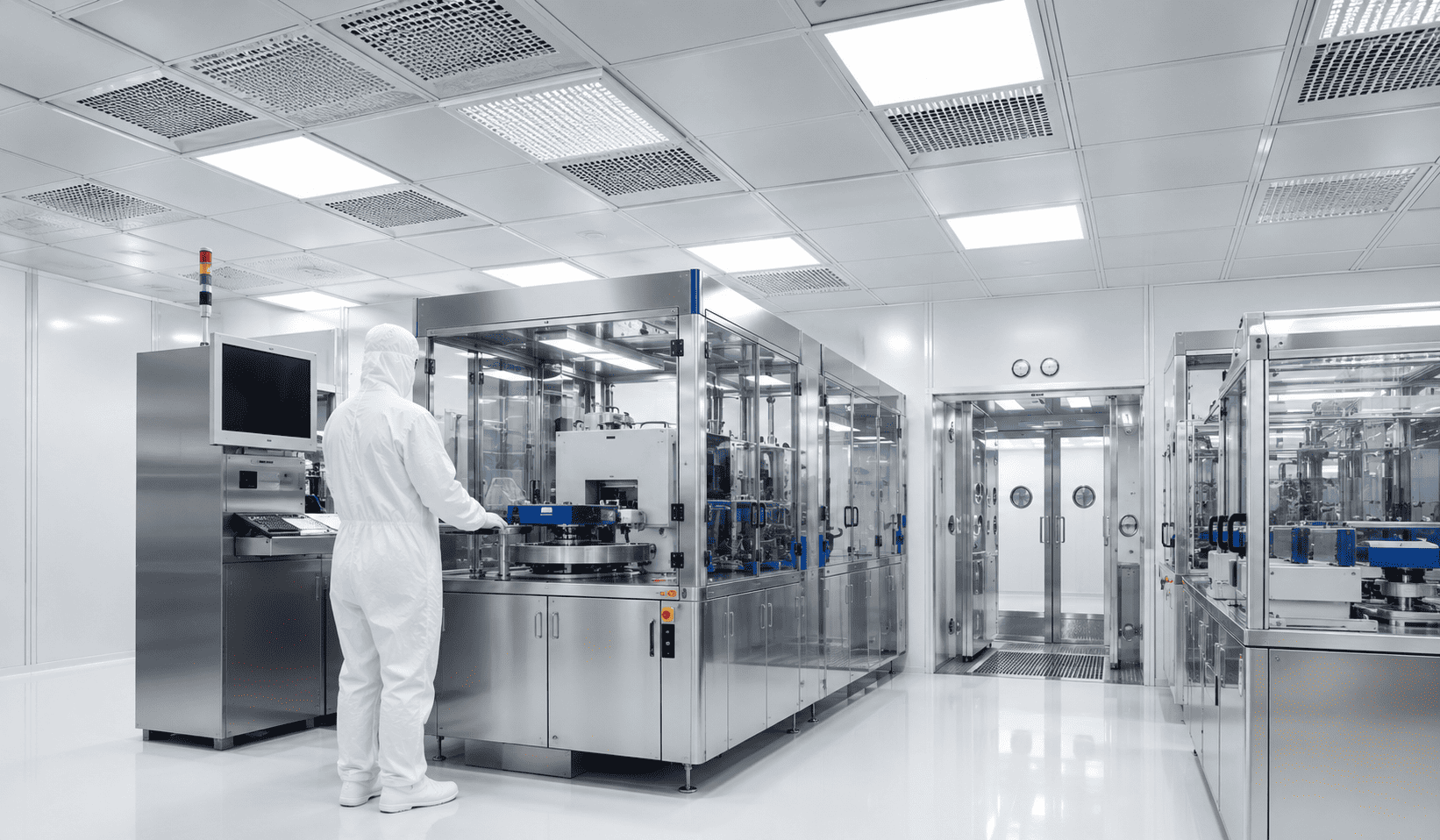
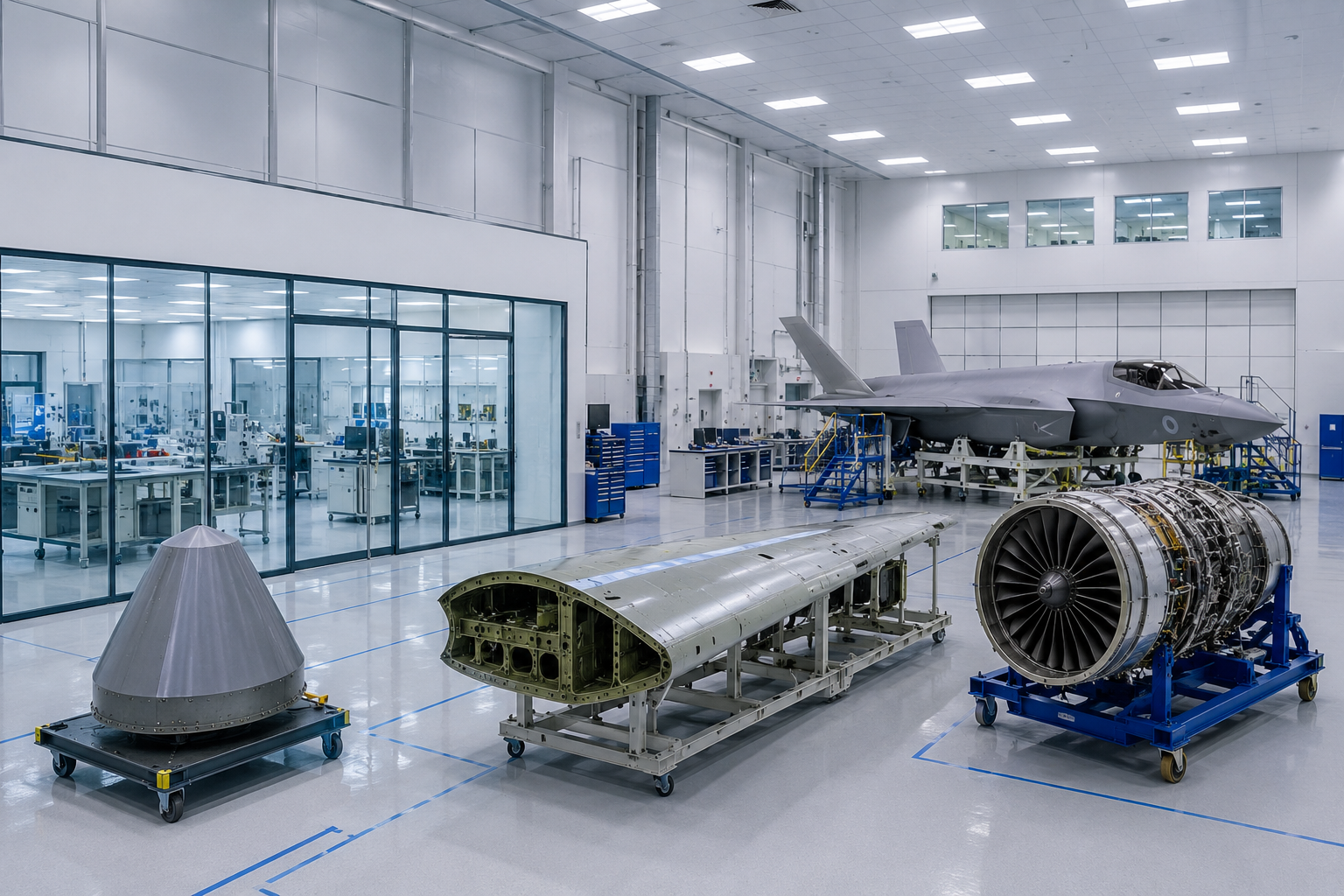
Aerospace and defence manufacturing depends on precision, consistency, and controlled production conditions at every stage.
For these industries, cleanroom companies play an important role in helping manufacturers reduce contamination risks, protect sensitive components, and create stable environments for mission-critical work.
Even small particles, static discharge, humidity changes, airflow issues, or process instability can affect the performance of aerospace components, defence electronics, optical systems, sensors, satellites, avionics, and propulsion-related assemblies.
Cleanrooms help create controlled environments where particle levels, temperature, humidity, airflow, pressure, and personnel movement can be managed with greater consistency.
In aerospace and defence production, this level of control is not simply a facility upgrade. It supports product reliability, process repeatability, regulatory expectations, and long-term manufacturing performance.
Ultrapure Technology is a cleanroom company in Suwanee, GA, supporting cleanroom design, cleanroom construction, installation, testing, and controlled environment solutions for specialized manufacturing needs.
Why Aerospace and Defence Manufacturing Requires Cleanrooms
Aerospace and defence manufacturing often involves components that must perform in demanding conditions.
These may include satellite systems, aircraft electronics, flight control components, radar systems, optical instruments, propulsion parts, communication systems, sensors, and precision assemblies.
Many of these components are sensitive to contamination during manufacturing, assembly, testing, and packaging.
A particle that seems minor in a standard production environment can create serious concerns in a controlled manufacturing process.
Contamination may affect coatings, bonding, alignment, electrical performance, optical clarity, or long-term reliability.
This is one reason cleanrooms are widely used for high-precision aerospace and defence applications.
Cleanrooms also support consistent production by controlling the conditions around the process.
Instead of relying on a general manufacturing floor, cleanroom environments are planned around contamination control, workflow, filtration, pressure, and environmental stability.
This is especially important when products must meet strict quality standards or operate in critical aerospace and defence environments.
A properly planned cleanroom helps manufacturers reduce avoidable risks while supporting reliable production outcomes.
How Cleanroom Companies Control Contamination Risks
Cleanroom companies help aerospace and defence manufacturers reduce contamination risks by designing environments around the process, not just the room.
The goal is to control how air, people, equipment, materials, and products move through space.
A professional cleanroom company may evaluate airborne particles, surface contamination risks, personnel movement, material transfer, equipment placement, cleaning access, and pressure relationships before finalizing a design.
This helps the cleanroom support the actual manufacturing process instead of creating problems after installation.
Common contamination control features may include gowning areas, pass-through chambers, HEPA filtration, ULPA filtration, cleanroom-compatible surfaces, sealed wall systems, controlled entry points, and carefully planned cleaning procedures.
Airlocks and gowning spaces can help reduce the movement of contaminants from less controlled areas into cleaner zones.
Material flow is also important. Aerospace and defence facilities often move sensitive parts, tools, packaging, and test equipment through multiple process stages.
If the layout is not planned correctly, materials may cross paths with personnel traffic or re-enter cleaner zones after exposure to less controlled areas. Cleanroom planning helps reduce those risks by separating movement patterns and supporting a logical production sequence.
Cleanroom Construction for Aerospace Manufacturing
Cleanroom construction for aerospace manufacturing requires attention to both cleanliness and facility integration.
The finished cleanroom must support controlled environmental performance while fitting within the building’s structure, utilities, HVAC systems, and production layout.
Important construction elements may include cleanroom wall panels, ceiling systems, flooring, doors, lighting, pass-throughs, cleanroom windows, utility connections, and equipment access points.
Each element must be selected and installed with contamination control in mind.
Surfaces should be cleanable, durable, and appropriate for the level of control required.
Doors and access points should limit unnecessary air leakage, while ceiling systems must support filtration, lighting, and airflow needs.
Flooring should support cleaning, durability, and, when needed, static control.
These details matter because aerospace and defence cleanrooms often support highly sensitive components that require stable and predictable conditions.
Cleanroom construction also needs to consider the size and weight of aerospace components.
Large assemblies, tooling, carts, test fixtures, or support equipment may require wider access points, reinforced areas, special workflow planning, or additional coordination with facility systems.
A cleanroom that works well on paper may create operational problems if construction details do not reflect the way the manufacturer actually works.
For this reason, experienced planning is essential before installation begins.
The Role of Cleanroom Construction Companies in Facility Planning
Cleanroom construction companies support aerospace and defence projects long before the first panel is installed.
Facility planning helps determine whether the existing building can support the cleanroom’s performance goals.
This may include reviewing available space, ceiling height, floor condition, structural limitations, existing HVAC capacity, utility access, electrical service, compressed air needs, exhaust requirements, equipment clearances, and maintenance access.
These details affect the cleanroom’s performance and long-term usability.
Cleanroom construction companies also consider ISO classification goals, product sensitivity, personnel count, process steps, equipment heat load, environmental control needs, and future expansion plans. This early planning helps prevent costly adjustments later.
For example, a cleanroom may require more airflow than the existing HVAC system can support. A process may need tighter humidity control than the current facility can maintain.
A layout may also need additional gowning space or material staging areas to reduce cross-contamination risks.
Addressing these issues before construction helps create a cleanroom that is more stable, compliant, and practical for daily use.
Aerospace and defence work often involves complex production requirements.
That makes early coordination between cleanroom designers, cleanroom constructors, facility teams, quality teams, and production managers especially important.
Airflow, Filtration, and Pressure Control in Aerospace Cleanrooms
Airflow and filtration are central to cleanroom performance.
In aerospace and defence cleanrooms, air movement must help control particles while supporting the specific process taking place inside the room.
HEPA and ULPA filtration are commonly used to remove fine particles from the air.
The airflow strategy depends on the room layout, ISO classification goals, equipment placement, product sensitivity, and contamination risks.
Ceiling systems are also part of this planning because they often support filter coverage, lighting, airflow distribution, and access for cleanroom components.
When designed correctly, they can help support contamination control in cleanrooms by helping manage airflow movement, filtration placement, and cleanroom performance across the controlled environment.
Some areas may require unidirectional airflow to move particles away from sensitive work zones.
Other areas may use mixed airflow where the process does not require the same level of directional control.
Pressure control also matters. Positive pressure can help reduce the entry of contaminants from adjacent spaces, while controlled pressure cascades can support cleaner zones by maintaining pressure relationships between rooms, gowning areas, corridors, and material transfer spaces.
In some specialized applications, negative pressure may be considered when containment is required. The correct pressure strategy depends on the process and the purpose of the cleanroom.
Aerospace cleanroom airflow design should not be separated from layout planning. Doors, equipment, personnel paths, workstations, pass-throughs, ceiling systems, and workstations can all affect how air moves.
Poor airflow planning may create turbulence, dead zones, or areas where particles collect.
Professional cleanroom design helps align filtration, airflow, ceiling systems, and pressure control with the intended manufacturing process.
Temperature, Humidity, and Static Control for Defence Manufacturing
Defence manufacturing often involves sensitive electronics, communication systems, sensors, optical equipment, and precision assemblies.
These components may be affected by temperature changes, humidity instability, and electrostatic discharge.
Temperature control helps support process consistency. Some materials may expand, contract, cure, bond, or align differently when temperature conditions vary.
In precision manufacturing, even small environmental changes can affect repeatability.
This is especially important when products must meet strict performance expectations after assembly and testing.
Humidity control is also important. Low humidity can increase static risk, while high humidity may affect materials, coatings, packaging, adhesives, or electronic components.
For defence electronics and aerospace assemblies, humidity must often be managed within a defined range to support product quality and process stability.
Static control may also be required when working with electronic components, avionics, sensors, or circuit assemblies.
Cleanroom constructors may plan antistatic flooring, grounding strategies, controlled humidity, ESD-safe furnishings, and compatible materials to help reduce electrostatic discharge risks.
These controls are especially important when sensitive components must maintain performance after manufacturing, shipping, testing, and field use.
Environmental control is not only about meeting a number on a specification sheet.
It is about creating stable conditions that help protect sensitive work and support consistent production outcomes.
ISO Classifications and Compliance Considerations
ISO classifications help define cleanroom cleanliness based on airborne particle concentration.
For aerospace and defence manufacturing, the required ISO class depends on the sensitivity of the component, the process being performed, and the level of contamination risk involved.
Aerospace cleanroom applications may involve different ISO zones within the same facility.
One area may support sensitive assembly, while another may support gowning, material transfer, inspection, or packaging.
Some highly sensitive operations may require cleaner environments, while less sensitive support areas may use a lower classification.
For example, optical components, spacecraft integration, or high-sensitivity sensor work may require stricter particle control than general preparation or staging areas.
Cleanroom companies help manufacturers plan around these requirements by aligning the cleanroom classification with the process.
They may also support cleanroom validation, cleanroom testing, documentation, airflow testing, particle counting, pressure testing, and filter integrity testing.
These activities help confirm that the cleanroom performs as intended after construction.
They also support long-term quality programs by giving manufacturers measurable performance data.
Compliance planning may also include customer requirements, internal quality systems, industry standards, documentation expectations, and ongoing monitoring needs.
In aerospace and defence manufacturing, cleanroom performance must be proven and maintained, not simply assumed after installation.
Workflow, Layout, and Material Movement
Cleanroom layout has a direct impact on contamination control and production efficiency.
A well-planned layout helps people, materials, tools, and products move through the cleanroom in a controlled and logical way.
Personnel flow should support proper gowning and entry procedures. Material flow should reduce unnecessary movement between cleaner and less clean areas.
Equipment placement should allow work to happen efficiently without blocking airflow, creating crowding, or limiting cleaning access.
Gowning rooms, airlocks, storage areas, pass-throughs, and staging spaces should be planned around the way the facility operates.
For aerospace and defence manufacturing, large or delicate components may require additional space for movement, inspection, assembly, or testing.
The layout should support these needs without increasing contamination risk.
Layout planning should also consider maintenance access. Filters, equipment, lights, sensors, utilities, and environmental monitoring systems may need routine service.
If these systems are difficult to access, maintenance can interrupt production or create unnecessary contamination risks.
Poor layout can also lead to traffic conflicts, particle movement, workflow delays, and cleaning challenges.
Professional cleanroom planning helps align the room design with both the production process and the contamination control strategy.
This creates a more practical environment for daily operations.
Long-Term Cleanroom Performance and Support
Cleanroom performance does not end after installation.
Aerospace and defence manufacturers need cleanrooms that continue to perform over time as production needs, equipment, personnel levels, and compliance requirements evolve.
Long-term support may include cleanroom testing, particle counting, airflow testing, pressure checks, filter integrity testing, environmental monitoring, maintenance planning, and periodic review of cleanroom performance.
These checks help confirm whether the room continues to meet its intended performance goals.
Environmental monitoring can track conditions such as airborne particles, temperature, humidity, and room pressure. This can help identify changes before they affect sensitive manufacturing work.
Future scalability is also important. A cleanroom may need to support new equipment, added process steps, increased production, or tighter classification requirements later.
Planning for flexibility can help manufacturers avoid unnecessary disruption when needs change.
This is especially valuable in aerospace and defence environments where production requirements may evolve with new programs, contracts, or technical standards.
Ultrapure Technology supports cleanroom design, cleanroom construction, installation, testing, and controlled environment support for specialized facilities in Suwanee, GA.
For aerospace and defence manufacturers, working with experienced cleanroom partners can help create environments that are practical, stable, and aligned with long-term production goals.
Build Aerospace and Defence Cleanrooms With Ultrapure Technology
Aerospace and defence manufacturing requires cleanrooms that are designed around precision, contamination control, environmental stability, and long-term performance.
Professional cleanroom companies help manufacturers evaluate the facility, define ISO classification goals, plan airflow and filtration, control temperature and humidity, manage pressure relationships, and support cleanroom validation after construction.
The right cleanroom company also understands that every project is different.
A satellite assembly area, avionics production space, defence electronics room, optical testing area, or propulsion component environment may each require a different layout, filtration approach, environmental strategy, and compliance plan.
Ultrapure Technology provides cleanroom design, cleanroom construction, installation, testing, and controlled environment solutions for facilities in Suwanee, GA.
If your aerospace or defence manufacturing project requires a controlled environment, contact Ultrapure Technology to discuss the cleanroom requirements, facility conditions, and performance goals for your project.
FAQs
Why do aerospace manufacturers need cleanrooms?
Aerospace manufacturers need cleanrooms to help protect sensitive components from particles, humidity changes, static discharge, and other environmental risks. Cleanrooms support controlled manufacturing, assembly, testing, and packaging for precision parts, avionics, satellites, optics, and sensors.
How do cleanroom companies support defence manufacturing?
Cleanroom companies support defence manufacturing by designing controlled environments that reduce contamination risks and support process stability. They help plan airflow, filtration, pressure control, temperature control, humidity control, static control, layout, and validation needs for sensitive defence applications.
What ISO cleanroom classification is used in aerospace manufacturing?
The ISO classification depends on the component, process, and contamination sensitivity. Some aerospace applications may require cleaner ISO-controlled areas for optics, satellites, or precision assemblies, while support spaces may use less strict classifications.
What does a cleanroom company evaluate before construction?
A cleanroom company evaluates the facility layout, available space, ceiling height, HVAC capacity, utilities, workflow, equipment needs, and ISO classification goals. The review also considers contamination risks, personnel movement, material flow, environmental controls, and long-term performance requirements.
How does cleanroom construction reduce contamination risks?
Cleanroom construction reduces contamination risks by using controlled wall systems, sealed ceilings, cleanable floors, filtered air, planned pressure relationships, and controlled access points. The construction approach supports cleaner workflows and helps limit the movement of particles into sensitive manufacturing areas.
Why are airflow and filtration important in aerospace cleanrooms?
Airflow and filtration help remove airborne particles and maintain cleaner conditions around sensitive aerospace components. Proper airflow design also helps prevent stagnant zones, turbulence, and unwanted particle movement near critical work areas.
What role does humidity control play in defence manufacturing?
Humidity control helps protect sensitive electronics, materials, coatings, adhesives, and precision assemblies. It can also help reduce static-related risks when combined with proper ESD planning, grounding, and cleanroom-compatible materials.
How do cleanroom constructors support long-term performance?
Cleanroom constructors support long-term performance by planning systems that can be tested, maintained, monitored, and adjusted over time. This may include access for filter testing, airflow checks, pressure monitoring, environmental monitoring, and future cleanroom changes.
Why choose Ultrapure Technology for cleanroom construction?
Ultrapure Technology supports cleanroom design, cleanroom construction, installation, testing, and controlled environment solutions in Suwanee, GA. The team helps manufacturers plan cleanrooms around contamination control, workflow, environmental stability, and long-term performance needs.