
Contamination can affect product quality, manufacturing efficiency, and regulatory compliance in industries that rely on controlled environments, including pharmaceuticals, biotechnology, medical devices, semiconductors, and electronics.
Although contamination is often associated with day-to-day operations, many of the conditions that influence cleanroom performance are established during planning and construction.
The planning, design, and construction of a cleanroom establish the foundation for maintaining the required cleanliness conditions throughout the facility’s operational life.
Cleanroom constructors help minimize contamination risks by designing and building facilities that support the required cleanliness classification.
Their work may involve coordinating layouts, materials, airflow systems, utilities, construction controls, testing, and commissioning.
By addressing contamination risks throughout every project phase, cleanroom constructors help facilities achieve consistent cleanroom performance, regulatory compliance, and dependable manufacturing operations.
Common Contamination Risks Cleanroom Constructors Address During Construction
Cleanroom projects present several opportunities for particles, moisture, and other contaminants to enter or accumulate if proper controls are not in place.
Recognizing these potential risks early helps project teams implement measures that protect the cleanroom environment throughout installation.
Airborne particles are among the most significant concerns. Dust generated during cutting, drilling, sanding, material handling, or nearby work can settle on walls, ceilings, ductwork, filters, and installed equipment.
Without effective containment and progressive cleaning, these particles may remain in the facility after construction is complete.
The building envelope can also become a contamination pathway if it is not properly sealed.
Gaps around wall panels, ceilings, doors, utility penetrations, lighting fixtures, and electrical outlets may allow untreated air, moisture, or debris to enter the controlled environment.
Careful installation and sealing help maintain pressure differentials and the integrity of the cleanroom.
Construction materials also influence long-term cleanliness. Surfaces that shed particles, absorb moisture, or are difficult to sanitize can compromise cleanroom performance.
For this reason, cleanroom constructors select smooth, non-porous, durable materials that withstand routine cleaning while minimizing particle generation.
Airflow systems require equal attention. Improperly installed HEPA or ULPA filters, poorly positioned supply and return air grilles, or unbalanced pressure relationships can disrupt airflow patterns and allow particles to accumulate in critical areas instead of being removed efficiently.
Additional risks include construction debris, contaminated tools, equipment installation activities, moisture intrusion, and uncontrolled personnel movement.
Managing these factors throughout the project helps establish a clean, controlled environment that is ready for testing, validation, and commissioning.
How Cleanroom Constructors Assess Contamination Risks Before Construction

Before construction begins, cleanroom constructors perform a detailed assessment to determine how the facility should be designed to minimize contamination throughout its operational life.
Rather than focusing on construction activities alone, this planning stage evaluates how the manufacturing process, building infrastructure, and facility layout will influence cleanroom performance.
The assessment begins by reviewing the manufacturing process.
Constructors consider the products being produced, the required ISO cleanliness classification, process sensitivity, equipment requirements, occupancy levels, and whether manufacturing activities generate particles, heat, moisture, chemicals, or microbial contaminants.
The existing building environment is also evaluated. Available ceiling space, structural limitations, utility routing, HVAC capacity, adjacent production areas, vibration sources, and access points can all influence cleanroom design and determine where additional contamination controls may be necessary.
Personnel and material movement are carefully planned to reduce cross-contamination.
Constructors evaluate gowning rooms, airlocks, pass-through chambers, equipment access routes, material flow, and waste removal pathways to minimize unnecessary traffic between controlled and less-controlled areas.
The assessment also includes reviewing mechanical, electrical, and process utilities.
Utility penetrations, lighting systems, ductwork, piping, and service connections are planned to reduce potential leakage points while supporting maintenance and future modifications.
Information gathered during this assessment guides decisions related to room layout, airflow design, construction sequencing, material selection, and commissioning requirements.
By addressing contamination risks before construction starts, cleanroom constructors create a stronger foundation for long-term cleanroom performance.
How Do Cleanroom Constructors Address Major Sources of Contamination?
Contamination in a cleanroom can originate from personnel, equipment, incoming materials, and the surrounding environment.
While operational procedures help manage these risks, cleanroom constructors incorporate design features that reduce the likelihood of contaminants entering or spreading within the facility.
To minimize personnel-related contamination, constructors design dedicated gowning rooms, airlocks, and controlled entry points that separate clean and less-controlled areas.
They also develop layouts that support one-way personnel flow, reducing unnecessary movement and the potential for cross-contamination.
Equipment can also become a source of contamination if it is difficult to clean or improperly integrated into the cleanroom.
Cleanroom constructors help address this by planning sufficient clearance around equipment, selecting cleanroom-compatible finishes for surrounding surfaces, and coordinating utility connections to minimize exposed piping, cables, and inaccessible areas where particles may accumulate.
Incoming materials require controlled transfer into the cleanroom.
Constructors incorporate pass-through chambers, material airlocks, and designated transfer routes that limit direct exposure between controlled and uncontrolled environments.
These features help reduce the introduction of dust, packaging debris, and other contaminants during material handling.
Environmental contamination is managed through the overall cleanroom design. Cleanroom constructors coordinate HVAC systems, HEPA or ULPA filtration, pressure differentials, temperature and humidity control, and airtight construction to maintain stable environmental conditions.
Combined with smooth, easy-to-clean surfaces, these engineering controls help create a controlled environment that supports long-term contamination prevention.
How Do Cleanroom Constructors Control Contamination During Installation?
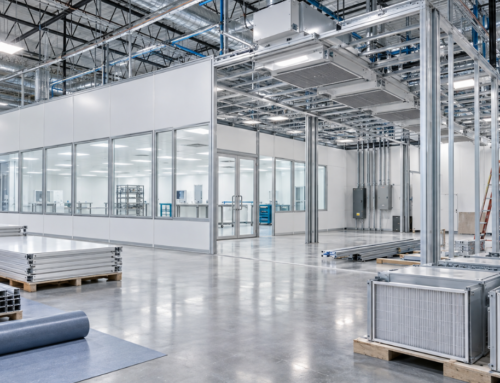
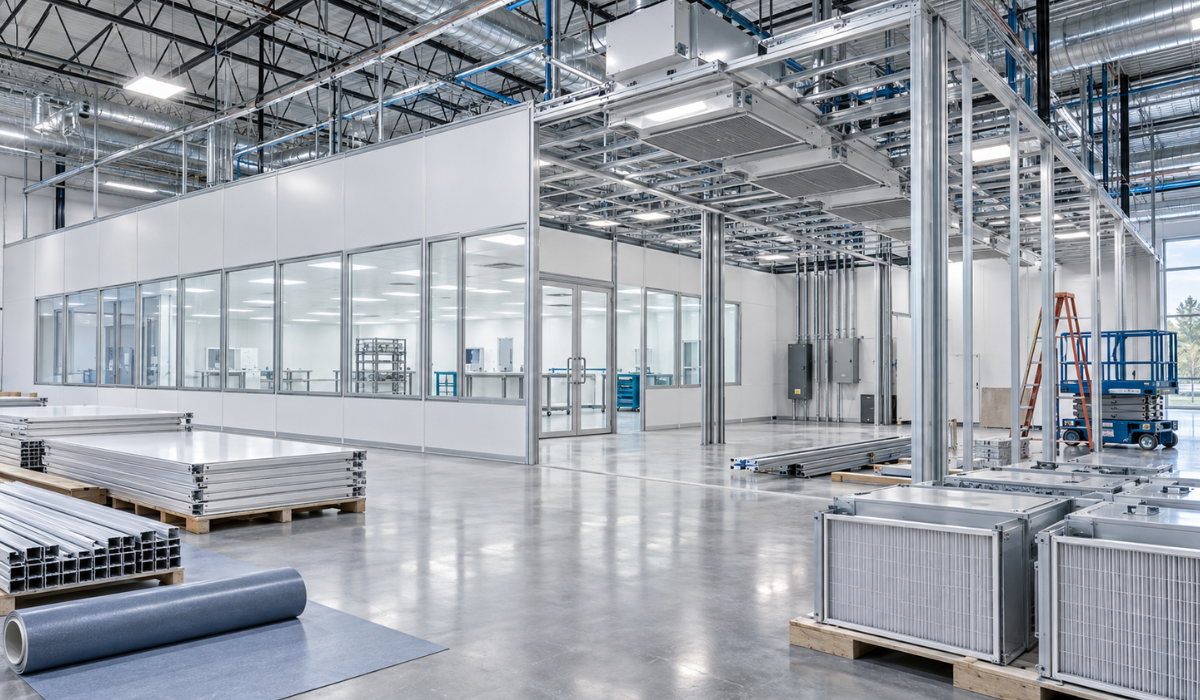
Contamination control continues after planning and design are complete. During installation, cleanroom constructors manage dust, debris, tools, materials, personnel access, and construction sequencing to prevent contaminants from collecting within completed building systems.
The installation area may be separated from active manufacturing and other parts of the facility using temporary barriers and controlled access points.
These measures help limit the movement of construction dust into nearby production areas and prevent unrelated personnel from entering the work zone.
Depending on the project, construction controls may include:
- Using dust collection during cutting and drilling
- Cleaning tools before they enter controlled work areas
- Protecting completed walls, ceilings, filters, and equipment
- Storing cleanroom components in clean, dry locations
- Removing packaging and construction debris regularly
- Restricting food, beverages, cardboard, and other unsuitable materials
- Controlling worker and material entry routes
- Performing progressive vacuuming and surface cleaning
- Inspecting concealed areas before walls and ceilings are closed
Construction sequencing is also important. Particle-generating activities should generally be completed before HEPA or ULPA filters, sensitive controls, and exposed cleanroom equipment are installed. Installing these components too early can expose them to dust or accidental damage.
As the project progresses, access and cleaning requirements may become more restrictive. This phased approach helps transition the area from a construction site into a controlled environment that is ready for final cleaning, system startup, testing, and commissioning.
Why Does Cleanroom Classification Influence Contamination Control?
Cleanroom classification establishes the maximum allowable concentration of airborne particles within a controlled environment and serves as the foundation for contamination control.
Standards such as ISO 14644-1 classify cleanrooms based on the number and size of airborne particles permitted per cubic meter of air.
Lower ISO classes, such as ISO Class 5, require stricter particle limits than higher classes, such as ISO Class 8.
Because each manufacturing process has different cleanliness requirements, selecting the appropriate classification is one of the earliest and most important decisions in a cleanroom project.
The required cleanroom classification influences nearly every aspect of design and construction.
Cleanroom constructors use the target ISO class to determine the room layout, HVAC capacity, filtration strategy, airflow patterns, air change rates, pressure differentials, and the selection of construction materials.
These elements must work together to maintain the specified cleanliness level under normal operating conditions.
For example, a pharmaceutical aseptic processing area that requires an ISO Class 5 environment demands tighter contamination controls than a medical device assembly area designed for ISO Class 7 or ISO Class 8.
Achieving higher cleanliness classifications typically requires more efficient HEPA or ULPA filtration, increased air changes, tighter sealing of the building envelope, and stricter control of personnel and material movement.
In contrast, designing a cleanroom to a higher classification than necessary can increase construction, energy, and maintenance costs without providing additional operational benefits.
Cleanroom classification also affects the arrangement of adjacent spaces.
Cleanroom constructors often design pressure cascades, airlocks, gowning rooms, and material transfer areas to support the cleanliness requirements of each zone and reduce the movement of contaminants between spaces.
Proper zoning helps maintain the required particle concentration while supporting efficient workflows.
By defining contamination control requirements from the outset, the selected cleanroom classification provides a framework for design, construction, testing, and commissioning.
Experienced cleanroom constructors use these requirements to ensure the completed facility can consistently achieve its intended cleanliness level while supporting regulatory compliance, reliable operations, and long-term performance.
How Is a Cleanroom Prepared for Testing and Commissioning?
Physical construction must be followed by inspection, cleaning, system balancing, and performance testing before the cleanroom becomes operational.
Cleanroom installation constructors coordinate the completion of walls, ceilings, floors, doors, filters, utilities, and environmental controls. They also inspect joints and penetrations, remove construction debris, correct visible deficiencies, and prepare exposed surfaces for final cleaning.
The HVAC system is then started, balanced, and adjusted to establish the required airflow and room-pressure relationships. Qualified testing personnel may perform tests such as:
- Airborne particle counting
- HEPA or ULPA filter integrity testing
- Airflow volume or velocity measurement
- Room-pressure differential testing
- Temperature and humidity verification
- Airflow visualization
- Recovery testing, when required
The specific tests depend on the cleanroom classification, intended use, occupancy state, and agreed certification plan. Any deficiencies should be corrected and affected systems retested before final handover.
Conclusion
Reducing contamination risks requires a combination of thoughtful planning, precision construction, and ongoing environmental control.
Cleanroom constructors play a key role in establishing facilities that support the required cleanliness standards through appropriate layouts, engineered airflow, cleanroom-compatible materials, and well-integrated building systems.
By addressing potential contamination risks from the earliest stages of a project and supporting effective testing and validation, they help create controlled environments that promote consistent manufacturing performance, regulatory compliance, and long-term operational reliability.
Build a Cleanroom That Minimizes Contamination from Day One
Effective contamination control starts with the right design and construction strategy.
Experienced cleanroom constructors combine industry expertise, proven construction techniques, cleanroom-compatible materials, and engineered airflow solutions to create facilities that meet your cleanliness and operational requirements.
Whether you’re building a new cleanroom or upgrading an existing one, partnering with knowledgeable professionals at UltraPure Technology helps reduce contamination risks, support regulatory compliance, and improve long-term cleanroom performance.
Contact our team to discuss a cleanroom solution tailored to your facility’s needs.
FAQs
How does environmental monitoring help prevent contamination in a cleanroom?
Environmental monitoring helps detect changes in cleanroom conditions that could increase contamination risks. By regularly measuring airborne particles, microorganisms, pressure differentials, temperature, and humidity, facilities can identify potential issues early and take corrective action before they affect product quality or regulatory compliance.
What Contamination Issues Are Commonly Found During Cleanroom Certification?
During cleanroom certification, inspectors verify that the facility continues to meet its required cleanliness standards. Common contamination-related findings include HEPA filter integrity failures, unstable pressure differentials, and airborne particle counts that exceed the limits for the specified ISO classification. Identifying and correcting these issues helps maintain contamination control, support regulatory compliance, and ensure consistent cleanroom performance.
Why Is Cardboard Not Allowed Inside a Cleanroom?
Cardboard sheds fibers and dust that can increase airborne particle levels within a cleanroom. It can also absorb moisture and harbor contaminants. For this reason, cleanroom materials are typically transferred using cleanroom-compatible containers and packaging that generate minimal particulate matter.
Why Are HEPA Filters Important in Cleanroom Contamination Control?
HEPA filters remove the majority of airborne particles from the supplied air, helping maintain the cleanliness level required for the cleanroom’s ISO classification. Proper installation, testing, and maintenance are essential to ensure the filtration system performs as intended.
How Is Construction Dust Removed Before a Cleanroom Becomes Operational?
Construction dust is removed through progressive cleaning followed by detailed final cleaning. Surfaces, ceiling systems, equipment exteriors, and accessible building components are cleaned using suitable cleanroom methods before the HVAC system is balanced and the room is tested.
How Long After Construction Can a Cleanroom Begin Operating?
The cleanroom can begin operating after construction deficiencies are corrected, final cleaning is completed, environmental systems are stabilized, and required testing confirms acceptable performance. The timeframe depends on the room classification, testing plan, equipment installation, and process-qualification requirements.
Can a Cleanroom Be Renovated Without Contaminating Nearby Operations?
Cleanroom renovations can be planned using temporary containment, controlled access, dust extraction, phased scheduling, and defined routes for workers, tools, and debris. The necessary precautions depend on the sensitivity of nearby processes and whether adjacent cleanrooms must remain operational.