Cleanroom companies help screen protector manufacturers maintain the controlled conditions needed to produce clear, smooth, and defect-free products.
Screen protectors may appear simple after installation, but their production process depends on careful handling, clean surfaces, stable air quality, and accurate material processing.
A single speck of dust, fiber, adhesive particle, or static-charged contaminant can affect the final product.
These defects may appear as bubbles, haze, lifting edges, poor adhesion, trapped particles, or surface marks.
For manufacturers producing screen protectors for smartphones, tablets, medical displays, automotive screens, industrial control panels, and electronic devices, consistency is essential.
Each product must meet exact size, clarity, thickness, coating, and adhesion requirements.
This is where a professional cleanroom company becomes important.
Cleanroom construction companies design controlled spaces that help reduce contamination at every production stage.
Cleanroom installation contractors make sure filtration, airflow, sealing, lighting, and work areas are installed correctly.
Together, these experts create environments where screen protector manufacturers can maintain product quality, reduce waste, and improve production reliability.
Why Screen Protector Manufacturing Requires a Controlled Environment
Screen protectors are usually made from multiple layers.
These may include tempered glass, PET film, TPU film, adhesive layers, anti-scratch coatings, anti-glare coatings, privacy filters, release liners, and protective packaging films.
Each layer must stay clean during processing. If contamination reaches the surface during cutting, coating, printing, laminating, or packaging, it can become permanently trapped.
This is a major concern because screen protectors are transparent products. Any small defect is easy to see.
A particle that might not matter in another product can become a visible flaw on a screen protector. The user may notice it immediately after installation.
For this reason, manufacturers need more than basic cleanliness.
They need a controlled production environment where air movement, employee access, material handling, static, and cleaning routines are carefully managed.
Cleanroom companies help build these environments around the actual manufacturing process, not just the room itself.
How Cleanrooms Reduce Particle Contamination
Particle contamination is one of the biggest causes of screen protector defects. Particles can come from people, packaging, equipment, clothing, floors, raw materials, and surrounding facility areas.
During production, these particles may settle on adhesive surfaces or between material layers.
Once a particle is trapped, the screen protector may no longer meet quality standards.
Cleanrooms reduce this risk by filtering the air and controlling how particles move inside the room.
HEPA or ULPA filtration systems remove fine particles before the air reaches sensitive production areas.
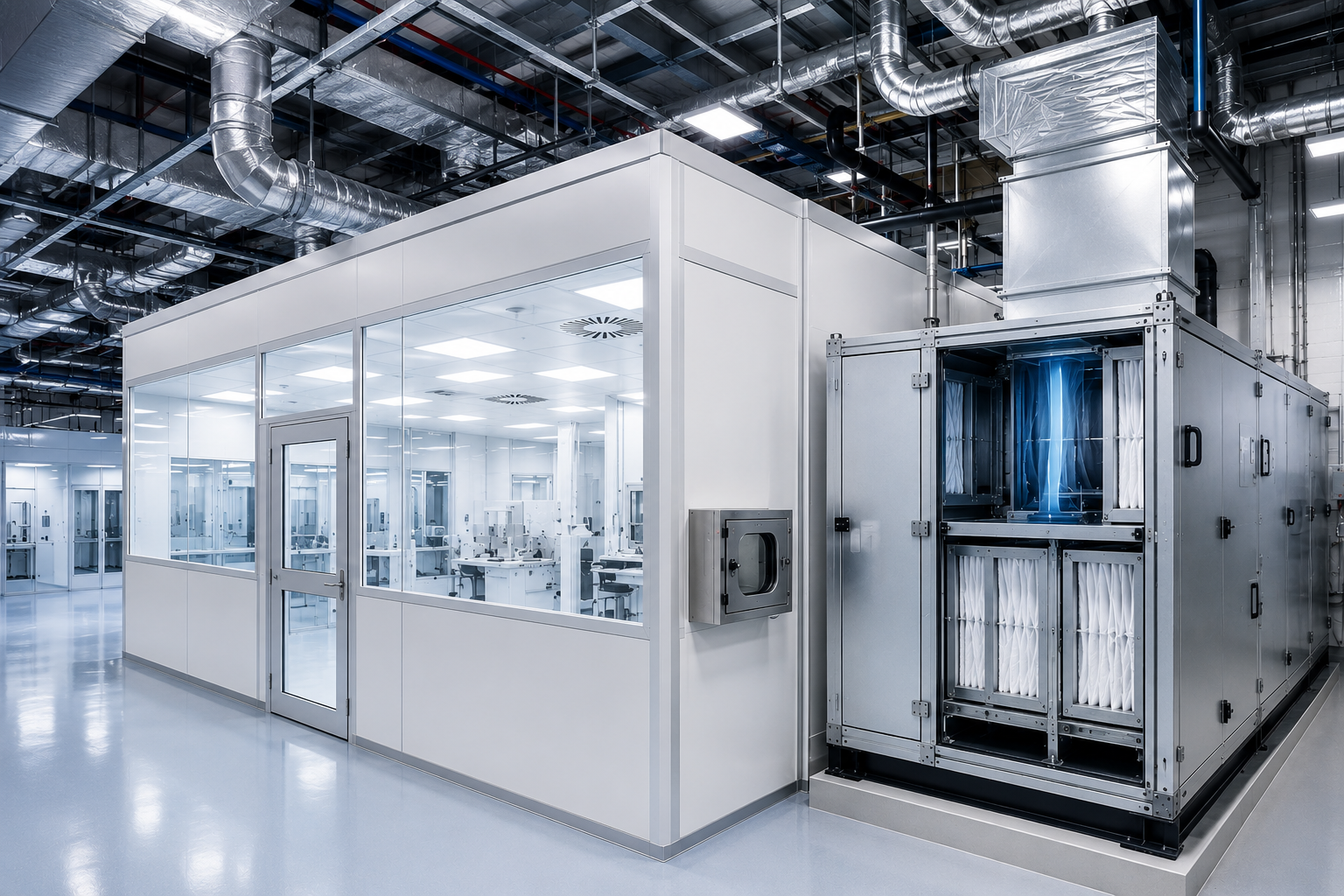
Smooth wall panels, sealed ceilings, cleanroom-grade flooring, and easy-to-clean surfaces reduce places where dust can collect.
Controlled entry areas help limit what enters the cleanroom from outside spaces.
A qualified cleanroom company plans these systems based on the level of cleanliness needed for the product.
This helps screen protector manufacturers keep production areas cleaner and more predictable.
Why Airflow Design Matters for Screen Protector Quality
Airflow plays a major role in keeping a cleanroom stable.
Air must move in a way that carries particles away from critical work areas.
If airflow is not properly designed, particles can stay suspended, settle on materials, or move from less clean areas into cleaner zones.
Screen protector production often includes sensitive steps such as adhesive exposure, lamination, coating, inspection, and final packaging.
These areas need controlled airflow to protect open surfaces.
Cleanroom construction companies consider air change rates, filter placement, return air paths, pressure control, and work zone layout during design.
Cleanroom installation contractors then make sure these systems are properly installed and balanced.
When airflow works correctly, the cleanroom supports cleaner production and more consistent results.
Managing Static During Film and Glass Handling
Static electricity is a common problem when handling plastic films, liners, and coated materials. Many screen protector materials can attract particles because of static charge.
This can cause dust to cling to the surface even after cleaning. Static can also make thin materials harder to handle during production.
A cleanroom company can help reduce static-related issues through humidity control, grounding methods, anti-static work surfaces, and proper material handling practices.
Stable humidity is especially important because dry air can increase static buildup.
When static is better controlled, materials move more smoothly through the production process.
This helps reduce trapped particles, alignment issues, and handling defects.
Protecting Adhesive Layers During Production
The adhesive layer is one of the most sensitive parts of a screen protector.
It must remain clean, even, and protected until the product is ready to be applied.
Dust, fibers, or skin particles on the adhesive can cause bubbles or poor bonding.
If the adhesive becomes contaminated, the final product may not attach properly to the screen.
Cleanroom environments help protect adhesive layers by reducing airborne particles and controlling material exposure.
Production zones can be arranged so adhesive handling happens in the cleanest part of the cleanroom.
Pass-through areas, covered material storage, and controlled packaging zones can also help keep adhesive surfaces protected.
This level of planning is one of the reasons manufacturers work with experienced cleanroom companies.
Supporting Accurate Cutting and Die-Cutting
Screen protectors must be cut with high accuracy.
They need to match device dimensions, curved edges, camera openings, speaker areas, fingerprint sensors, and display boundaries.
Any shift during cutting can lead to poor fit or product rejection.
Cleanrooms support accurate cutting by creating stable conditions around the process.
Temperature and humidity control help reduce material movement.
Clean surfaces reduce the risk of debris affecting cutting tools or product alignment.
Organized workflow helps operators handle materials more carefully before and after cutting.
For screen protector manufacturers, precision is not only about equipment.
The surrounding environment also affects the final result.
Improving Lamination and Coating Quality
Many screen protectors go through lamination or coating steps.
These may include anti-scratch coatings, anti-fingerprint coatings, anti-glare layers, privacy filters, or optical clarity treatments.
These processes require clean surfaces and stable conditions.
Particles, moisture changes, and uneven airflow can affect how layers bond or how coatings settle.
A cleanroom helps protect these processes by maintaining cleaner air and better environmental control.
A professional cleanroom company can design production zones that support coating, curing, lamination, and inspection without unnecessary exposure.
This helps improve surface quality and reduces defects that could affect clarity or touch performance.
Creating Better Inspection Conditions
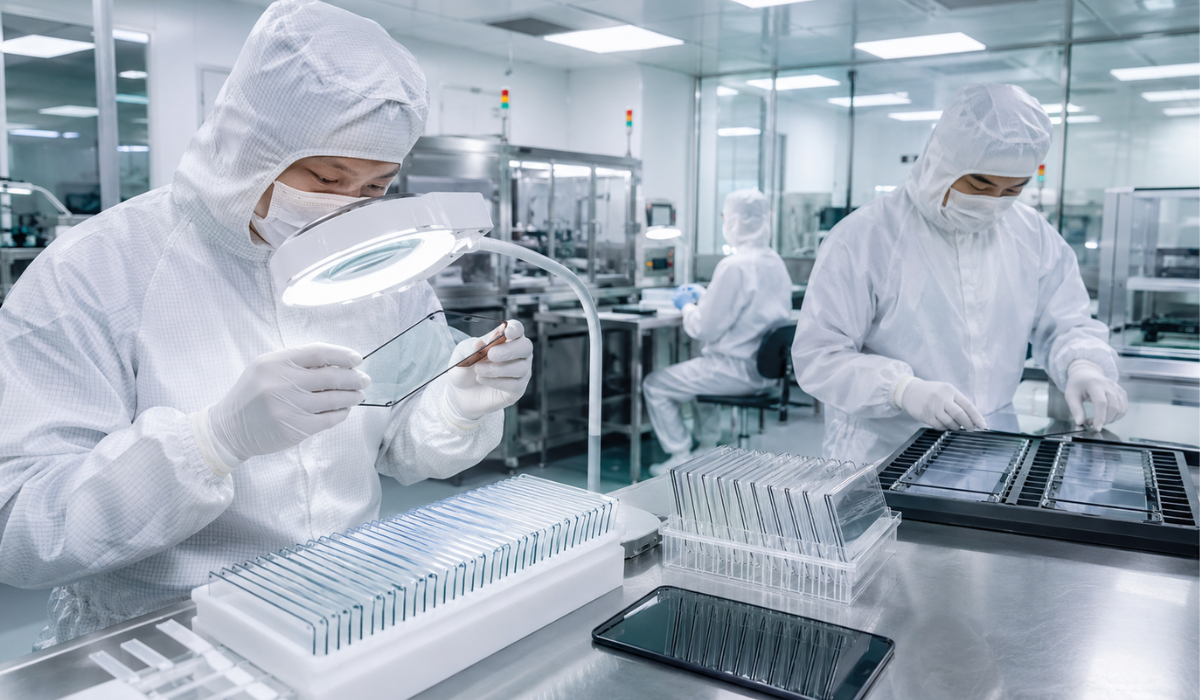
Inspection is a critical part of screen protector production.
Manufacturers need to identify scratches, coating marks, bubbles, dust, edge defects, alignment problems, and packaging issues before products leave the facility.
A cleanroom helps inspection teams work in a more reliable environment.
Controlled lighting can make defects easier to see.
Clean surfaces reduce false defects caused by surrounding dust.
Stable airflow prevents new particles from landing on products during inspection.
When the environment is controlled, inspection becomes more accurate.
This helps manufacturers catch real defects and maintain stronger quality standards.
How Cleanroom Layout Supports Better Workflow
Cleanroom layout has a direct effect on product quality.
Poor layout can increase unnecessary movement, slow down production, and raise contamination risks.
For example, if raw materials, finished goods, employees, and waste all move through the same path, contamination risk increases.
A well-designed cleanroom creates a logical flow.
Materials enter through controlled areas.
Employees pass through gowning zones.
Sensitive production steps are separated from packaging or storage zones.
Finished products move toward inspection and packaging without crossing back through raw material areas.
Cleanroom companies plan these details so the space supports production instead of creating problems.
Good layout also helps employees follow cleanroom procedures more easily.
The Role of Cleanroom Construction Companies
Cleanroom construction companies understand how construction details affect cleanliness.
A normal production room may have rough surfaces, exposed joints, standard ceiling tiles, and flooring that can release particles.
These materials are not ideal for screen protector production.
Cleanroom construction uses smooth panels, sealed joints, cleanable flooring, proper ceiling systems, and controlled utility integration.
Every edge, wall connection, light fixture, and door system matters.
If a surface collects dust or is difficult to clean, it can become a long-term contamination source.
Experienced cleanroom construction companies help avoid these problems by using proper cleanroom materials and installation methods.
Their work creates a stronger foundation for long-term product quality.
The Role of Cleanroom Installation Contractors
Cleanroom installation contractors are responsible for making sure the cleanroom is assembled correctly.
This includes installing panels, doors, windows, ceilings, filtration systems, flooring, lighting, and other components.
Installation quality matters because even a small gap or poor seal can affect cleanroom performance.
For screen protector manufacturing, the cleanroom must maintain stable conditions every day.
If air leaks, pressure issues, or filtration problems occur, product quality can suffer.
Skilled cleanroom installation contractors follow proper procedures to protect the room during installation and prepare it for testing.
Their precision helps the cleanroom perform as designed.
Temperature and Humidity Control in Screen Protector Production
Temperature and humidity can affect materials used in screen protectors. Films may expand or contract.
Adhesives may become harder or softer. Coatings may behave differently.
Static can become worse when humidity is too low. These changes can affect cutting accuracy, lamination quality, adhesive performance, and packaging consistency.
Cleanroom companies help control these factors by designing HVAC and monitoring systems around the production process.
Stable temperature and humidity make it easier to maintain repeatable results.
This is especially valuable for manufacturers producing high volumes or working with sensitive materials.
Reducing Rejected Products and Production Waste
Rejected products can become expensive for screen protector manufacturers.
Waste may include raw materials, adhesive films, glass sheets, packaging, labor time, and machine time.
Many defects are caused by contamination or unstable production conditions.
Cleanrooms help reduce these problems by controlling the environment before defects happen.
Cleaner air reduces dust-related waste. Better workflow reduces handling errors. Stable environmental conditions improve process consistency.
Proper cleanroom design can lower rejection rates and help manufacturers protect their production investment.
Over time, this supports better efficiency and stronger profit margins.
Why Quality Packaging Also Needs Cleanroom Control
Packaging is often the final step before the screen protector reaches the customer.
If contamination enters at this stage, the product may still be rejected by the end user.
Dust on the protector, liner, cleaning cloth, or inside the package can affect customer satisfaction.
For premium screen protectors, packaging must look clean and professional.
A controlled cleanroom packaging area helps protect finished products before sealing.
It also reduces the risk of particles entering the final package.
Cleanroom companies can help design dedicated packaging zones that keep completed screen protectors protected until shipment.
Maintaining Cleanroom Performance Over Time
A cleanroom must be maintained after installation. Filters need to be replaced.
Surfaces need to be cleaned correctly. Airflow and pressure should be monitored. Employees need to follow proper entry and handling procedures.
Without regular maintenance, cleanroom performance can slowly decline. This can lead to more defects and inconsistent production.
A cleanroom company can help manufacturers understand maintenance needs and best practices.
This includes cleaning schedules, filter service intervals, monitoring routines, and operational procedures.
Long-term performance depends on both good construction and proper daily use.
Choosing the Right Cleanroom Company for Screen Protector Manufacturing
Choosing the right cleanroom company is an important decision.
The provider should understand contamination control, cleanroom construction, airflow planning, material flow, and process-specific requirements.
They should be able to design a cleanroom that supports your actual production steps, not just provide a basic enclosed room.
Manufacturers should look for cleanroom companies that provide planning, design, construction, installation, and long-term support.
Cleanroom construction companies should understand materials, sealing, and controlled room design.
Cleanroom installation contractors should have experience with cleanroom-grade systems and careful installation practices.
The right partner can help manufacturers avoid design mistakes, reduce production risks, and create a cleaner, more efficient operation.
Conclusion
Screen protector manufacturing depends on clean surfaces, accurate processing, stable conditions, and careful handling.
Even a small particle or environmental change can affect product clarity, adhesion, fit, and overall quality.
Cleanroom companies help manufacturers control these risks by designing clean, stable, and efficient production environments.
A professional cleanroom company supports better airflow, cleaner surfaces, stronger contamination control, and smoother workflow.
Cleanroom construction companies make sure the facility is built with proper materials and cleanroom-grade details.
Cleanroom installation contractors help ensure the systems are installed correctly and ready for long-term use.
For screen protector manufacturers, a cleanroom is not only a production area.
It is a quality control tool that helps protect the product from raw material handling to final packaging.
Build a Cleaner Production Environment with UltraPure Technology
UltraPure Technology helps manufacturers create controlled cleanroom environments that support precision, consistency, and product quality.
For screen protector production, our team can help plan and build a cleanroom that reduces contamination risks, improves workflow, and supports cleaner handling of sensitive materials.
From design and construction to installation and ongoing support, we deliver cleanroom solutions built around your production needs.
Contact our team today to discuss your cleanroom project and build a solution designed for precision, quality, and long-term performance.
Frequently Asked Questions
Why do screen protector manufacturers need cleanrooms?
Screen protector manufacturers need cleanrooms because particles, dust, and fibers can become trapped between material layers. These defects can cause bubbles, marks, poor clarity, and rejected products. A cleanroom helps protect sensitive surfaces during cutting, coating, lamination, inspection, and packaging.
How do cleanroom companies improve screen protector quality?
Cleanroom companies improve quality by designing controlled spaces that reduce contamination and support stable production conditions. They plan airflow, filtration, pressure control, material flow, and cleaning requirements. This helps manufacturers produce clearer, cleaner, and more consistent screen protectors.
What does a cleanroom company do during screen protector production planning?
A cleanroom company reviews the production process, product sensitivity, equipment layout, and cleanliness requirements. Based on these details, they recommend the right cleanroom design, airflow system, filtration level, and workflow plan. This helps create a cleanroom that fits the manufacturer’s actual operation.
Why are cleanroom construction companies important for screen protector facilities?
Cleanroom construction companies understand how to build spaces that reduce contamination risks. They use cleanroom-compatible materials, sealed surfaces, proper wall systems, and controlled layouts. Their work helps protect the production area and supports long-term cleanroom performance.
How do cleanroom installation contractors support contamination control?
Cleanroom installation contractors install filtration systems, panels, ceilings, flooring, doors, and other components with precision. Proper installation helps prevent leaks, gaps, and airflow problems. This ensures the cleanroom can maintain the conditions needed for high-quality screen protector production.
Can cleanrooms help reduce product waste?
Yes, cleanrooms can reduce waste by lowering the number of defects caused by dust, static, poor airflow, and unstable conditions. Cleaner production areas help protect films, adhesives, and glass surfaces. This means fewer rejected products and more consistent production output.
What cleanroom features matter most for screen protector manufacturing?
Important features include HEPA filtration, controlled airflow, humidity control, static control, cleanable surfaces, sealed construction, and organized workflow. These features help protect sensitive materials and reduce the chance of contamination during manufacturing and packaging.
How does a cleanroom improve adhesive layer quality?
The adhesive layer is one of the most sensitive parts of a screen protector. If dust or fibers reach the adhesive surface, they can create bubbles or visible defects. A cleanroom helps keep particles away from open adhesive areas during lamination and assembly.
Why choose UltraPure Technology for cleanroom solutions?
UltraPure Technology helps manufacturers create controlled environments for sensitive production needs. Our team supports cleanroom planning, construction, installation, and long-term performance. We design cleanroom solutions that help protect quality, improve workflow, and support consistent manufacturing results.