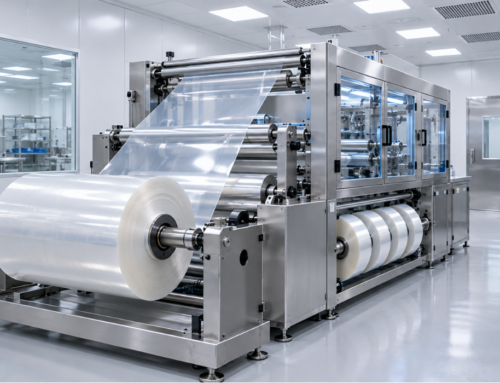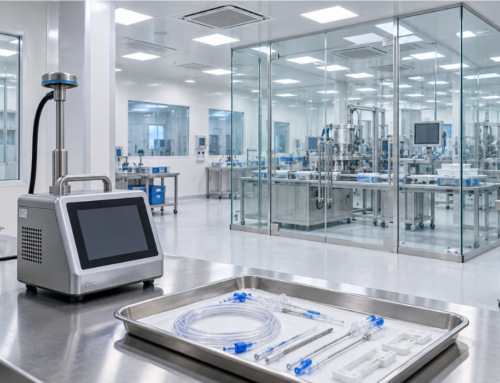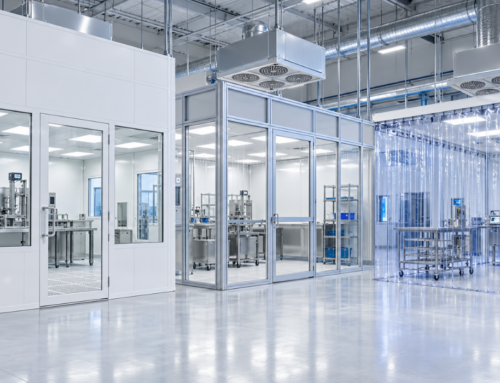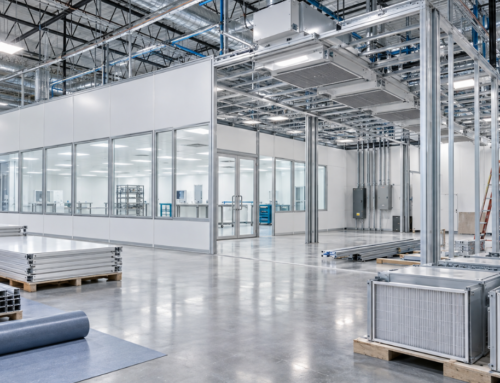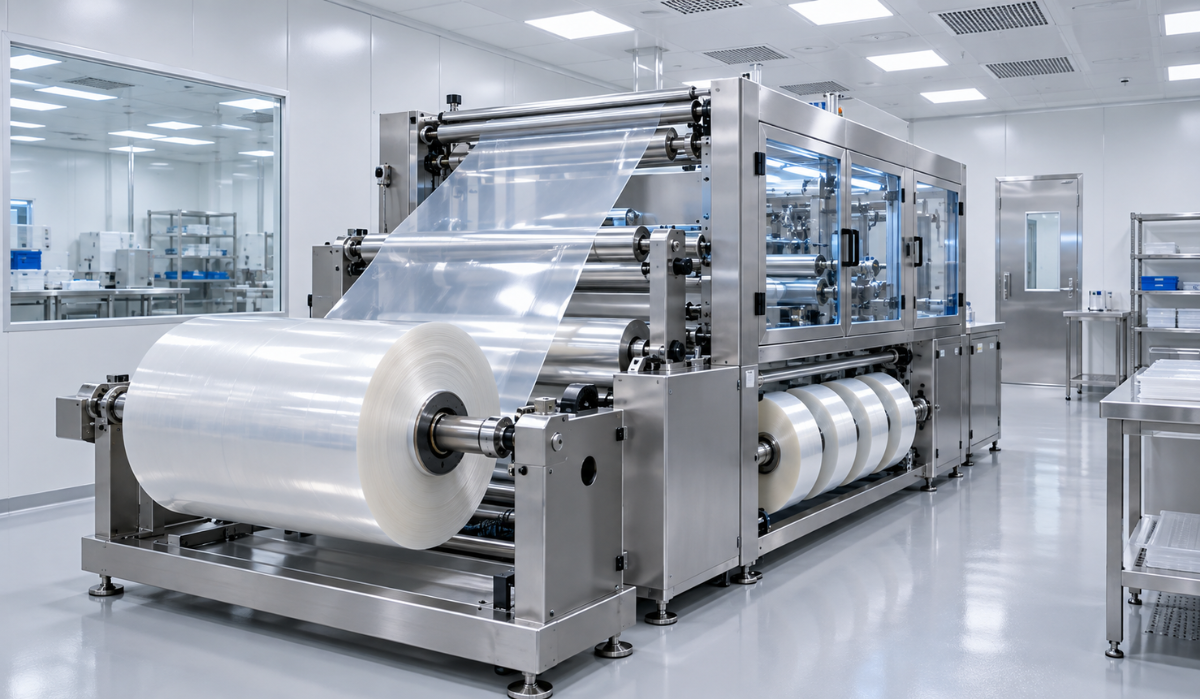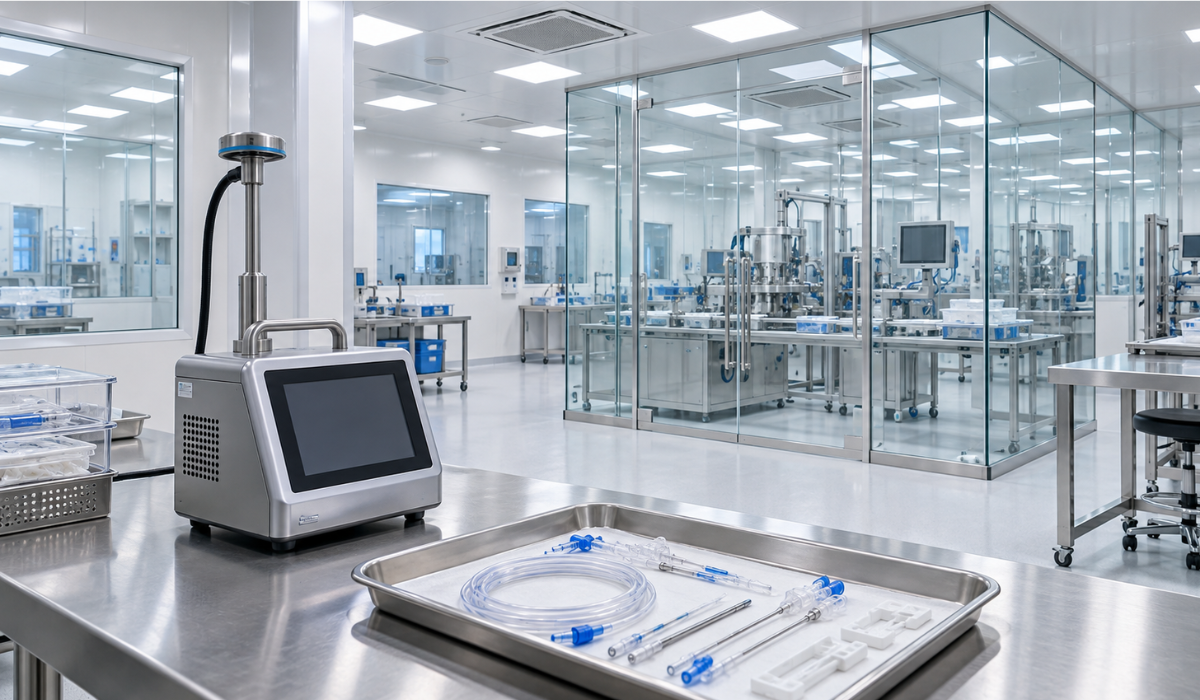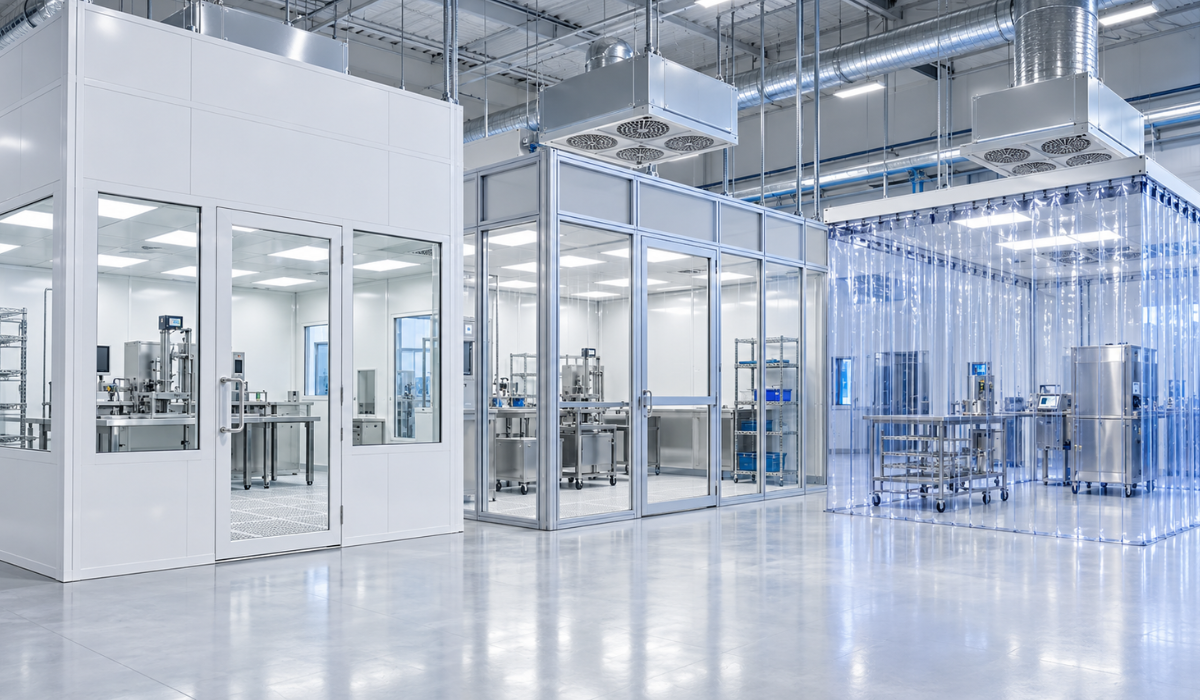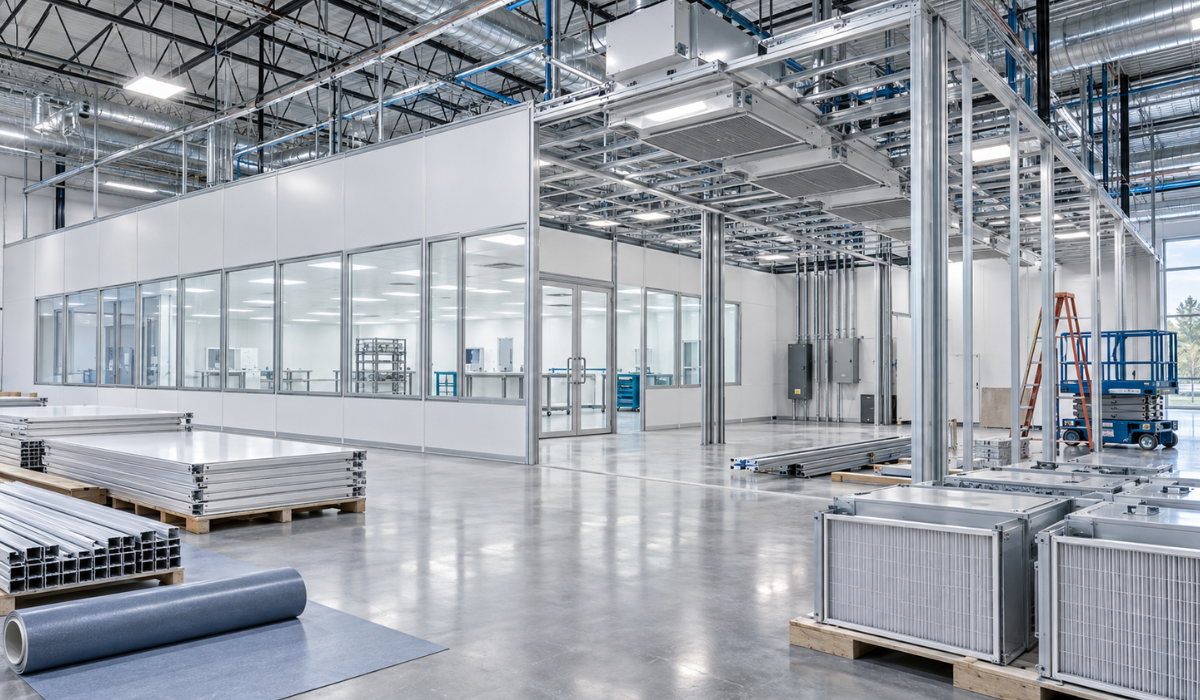

Cleanroom converting services involve cutting, slitting, laminating, die cutting, rewinding, assembling, or preparing materials inside a controlled cleanroom environment. These services are used when products or components must be protected from dust, fibers, particles, oils, residues, or other contaminants during production.
In medical and industrial manufacturing, even small contamination issues can affect product quality, consistency, performance, or downstream processing. This is why companies working with sensitive films, foams, adhesives, medical device components, diagnostics, electronics, or specialty materials often need more than standard production space. They may need a properly planned cleanroom that supports controlled handling, cleanable surfaces, filtered airflow, pressure management, equipment workflow, and documentation needs.
For manufacturers considering cleanroom converting, the key question is not only whether the process can be performed in a cleanroom. The bigger question is whether the cleanroom itself is designed around the product, equipment, workflow, and cleanliness requirements.
What Cleanroom Converting Services Include
Converting refers to changing raw or semi-finished materials into another usable form. In a cleanroom setting, this work is performed under controlled environmental conditions to reduce contamination risk.
Cleanroom converting may include die cutting, slitting, laminating, rewinding, roll-to-roll processing, material cutting, adhesive application, component preparation, packaging support, and assembly-related handling. These processes are often used for materials such as films, foams, tapes, adhesives, liners, labels, membranes, specialty plastics, and medical-grade components.
The cleanroom environment helps protect these materials from unwanted particles or residues that could affect product function or cleanliness. However, not every converting process requires a cleanroom. The need depends on product sensitivity, industry requirements, customer specifications, regulatory expectations, and how the finished material will be used.
Why Medical Manufacturers Use Cleanroom Converting
Cleanroom converting is especially important in medical manufacturing because many products are used in sensitive healthcare, diagnostic, or patient-contact applications. In medical device cleanroom manufacturing, materials may need to be cut, layered, prepared, or packaged in a controlled environment before they become part of a finished device or system.
Medical applications may include wearable medical components, diagnostic materials, adhesive patches, surgical support materials, films and foams, tubing-related components, packaging materials, device labels and liners, and sterile barrier support materials. In these applications, particles, fibers, oils, or residues can create quality concerns. A controlled cleanroom environment helps reduce exposure during key production steps and supports more consistent handling.
For medical manufacturers, cleanroom converting is often part of a broader quality strategy. The environment, materials, workflow, equipment, and operator procedures all need to work together to support reliable production.
How Industrial Manufacturers Benefit From Cleanroom Converting
Cleanroom converting is not limited to medical products. Many industrial manufacturers also rely on controlled environments when their products require high cleanliness, precision, or consistency.
Electronics, microelectronics, aerospace, optics, battery production, automotive components, specialty adhesives, precision films, and high-performance materials may all require cleaner production conditions. In these industries, contamination can affect adhesion, electrical performance, optical clarity, coating quality, product appearance, or assembly reliability.
A small particle may not seem important in a general manufacturing space, but it can cause defects in precision industrial applications. This is why cleanroom converting can be valuable for both medical and industrial manufacturers. It supports cleaner handling, better process control, and reduced risk during sensitive material preparation.
Why an ISO Cleanroom May Be Needed
An ISO cleanroom is classified based on the number and size of airborne particles allowed within the space. ISO cleanroom requirements are commonly used when manufacturers need a defined cleanliness level for production, testing, packaging, or handling.
The required ISO class depends on the product and process. A less sensitive industrial component may need a lower level of control, while a medical device component or critical material may require a stricter cleanroom classification.
Product sensitivity, material type, exposure time, medical or critical use, customer requirements, packaging needs, sterilization needs, equipment movement, and personnel activity can all affect the ISO class needed. Choosing the right ISO class is important because overbuilding can increase costs unnecessarily, while underbuilding can create quality or compliance problems.
A cleanroom company should help evaluate the actual process before recommending the level of control needed.
Cleanroom Design Requirements for Converting Operations
Successful cleanroom converting depends on more than equipment placement. The room must be designed around how materials, people, equipment, and finished components move through the space.
Strong cleanroom design and construction planning should consider equipment layout, material flow, personnel gowning, controlled entry points, pass-through placement, HEPA filtration, airflow direction, pressure relationships, temperature and humidity control, static control, cleanable surfaces, utility routing, maintenance access, waste handling, packaging, and staging areas.
Poor layout can create unnecessary contamination risks. For example, if incoming materials cross paths with finished goods, or if operators must move through inefficient traffic patterns, the cleanroom may be harder to manage. A cleanroom should support the actual manufacturing process, not interrupt it.
Modular Cleanrooms for Converting Services
A modular cleanroom can be a practical option for companies adding converting services inside an existing facility. Modular systems are often used when manufacturers need flexibility, faster installation, or future expansion options.
A modular cleanroom can support adaptable layouts, faster deployment, easier future modification, compatibility with existing buildings, scalable cleanroom footprints, and controlled wall and ceiling systems. However, modular does not mean simple or generic. A modular cleanroom still requires proper planning for HVAC, filtration, airflow, equipment layout, utilities, doors, pass-throughs, and cleanroom installation.
For converting operations, modular cleanrooms can be especially useful when equipment, production volume, or customer requirements may change over time.
Cleanroom Installation Considerations for Converting Equipment
Cleanroom converting equipment can affect the entire cleanroom plan. Before construction begins, the project team should understand the equipment size, utility requirements, heat load, operator access, cleaning needs, and material movement.
Important cleanroom installation considerations include equipment dimensions, delivery paths, floor loading, electrical needs, compressed air requirements, heat generated by machinery, ventilation or exhaust needs, operator work zones, cleaning access, maintenance clearance, material staging, and finished product flow.
If the cleanroom is built before equipment requirements are fully understood, the facility may face expensive modifications later. Openings may need to be changed, utilities may need to be rerouted, or airflow may need to be rebalanced. Planning the cleanroom around the converting process helps reduce these risks.
When Do You Need Cleanroom Converting Services?
A company may need cleanroom converting services when contamination could affect product performance, appearance, cleanliness, safety expectations, or customer acceptance.
This need is common when products are used in medical, diagnostic, pharmaceutical, or precision industrial applications. It may also apply when materials are sensitive to particles, fibers, oils, or residues, when adhesives, films, foams, or coatings must remain clean, when products require controlled handling before packaging, when components will be sterilized later, when customers require cleanroom production, when defects are linked to contamination, or when environmental documentation is needed.
Standard converting may be enough when the product is not highly sensitive and customer requirements do not call for a controlled environment. The decision should be based on process risk, product use, and quality expectations.
Questions to Ask Before Building a Cleanroom for Converting
Before investing in a cleanroom for converting work, manufacturers should define the process clearly. This helps avoid overbuilding, underbuilding, or creating a space that does not support daily operations.
Manufacturers should ask what material or product will be converted, what contaminants could affect quality, what ISO class is required, what equipment will operate inside the cleanroom, how materials will enter the room, how finished components will exit the space, how personnel will gown and move through the area, whether temperature, humidity, or static controls are needed, what cleaning procedures the room must support, whether future production will require more space, and what testing or documentation will be required.
Clear answers help define the right cleanroom construction scope and reduce costly changes later.
How UltraPure Technology Supports Cleanroom Converting Environments
UltraPure Technology, Inc. supports companies that need controlled environments for converting, manufacturing, assembly, packaging, and related production processes. The company provides cleanroom design and construction, cleanroom installation, custom modular cleanrooms, and modular cleanroom systems for medical, industrial, laboratory, and manufacturing applications.
For organizations planning converting operations, UltraPure Technology helps evaluate workflow, equipment needs, ISO classification, facility conditions, material handling, and long-term usability. This approach helps create a cleanroom environment that supports production goals instead of simply enclosing equipment inside a controlled space.
Conclusion
Cleanroom converting services are used when materials must be cut, laminated, slit, assembled, packaged, or prepared under controlled conditions. These services are important in medical and industrial manufacturing because contamination can affect product quality, consistency, appearance, performance, or compliance readiness.
The success of cleanroom converting depends on more than the converting process itself. It depends on the cleanroom environment, ISO class, workflow, HVAC planning, materials, equipment layout, and installation quality.
Before building or expanding a cleanroom for converting work, manufacturers should evaluate the product, process, equipment, contamination risks, and future growth needs. A well-planned cleanroom can support cleaner production, better workflow, and long-term manufacturing reliability.
FAQs
What are cleanroom converting services?
Cleanroom converting services involve cutting, slitting, laminating, die cutting, rewinding, assembling, or preparing materials inside a controlled cleanroom environment. These services are used when dust, fibers, oils, particles, or residues could affect product quality, performance, or cleanliness requirements.
Which industries use cleanroom converting services?
Medical device, pharmaceutical, diagnostics, electronics, aerospace, optics, battery, and precision industrial manufacturers may use cleanroom converting services. These industries often work with sensitive materials or components where contamination can affect reliability, appearance, safety expectations, or production consistency.
Does every converting process need an ISO cleanroom?
No. Not every converting process requires an ISO cleanroom. The need depends on the product’s sensitivity, customer requirements, contamination risk, regulatory expectations, and the level of environmental control required for reliable production.
What is the difference between cleanroom converting and cleanroom manufacturing?
Cleanroom converting usually refers to modifying materials through cutting, slitting, laminating, rewinding, or die cutting. Cleanroom manufacturing is broader and may include assembly, molding, testing, packaging, or full product production inside a controlled cleanroom environment.
Can modular cleanrooms be used for cleanroom converting?
Yes. Modular cleanrooms can support cleanroom converting when companies need a controlled environment inside an existing facility or want flexibility for future changes. However, they still require proper planning for HVAC, filtration, workflow, equipment access, and installation.
Why is cleanroom design important for converting services?
Cleanroom design is important because converting equipment affects airflow, utility routing, operator movement, maintenance access, material handling, and finished product flow. If the cleanroom is not designed around the process, contamination risk and operational problems can increase.