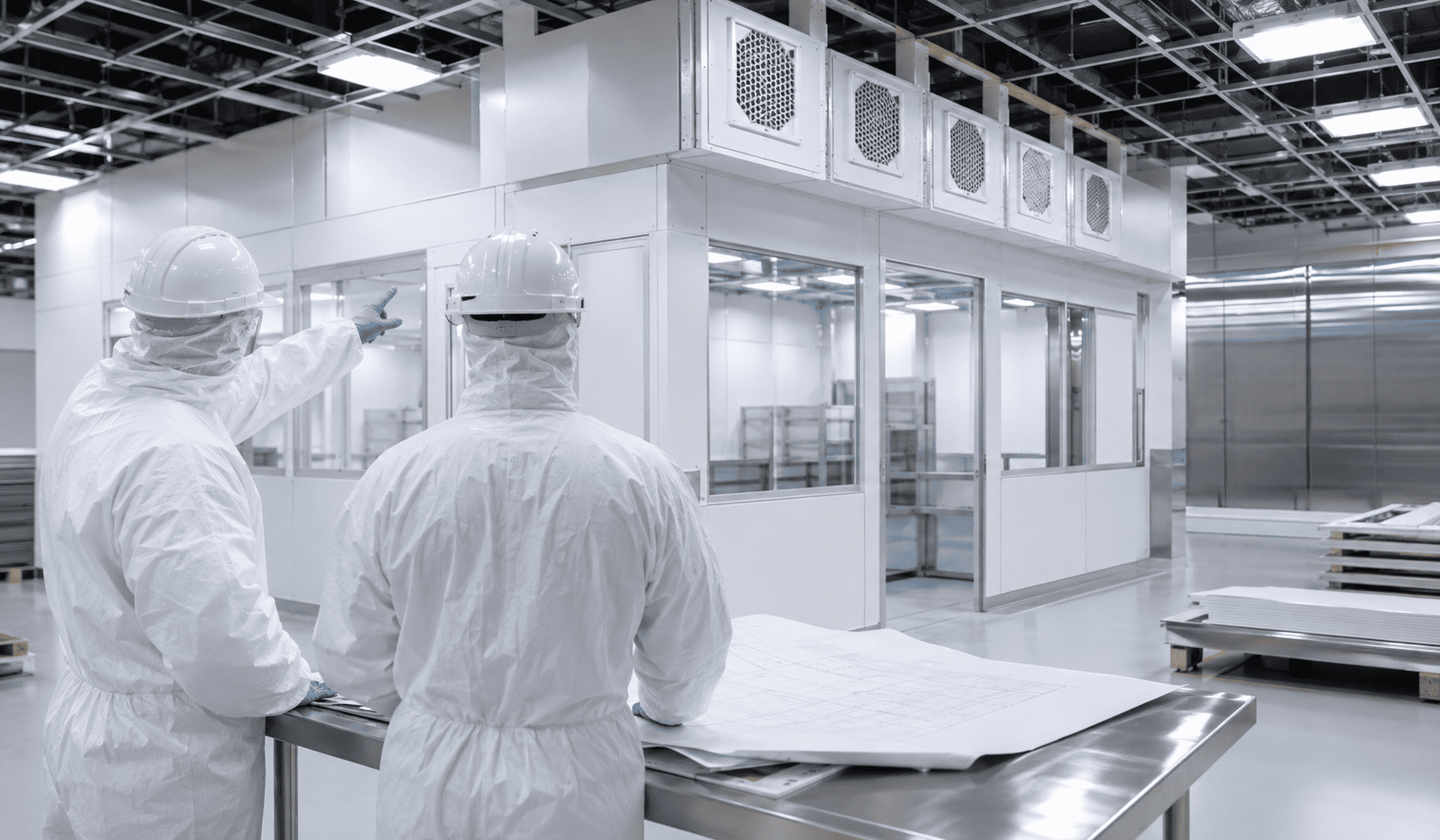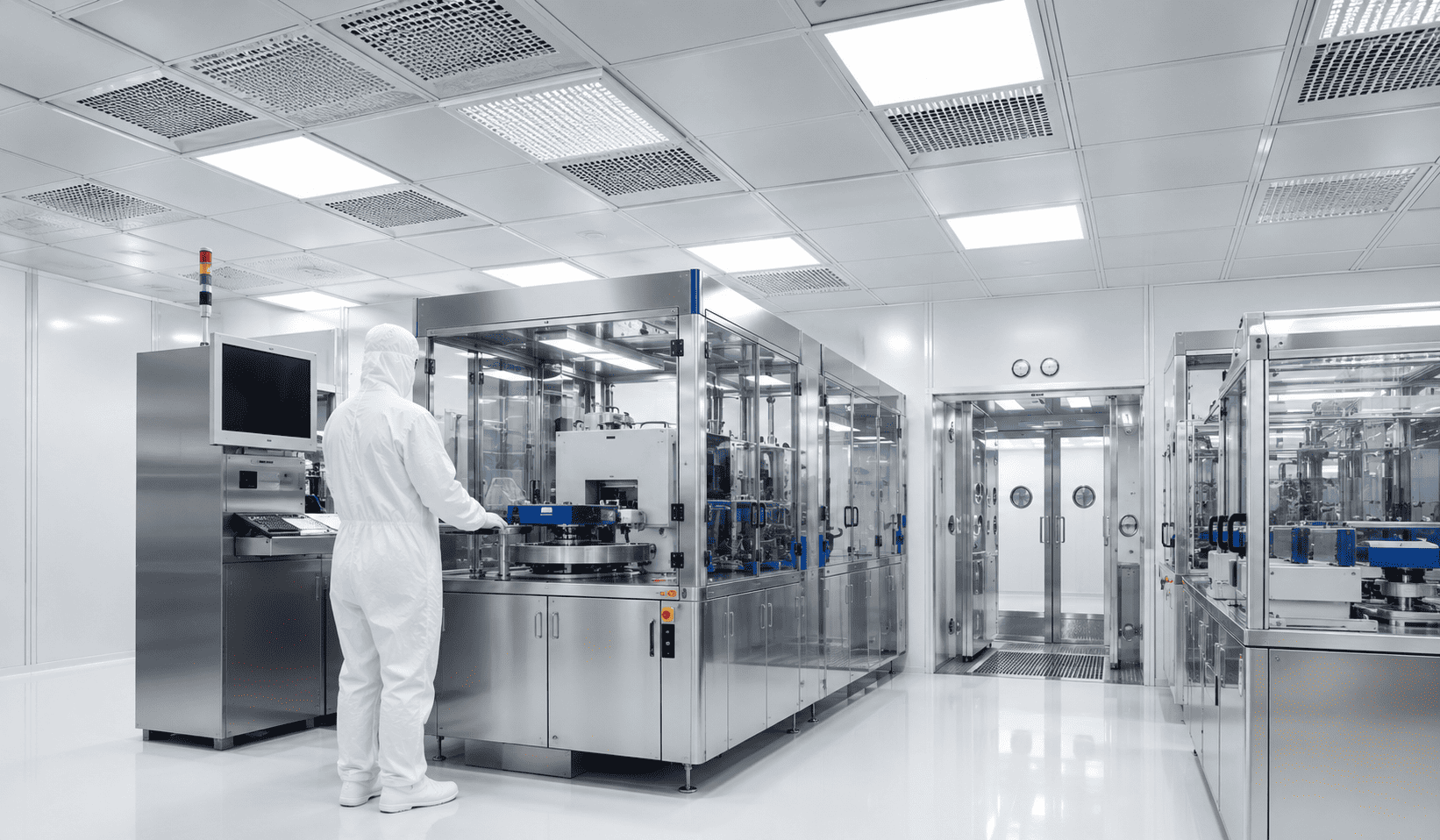

Cleanroom customization is a major investment for any facility that depends on contamination control, ISO classification, regulated production, or highly controlled workflows.
For businesses in Suwanee, GA and the greater Atlanta metro area, choosing the right cleanroom customization company before signing a contract can directly affect project cost, compliance readiness, workflow efficiency, documentation quality, and long-term performance.
A cleanroom is not just another construction project. It must be designed around airflow, filtration, pressure relationships, surface materials, equipment layout, personnel movement, product handling, cleaning procedures, and testing expectations.
If these details are not clearly defined upfront, the project can become vulnerable to scope gaps, delays, change orders, performance issues, or expensive redesigns after installation.
This guide explains how to choose a cleanroom customization company, what questions to ask before hiring a cleanroom builder, and what to review before signing a contract for custom cleanroom design and construction in Suwanee.
Why Cleanroom Customization Requires Careful Company Evaluation
Choosing a cleanroom company should involve more than comparing prices or installation timelines.
The provider must understand how the cleanroom will be used day to day, what risks need to be controlled, and how each system will support the facility’s production goals.
A strong cleanroom customization partner should be able to review your process, identify design risks, clarify technical responsibilities, and explain how the final space will support both current operations and future changes.
This includes planning for equipment access, maintenance needs, personnel movement, cleaning procedures, documentation, and possible expansion.
For regulated facilities, this evaluation is especially important because small gaps in scope can create larger problems after installation.
Before hiring a cleanroom contractor for custom ISO cleanrooms, decision-makers should confirm that the company can manage the full connection between design planning, installation quality, testing support, and long-term usability.
What Cleanroom Customization Requirements Should Be Defined First?

Before requesting a final proposal, your team should define the most important cleanroom requirements.
A qualified cleanroom customization company in Suwanee GA should help clarify these details early so the design is based on the actual use of the space.
Important requirements include:
- Required ISO classification
- Industry or product-specific contamination control needs
- Room size and layout
- Personnel and material flow
- Pressure control requirements
- HVAC and filtration needs
- Temperature and humidity expectations
- Equipment placement
- Wall, ceiling, and flooring materials
- Gowning and transition areas
- Utility and electrical requirements
- Testing, commissioning, and validation responsibilities
The ISO classification is especially important because it influences airflow rates, filtration strategy, room pressurization, and cleaning expectations.
A cleanroom designed for a less demanding process may not support the needs of a stricter controlled environment.
Workflow should also be reviewed carefully. A cleanroom should support how people, products, tools, and materials move through the space.
Poor layout planning can create contamination risks, bottlenecks, or inefficient production steps.
How to Review a Cleanroom Company’s ISO Experience
ISO experience should be one of the most important factors when comparing cleanroom specialists.
The company does not need to make unrealistic promises, but it should understand how ISO classification affects cleanroom design, construction, and commissioning.
A qualified cleanroom builder should be able to explain how the required ISO class influences:
- Airflow design
- Filtration selection
- Air changes per hour
- Pressure differentials
- Particle control strategy
- Room envelope integrity
- Material selection
- Cleaning compatibility
- Testing and certification coordination
- Documentation needs
For custom ISO cleanrooms, the company should also understand the difference between designing for a target classification and completing the testing or validation steps needed to confirm room performance. These responsibilities should be clearly documented in the contract.
Avoid companies that use vague language around compliance.
Claims like “fully compliant” or “guaranteed ISO cleanroom” should be supported by clear design criteria, testing responsibilities, documentation, and defined acceptance standards.
The safest approach is to work with a cleanroom contractor who can explain the pathway from design intent to commissioning and certification support.
What Should Be Included in a Cleanroom Customization Contract?
A cleanroom customization contract should be specific, detailed, and easy to understand.
As cleanroom projects involve multiple systems, vague contract language can lead to confusion during installation or after the project is complete.
The contract should include a detailed scope of work. This should explain what the provider will deliver, what systems are included, what materials are specified, and what responsibilities remain with the owner or other contractors.
The contract should also include drawings or layout documents.
These help confirm room size, equipment placement, access points, air handling assumptions, gowning areas, pass-throughs, and other design details.
ISO requirements should be clearly stated. The contract should identify the target ISO classification and any assumptions connected to that classification.
If testing or certification is part of the project, the contract should explain who is responsible and what documentation will be provided.
Material specifications should also be included. Wall panels, ceiling grids, flooring, doors, seals, lighting, windows, and pass-throughs should be described clearly enough for the client to understand what is being installed.
HVAC and filtration responsibilities must be defined. Cleanroom disputes often happen when mechanical responsibilities are unclear.
The contract should explain whether the cleanroom company, mechanical contractor, or facility team is responsible for HVAC design, filtration, air balancing, and pressure control.
Commissioning, closeout documentation, warranty terms, exclusions, project timeline, change order process, and post-installation support should also be included.
If any of these items are missing or listed as “to be determined,” ask for clarification before signing.
Red Flags to Watch for Before Signing With a Cleanroom Contractor
Not every cleanroom proposal is complete, even if it looks professional. Before signing, review the proposal carefully for red flags.
One major red flag is vague scope language. Phrases such as “cleanroom installation as discussed” or “materials to be finalized later” can create confusion.
A cleanroom contract should not depend on verbal assumptions. Important details should be written clearly.
Another warning sign is limited ISO knowledge. If the company cannot explain ISO classification, airflow, filtration, pressure control, or particle testing in practical terms, it may not be the right fit for a regulated cleanroom project.
A missing validation or commissioning plan is also a concern.
Even if third-party certification is handled separately, the cleanroom company should be able to explain what testing support, documentation, or coordination is included in the project.
Unusually low pricing without technical clarity can also be risky. The lowest quote may exclude important items such as HVAC integration, filtration upgrades, documentation, testing support, or post-installation service. In controlled environments, the cost of rework can be much higher than the initial savings from a low bid.
Poor communication during the proposal stage should also be taken seriously.
If a company is slow to answer questions, avoids technical details, or cannot explain responsibilities clearly, those issues may become larger once construction begins.
Why Local Cleanroom Specialists in Suwanee, GA Matter
For facilities in Suwanee, Gwinnett County, and the greater Atlanta metro area, working with local or regional cleanroom specialists can provide practical advantages.
Local cleanroom specialists can often perform site assessments more quickly.
Cleanroom projects usually require facility reviews, field measurements, coordination meetings, and installation planning.
A nearby provider may be able to respond faster and stay more involved throughout the project.
Local experience can also improve communication. Cleanroom projects often involve facility teams, quality teams, engineering teams, contractors, and vendors.
A regional partner may be easier to coordinate with during design, installation, and closeout.
Post-installation support is another advantage. Cleanroom needs may change over time.
Your facility may need modifications, repairs, reconfiguration, expansion, additional documentation, or support for future testing.
Working with cleanroom specialists near Suwanee, GA can make that support more accessible.
A local provider also brings regional familiarity. Facilities across the Atlanta metro area may have specific building conditions, utility configurations, trade coordination needs, and scheduling challenges.
A company familiar with the area may be better prepared to support those requirements.
How UltraPure Technology Supports Cleanroom Customization Projects
UltraPure Technology supports facilities that need cleanroom customization, cleanroom design and construction, modular cleanroom systems, and custom ISO cleanrooms designed around specific operational needs.
Based in Suwanee, GA, UltraPure Technology works with organizations that require controlled environments for regulated, technical, and specialized applications.
The company can support planning around ISO classification goals, room layout, workflow, contamination control, material selection, installation details, and long-term cleanroom usability.
UltraPure Technology’s cleanroom design and build approach helps clients think through the full project, not just the initial installation.
This includes understanding how the cleanroom will be used, what systems need to be coordinated, what documentation may be required, and how the space can support future operational needs.
For facilities that need flexibility, modular cleanroom systems may be a strong option.
Modular cleanrooms can be designed around specific room sizes, ISO classifications, workflow requirements, and expansion needs.
They can also be useful for companies that want a scalable solution or need a faster path to installation.
UltraPure Technology also supports regulated industry applications, including pharmaceutical cleanrooms, medical device cleanrooms, and biotechnology cleanrooms.
These environments often require careful planning around contamination control, documentation, and process-specific requirements.
By working with a Suwanee-based cleanroom specialist, facilities across the Atlanta metro area can receive support from a team that understands both technical cleanroom planning and local project coordination.
Conclusion
Choosing the right cleanroom customization company is one of the most important decisions your facility will make before starting a controlled environment project.
A cleanroom contract should not be signed until the project scope, ISO classification, HVAC responsibilities, filtration needs, material specifications, testing expectations, documentation requirements, warranty terms, and change order process are clearly understood.
The right cleanroom builder will do more than provide a quote. They will help your team understand the requirements behind the project, identify potential risks, and create a clear path from design to installation and support.
For facilities in Suwanee, GA and the greater Atlanta metro area, UltraPure Technology provides cleanroom customization support for companies that need technically planned, clearly scoped, and operationally reliable controlled environments.
Whether your facility needs a custom cleanroom, modular cleanroom, or ISO-focused cleanroom solution, taking time to vet the right partner before signing a contract can help protect your investment and support long-term performance.
Ready to Discuss Your Cleanroom Customization Project?
UltraPure Technology works with pharmaceutical, biotech, medical device, and manufacturing facilities across Suwanee, GA and the Atlanta metro area to plan, design, and build custom ISO cleanrooms that align with specific classification, workflow, and operational requirements.
Whether you want to evaluate your first cleanroom project, expand an existing facility, or review a proposal before signing, UltraPure Technology can support your unique cleanroom design and build requirements.
Choosing the right cleanroom customization company starts with reviewing its experience with ISO cleanrooms, cleanroom design and construction, regulated industries, material selection, HVAC coordination, and documentation.
As a qualified provider, UltraPure Technology can explain how your cleanroom project will address airflow, filtration, pressure control, room layout, and testing expectations before you sign a contract.
Our team offers custom ISO cleanrooms, modular cleanroom systems, and cleanroom customization options tailored to your facility.
Contact us to discuss your project requirements, review your cleanroom scope, or learn what a complete cleanroom project should include.
FAQs
What should I ask before hiring a cleanroom builder?
Before hiring a cleanroom builder, ask who prepares the design drawings, who handles HVAC and filtration planning, what materials are included, and what testing or commissioning support is provided. You should also ask about warranty terms, change order procedures, closeout documentation, and post-installation support. These questions help reveal whether the proposal is complete or missing important details.
What are ISO requirements for cleanrooms?
ISO requirements for cleanrooms are based on airborne particle limits and cleanliness classifications. The required ISO class depends on the product, process, and industry. ISO classification affects airflow, filtration, pressure control, surface materials, cleaning expectations, testing procedures, and documentation needs.
What should be included in a cleanroom customization contract?
A cleanroom customization contract should include the project scope, drawings, ISO classification target, material specifications, HVAC and filtration responsibilities, installation timeline, commissioning expectations, documentation deliverables, warranty terms, exclusions, and change order process. Clear contract language helps reduce misunderstandings and protects the facility from hidden scope gaps.
Why does ISO classification affect cleanroom design?
ISO classification affects cleanroom design because it determines the level of environmental control required. It can influence air change rates, filtration levels, pressure relationships, room layout, ceiling coverage, surface materials, gowning areas, and testing expectations. Without a confirmed ISO target, the cleanroom cannot be accurately designed, scoped, or priced.
Is a modular cleanroom better for customization?
A modular cleanroom can be a strong option for customization when a facility needs flexibility, faster installation, or future reconfiguration. Modular systems can be designed around specific ISO classifications, room sizes, workflows, and operational needs. The best choice depends on your facility layout, process requirements, equipment needs, and long-term growth plans.
How much does it cost to set up a cleanroom?
The cost to set up a cleanroom depends on ISO classification, room size, HVAC and filtration complexity, materials, installation conditions, utility needs, and testing or validation scope. A lower quote may not include everything required for a regulated cleanroom project. It is better to compare proposals based on technical completeness, scope clarity, and long-term performance.
Why should I work with cleanroom specialists near Suwanee, GA?
Working with cleanroom specialists near Suwanee, GA can make site assessments, project coordination, installation planning, and post-installation support easier. A local or regional provider can respond faster and communicate more efficiently throughout the project. This is especially valuable for facilities across the Atlanta metro area that may need ongoing support after installation.
What should I ask about scope and design before hiring a cleanroom builder?
Ask who prepares the drawings, whether the project is design-build or construction-only, and what is included or excluded in the base contract. You should also confirm whether the layout is planned around workflow, equipment placement, and ISO classification requirements.
What should I ask about materials, HVAC, and installation?
Ask which wall systems, ceiling systems, flooring, doors, seals, windows, and pass-throughs are included in the proposal. You should also confirm who is responsible for HVAC design, HEPA or ULPA filtration planning, air changes, and pressure control.
What should I ask about testing, documentation, and support?
Ask who performs particle count testing, who verifies pressure differentials, and what commissioning or closeout documents will be provided. You should also ask about warranty terms, change orders, post-installation support, and future modifications or expansion.