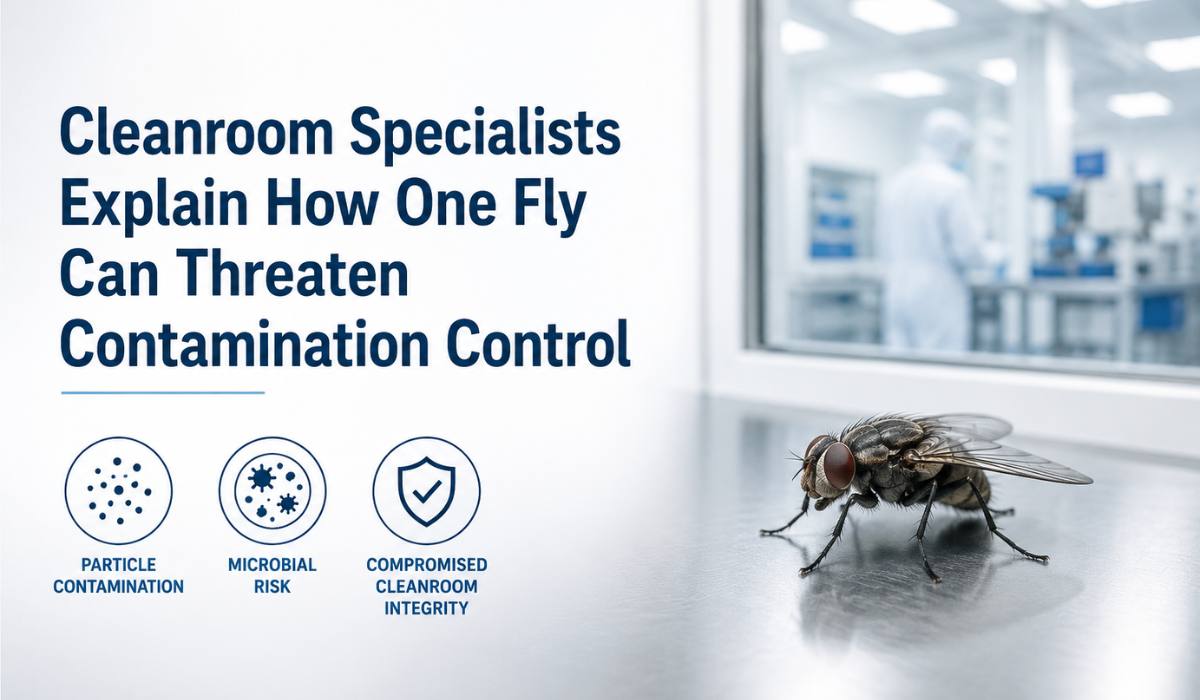
Cleanroom specialists understand that contamination control depends on details most people never notice.
In a normal building, one fly may seem like a minor nuisance.
In a cleanroom, it can signal a serious weakness in access control, sealing, airflow, pressure control, cleaning procedures, or facility maintenance.
A cleanroom is designed to protect sensitive products, processes, and components from airborne particles, fibers, microbes, and other contaminants.
When a fly enters that controlled environment, the concern is not only the insect itself.
The bigger issue is what its presence reveals. If a fly can enter the clean side of the cleanroom, particles, microbes, dust, packaging debris, or unfiltered air may also have a pathway into space.
For pharmaceutical, medical device, biotechnology, electronics, aerospace, and advanced manufacturing facilities, even a small contamination event can affect product quality, process consistency, testing results, and compliance readiness.
That is why contamination control must be planned into the cleanroom from the beginning, not treated as a housekeeping issue after installation.
Why One Fly Matters in a Cleanroom
One fly can threaten contamination control because it can carry particles, microbes, fibers, and biological material into a classified or controlled environment.
Flies come into contact with many surfaces before entering a building, and they can transfer unwanted contamination when they land on cleanroom surfaces, equipment, packaging, or production materials.
The fly itself is only part of the problem. Its presence may point to a larger failure in the cleanroom system.
Possible causes include poor door control, damaged seals, pressure imbalance, weak pest prevention, improper gowning flow, open access points, or gaps around walls, ceilings, utility penetrations, or loading areas.
In a properly planned cleanroom, entry points should be controlled, airflow should support contamination control, and pressure relationships should help protect cleaner zones from surrounding spaces.
If pests can enter, the facility should investigate how the cleanroom envelope, access procedures, and building maintenance systems are performing.
What Is the Main Source of Contamination in a Cleanroom?
Personnel are often one of the largest sources of contamination in a cleanroom.
People naturally shed skin particles, hair, fibers from clothing, and microbes.
Movement, talking, poor gowning, and improper handling can also introduce or spread contamination inside the cleanroom.
However, people are not the only concern. Contamination can also come from equipment, tools, raw materials, packaging, carts, cleaning products, air movement, HVAC issues, poor filtration, maintenance activity, and pests.
A fly in a cleanroom may seem like a small event, but it belongs to a larger contamination-control category: unwanted intrusion from outside the controlled environment.
Cleanroom specialists evaluate contamination sources as part of the full system. They look at where contaminants may enter, how they may move, where they may settle, and how facility design can reduce that risk.
How Contamination Enters Controlled Environments
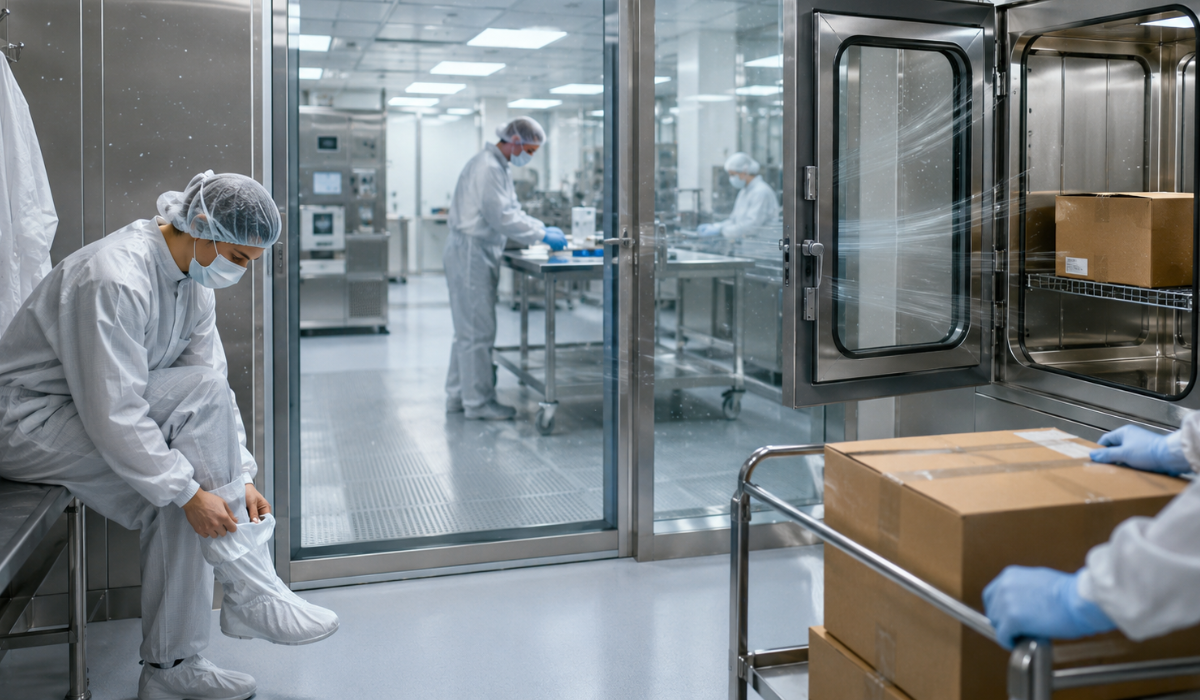
Contamination can enter a cleanroom through many pathways. The most common source is personnel movement.
Every time a person enters the cleanroom, there is a chance of introducing particles or microbes if gowning, hand hygiene, or entry procedures are not followed correctly.
Doors and traffic flow are another major concern. Frequent door openings can disrupt pressure relationships and allow less-clean air to enter cleaner areas.
Poorly located doors, weak seals, and uncontrolled access points can increase that risk.
Materials and equipment can also bring contamination into the room.
Packaging, tools, carts, production components, and maintenance equipment should be introduced through controlled transfer procedures.
If materials bypass proper staging, cleaning, or pass-through systems, they may carry particles into the cleanroom.
HVAC and filtration issues can also contribute to contamination.
If filters are not properly selected, installed, sealed, tested, or maintained, the cleanroom may not maintain the required particle control.
Pressure imbalance can also allow contaminants from adjacent spaces to enter the cleanroom.
Pest intrusion is another warning sign. A fly, insect, or other pest may indicate gaps in building maintenance, exterior door control, dock areas, floor-wall joints, ceiling penetrations, drains, or facility entry points.
What Happens If a Cleanroom Gets Contaminated?
If a cleanroom gets contaminated, the impact depends on the industry, product, ISO classification, and severity of the event.
In some cases, the facility may need to stop work, investigate the source, clean the affected area, review product exposure, and perform additional testing before resuming operations.
For regulated industries, contamination can create more serious consequences.
Pharmaceutical and medical device facilities may need to document the event, review affected batches or components, perform environmental monitoring, conduct root-cause analysis, and determine whether product quality was compromised.
Contamination can also lead to production delays, re-cleaning, re-testing, rejected materials, failed inspections, or increased audit scrutiny.
Even if the final product is not affected, the event may reveal weaknesses in cleanroom design, maintenance, personnel flow, or environmental control that need to be corrected.
This is why cleanroom specialists take small events seriously. One fly may be visible, but the underlying pathway that allowed it to enter may also allow invisible contamination.
How Cleanroom Specialists Control Contamination
Cleanroom specialists control contamination through a combination of design, cleanroom construction, airflow planning, filtration, pressure control, procedures, and monitoring.
No single feature can protect a cleanroom by itself. Effective contamination control depends on how all systems work together.
A strong contamination-control plan may include:
- Proper cleanroom layout
- Clean-to-less-clean workflow
- HEPA or ULPA filtration
- Pressure control between rooms
- Controlled access points
- Airlocks and gowning areas
- Pass-throughs for materials
- Cleanable wall, floor, and ceiling surfaces
- Properly sealed doors and penetrations
- Cleaning and disinfection protocols
- Environmental monitoring
- Preventive maintenance
- Pest prevention planning
Cleanroom specialists also help facilities identify risk points before problems occur.
They may review how people enter the space, how materials are transferred, how doors are used, how equipment is positioned, and how air moves through the room.
When these controls are planned correctly, the cleanroom is better prepared to resist both visible contamination, such as a fly, and invisible contamination, such as airborne particles or microbes.
Why Cleanroom Design Matters for Pest and Particle Control
Pest control in a cleanroom is not only a cleaning issue. It is also a design and facility-control issue.
A well-designed cleanroom should reduce the chance of pests entering by limiting uncontrolled openings, supporting proper pressure relationships, and using cleanable, sealed materials.
Door selection and placement matter. If doors are frequently opened or poorly sealed, they can create weak points.
Airlocks, gowning rooms, and controlled entry areas can reduce the chance of direct access from less-clean spaces into cleaner zones.
Pressure control also matters. Positive pressure can help protect cleaner rooms from surrounding areas by pushing air outward when doors open.
However, pressure relationships must be designed correctly for the facility’s process and risk profile.
In some specialized applications, negative pressure may be needed to contain a process instead.
Cleanable surfaces are also important. Smooth wall systems, sealed joints, appropriate flooring, and properly finished ceiling systems help reduce areas where particles, dust, or pests can hide.
Utility penetrations, drains, corners, and maintenance access points should be reviewed carefully during design and installation.
International Requirements for Controlling Cleanroom Contamination
Cleanroom contamination control is often guided by international standards, especially the ISO 14644 series.
ISO 14644 is widely used for cleanroom classification, particle limits, testing methods, and performance expectations for cleanrooms and controlled environments.
The specific requirements depend on the ISO class, industry, product, and process.
For example, a cleanroom used for medical device assembly may have different requirements than a pharmaceutical filling area or semiconductor manufacturing space.
ISO standards help define airborne particle control, but contamination control also depends on facility procedures, cleaning practices, gowning requirements, environmental monitoring, and industry-specific quality systems.
Cleanroom specialists help connect these requirements to real design and operational decisions.
A cleanroom should not be planned around the standard alone.
It should be planned around how the facility will actually use the space, what risks need to be controlled, and what documentation may be required for audits, testing, or certification.
How UltraPure Technology Supports Contamination Control
UltraPure Technology supports facilities that need cleanrooms designed around contamination control, ISO classification, workflow, airflow, filtration, pressure control, cleanable materials, and long-term operational performance.
For pharmaceutical, medical device, biotechnology, manufacturing, and technical facilities, UltraPure Technology helps plan cleanroom environments that address both visible and invisible contamination risks.
This includes layout planning, room envelope considerations, HVAC coordination, filtration strategy, material selection, installation quality, and support for cleanroom performance goals.
A fly in a cleanroom may seem like a small issue, but it can reveal a much larger weakness in the controlled environment.
UltraPure Technology helps facilities reduce these risks by designing cleanrooms with proper access control, sealed surfaces, appropriate pressure relationships, cleanable materials, and contamination-control planning from the start.
Conclusion
One fly in a cleanroom is more than an inconvenience.
It can signal a breakdown in contamination control, access management, pressure balance, sealing, cleaning procedures, or facility maintenance.
For regulated and technical facilities, that kind of event deserves attention because it may point to hidden contamination pathways.
Cleanroom specialists help facilities prevent these risks through proper design, airflow planning, filtration, pressure control, material selection, entry control, monitoring, and ongoing support.
When the cleanroom is planned correctly, it is better prepared to protect sensitive products, processes, and components from contamination.
UltraPure Technology helps facilities create controlled environments designed for contamination control and long-term performance.
Whether your facility needs a new cleanroom, a cleanroom evaluation, or support planning a more reliable controlled environment, the right cleanroom specialist can help reduce risk before small problems become larger ones.
Ready to Strengthen Your Contamination Control Strategy?
UltraPure Technology helps facilities plan and build cleanrooms that support contamination control, ISO classification, workflow, and long-term performance.
Whether you are planning a new cleanroom, improving an existing space, or trying to reduce contamination risks, our team can help define the right cleanroom solution for your facility.
Get in touch with us to discuss your cleanroom project and learn how thoughtful design can help prevent contamination issues before they affect production.
FAQs
What is the main source of contamination in a cleanroom?
Personnel are often one of the largest sources of contamination in a cleanroom because people naturally shed skin particles, hair, fibers, and microbes. Equipment, materials, packaging, air movement, maintenance activity, and pests can also introduce contamination. Effective cleanroom control requires managing all of these sources together.
How do you control contamination in a cleanroom?
Contamination is controlled through cleanroom design, airflow planning, HEPA or ULPA filtration, pressure control, gowning procedures, cleaning protocols, material transfer rules, and environmental monitoring. Cleanroom specialists also review doors, seals, pass-throughs, workflow, and maintenance access points to reduce contamination pathways.
What happens if a cleanroom gets contaminated?
A contaminated cleanroom may require investigation, cleaning, re-testing, production delays, or product review. In regulated industries, contamination can affect product quality, documentation, audits, and compliance readiness. The response depends on the severity of the event and the type of product or process involved.
Why is a cleanroom required?
A cleanroom is required when a product, component, or process must be protected from airborne particles, fibers, microbes, or other contaminants. Cleanrooms are commonly used in pharmaceutical, medical device, biotechnology, aerospace, electronics, semiconductor, and advanced manufacturing environments.
Can one fly contaminate a cleanroom?
Yes, one fly can introduce particles, microbes, and biological contamination into a controlled environment. Its presence may also indicate a larger issue with sealing, pressure control, access management, cleaning, or pest prevention. Cleanroom specialists treat even small intrusions as warning signs.
What are the international requirements for controlling contamination in cleanrooms?
The ISO 14644 series is widely used for cleanroom classification, testing, and contamination-control expectations in cleanrooms and controlled environments. It helps define airborne particle limits and testing methods. Exact requirements depend on the ISO class, industry, product, and process.
What are common contamination sources in a cleanroom?
Common contamination sources include people, clothing fibers, tools, equipment, raw materials, packaging, HVAC issues, poor filtration, cleaning errors, maintenance activity, and pests. Contamination can enter through doors, pass-throughs, air leaks, pressure imbalance, or improper material transfer.
How do cleanroom specialists prevent pest-related contamination?
Cleanroom specialists help prevent pest-related contamination by planning controlled entry points, sealed surfaces, proper pressure relationships, cleanable materials, airlocks, pass-throughs, and facility maintenance access. They also help identify design or operational gaps that may allow pests or particles to enter the cleanroom.