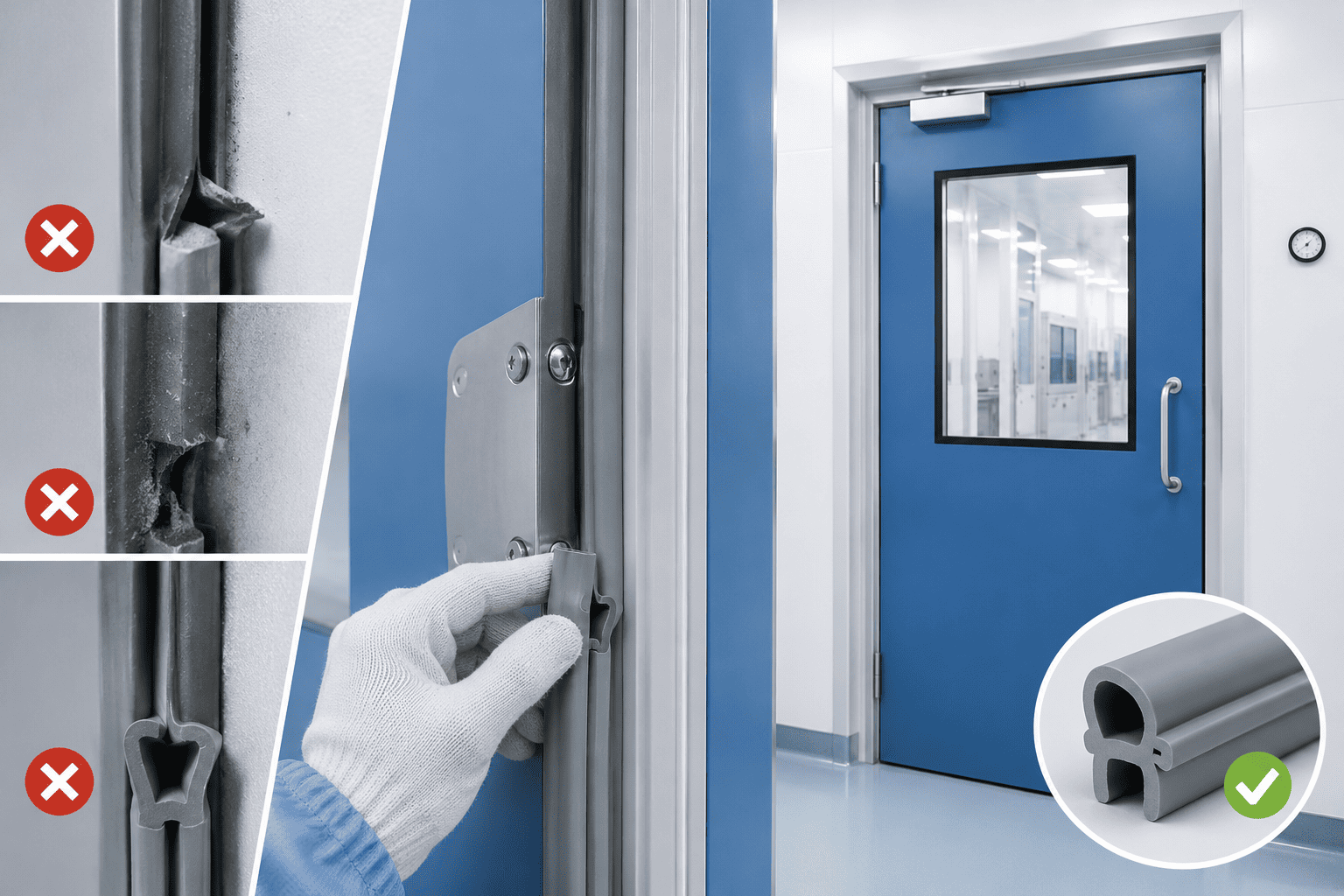
Cleanroom installers play a critical role in protecting cleanroom performance because even a small door seal issue can affect airflow, pressure control, contamination control, and long-term cleanroom reliability. In controlled environments, doors are not just access points. They are part of the cleanroom envelope, and their installation quality can influence how well the room maintains separation between clean and less-clean spaces.
Cleanroom door installation must account for frame alignment, door movement, gasket compression, cleanroom airflow, pressure differential, threshold condition, hardware adjustment, and seal material compatibility. When any of these details are missed, cleanroom door seals may begin to leak, drag, crack, loosen, or fail to compress evenly.
For facilities using ISO cleanrooms, pharmaceutical cleanrooms, medical device cleanrooms, laboratories, semiconductor environments, biotechnology suites, or controlled manufacturing areas, seal failure is more than a maintenance issue. It can allow unwanted air movement, increase particle intrusion risk, make HVAC systems work harder, and create avoidable performance problems.
cleanroom installers
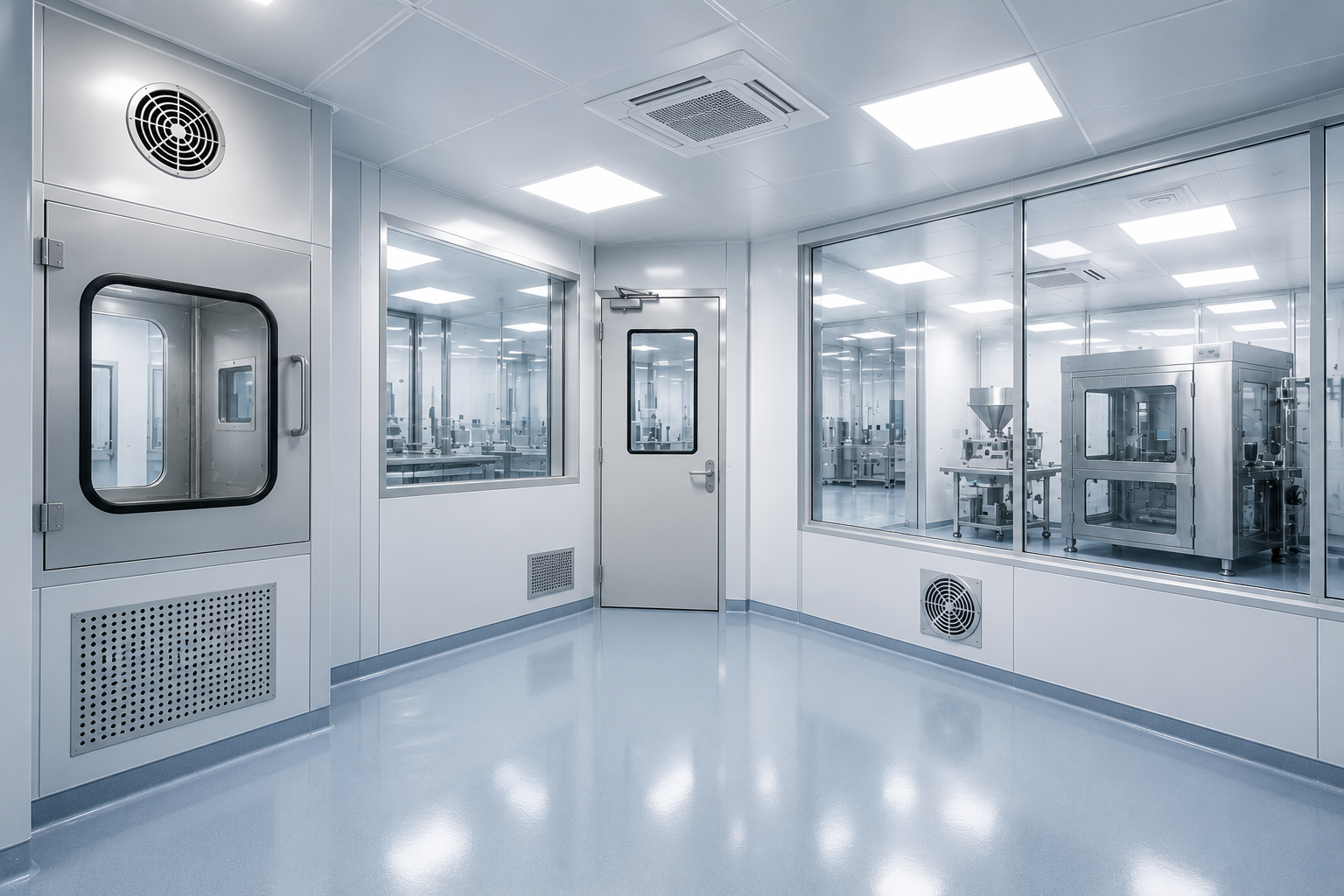
Cleanroom doors help separate controlled spaces from less controlled areas. Their seals help maintain room pressure, reduce particulate ingress, and support contamination control. Cleanroom door specifications often include specialized materials, airtight seals, smooth surfaces, corrosion resistance, and easy-to-clean finishes because the door must support the controlled environment, not weaken it.
The seal around a cleanroom door helps close small gaps between the door leaf, frame, threshold, and surrounding wall system. When that seal works correctly, it supports stable airflow and pressure relationships. When the seal fails, the room may lose pressure faster, allow air leakage at the perimeter, or experience increased contamination risk.
This is why cleanroom installation contractors must treat door installation as a performance detail, not just a hardware task.
The Most Common Causes of Cleanroom Door Seal Failure
Cleanroom door seal failure can happen for several reasons, but many problems begin during installation. A cleanroom door may look properly installed from a distance while still having small alignment or compression issues that create leakage.
Frame Misalignment
Frame misalignment is one of the most common causes of seal failure. If the frame is not level, plumb, square, or properly anchored, the door may not press evenly against the gasket. One side may over-compress while another side leaves a gap.
This type of problem is especially important in cleanroom installation because small gaps can affect pressure stability. Cleanroom door installation guidance commonly points to frame dimensional accuracy, diagonal measurements, and perimeter gap consistency as important checkpoints during troubleshooting.
Cleanroom installers typically check the door frame, wall opening, panel system, and hardware before assuming the seal itself is defective.
Poor Gasket Compression
A cleanroom door gasket must compress enough to create an airtight barrier, but not so much that the material becomes damaged. If the gasket is under-compressed, the seal may not close the gap. If it is over-compressed, the gasket may flatten, lose recovery, or wear out early.
Poor gasket compression can result from the wrong gasket profile, improper frame depth, door sag, uneven hinges, a weak closer, or threshold problems. Cleanroom installation contractors should verify that the seal is making consistent contact around the door perimeter.
Incorrect Seal Material
Seal material matters because cleanrooms are often exposed to frequent cleaning, disinfectants, humidity, temperature changes, and high door-use cycles. If the gasket material does not match the operating environment, it may harden, crack, swell, shrink, or lose elasticity.
Cleanroom door specifications often emphasize durable materials that can resist cleaning chemicals, moisture, corrosion, and repeated use.
The right seal material depends on the cleanroom type, cleaning protocol, chemical exposure, door traffic, and pressure requirements.
Hardware and Hinge Problems
Door hardware directly affects seal performance. Hinges, closers, latches, tracks, handles, interlocks, and automatic operators all influence how the door closes and how the seal compresses.
If a hinge loosens, the door may sag and create a gap at the top or bottom. If a closer is too strong, it may slam the door and damage the seal. If the closer is too weak, the door may not fully latch. If a sliding door track is misaligned, the seal may not meet the frame evenly.
Cleanroom installers should inspect both the door and the hardware system before replacing a gasket.
Threshold and Floor Issues
The bottom of the door is often a weak point. Uneven flooring, damaged thresholds, poor sweep adjustment, or settlement can stop the bottom seal from closing properly. Even a cleanroom door with a good frame and gasket can leak if the floor interface is not correct.
This is why cleanroom door installation should include checking the threshold, floor levelness, bottom sweep, and transition strip. A door that drags on one side but leaks on the other often points to a floor or threshold issue rather than a seal-only problem.
Airflow and Pressure Imbalance
Sometimes a door seal appears to be the problem, but the root issue is pressure imbalance. Cleanrooms rely on controlled airflow and pressure relationships. If the pressure differential is too high, unstable, or poorly balanced, the door may be harder to close or the seal may experience uneven stress.
Cleanroom doors are often designed to support pressure differentials and prevent unwanted air movement between zones. Poorly sealed doors can disrupt airflow and increase particle risk in sensitive environments.
Cleanroom installers should coordinate with HVAC and controls teams when door sealing problems appear during commissioning or operation.
How Cleanroom Installers Diagnose Door Seal Problems
Cleanroom installers should follow a structured process instead of guessing. Seal leakage may come from the gasket, frame, threshold, hardware, wall system, or HVAC pressure conditions.
Visual Inspection
The first step is usually a visual inspection. Installers check whether the door sits evenly in the frame, whether the gasket is cracked or loose, whether the threshold is damaged, and whether the door closes fully.
They may also check for rubbing marks, uneven wear, visible gaps, loose hardware, damaged seals, and signs of repeated impact.
Frame and Gap Measurement
Next, cleanroom installation contractors may measure the frame, diagonals, perimeter gaps, and door clearances. These measurements help identify whether the door was installed squarely and whether the door leaf is aligned with the frame.
If the frame is out of square, replacing the seal may only provide a temporary fix.
Seal Compression Check
A proper seal should compress evenly around the door. Installers may check for inconsistent contact, weak compression, flattened gaskets, separated seams, or missing sections.
Common problems with door sealing strips include cracking, peeling, hardening, compression set, adhesive failure, dirt buildup, and gaps at corners or joints.
Smoke or Airflow Testing
Smoke testing or airflow visualization can help locate leakage points. If smoke pulls through the door perimeter, threshold, corners, or hardware penetrations, the installer can identify where the seal is failing.
This is useful because not all air leaks are visible during a standard inspection.
Pressure Differential Review
If the cleanroom door is part of an airlock, gowning area, production room, or critical cleanroom boundary, pressure differential should also be reviewed. A leaking door can cause pressure instability, but pressure imbalance can also make door performance worse.
A cleanroom door problem should be evaluated as part of the whole controlled environment.
How Cleanroom Installers Fix Door Seal Problems
The right repair depends on the root cause. Cleanroom installers should avoid simply adding more sealant or replacing the gasket without checking alignment, pressure, and hardware.
Realigning the Door Frame
If the frame is misaligned, the installer may need to adjust anchors, correct shimming, reinforce the opening, or reset the frame. This can restore even contact between the door and gasket.
Frame realignment is especially important when the door is installed into modular wall systems or lightweight cleanroom panels. The wall system must support the door without flexing or shifting.
Replacing the Door Gasket
If the gasket is cracked, hardened, flattened, torn, chemically damaged, or no longer recovering after compression, replacement may be necessary. The replacement gasket should match the door design, cleanroom requirements, cleaning protocol, and pressure conditions.
Installers should also pay attention to corners and seams. Poorly finished gasket joints can create small leakage channels.
Adjusting Hinges, Closers, and Latches
Hardware adjustment can often solve sealing problems. Cleanroom installers may adjust hinges, closer speed, latch engagement, strike plate position, automatic operator settings, or sliding door tracks.
The goal is to make the door close smoothly and consistently without slamming, dragging, bouncing, or stopping short of full contact.
Repairing the Threshold or Bottom Seal
If leakage occurs at the bottom of the door, installers may need to adjust the sweep, repair the threshold, correct floor transitions, or replace worn bottom sealing components.
This area should be inspected carefully because foot traffic, carts, cleaning equipment, and floor wear can damage bottom seals over time.
Reviewing HVAC and Pressure Control
If pressure imbalance is causing door problems, cleanroom installation contractors may need to coordinate with HVAC specialists. Adjustments may involve supply air, return air, exhaust, pressure setpoints, interlock timing, or door sequencing.
This is especially important in airlocks, gowning rooms, pass-through areas, and high-traffic cleanroom entries.
Preventing Cleanroom Door Seal Leakage
Preventing seal leakage is easier than fixing recurring failures. Facilities should build door inspections into routine cleanroom maintenance.
Choose the Right Door Type
Cleanroom doors may be manual, automatic, sliding, swing-out, single, double, or bi-parting depending on the space and workflow. Door operation mechanisms can affect contamination risk, air disturbance, cleaning access, and maintenance needs.
The right door type depends on traffic volume, room pressure, product sensitivity, gowning flow, material movement, and available space.
Match Seals to the Environment
Door seals should be compatible with cleaning chemicals, disinfectants, humidity, temperature, door traffic, and pressure conditions. Facilities should avoid using generic sealing strips that are not intended for cleanroom use.
Inspect Seals Regularly
Routine inspections should check for cracks, gaps, compression loss, loose sections, debris, chemical damage, and corner separation. High-traffic cleanroom doors may need more frequent checks than low-use doors.
Keep Door Hardware Maintained
Hinges, closers, tracks, latches, interlocks, and operators should be maintained so the door closes consistently. A good gasket cannot perform correctly if the door does not close properly.
Train Staff on Door Use
Cleanroom personnel should understand that doors are part of contamination control. Propping doors open, forcing doors closed, pushing carts into frames, or ignoring door alarms can shorten seal life and affect cleanroom performance.
Why Cleanroom Door Installation Quality Affects Contamination Control
Cleanroom door installation affects more than the door itself. It influences the room’s ability to maintain controlled conditions.
A poorly installed door can create air leakage paths, disrupt pressure cascade, increase particulate movement, create cleaning challenges, and reduce operational reliability. In sensitive environments, cleanroom doors act as barriers between sterile or controlled zones and less controlled spaces. Airtight construction helps maintain pressure differentials and limits unwanted air movement.
This is why facilities should work with cleanroom installation contractors who understand the full system, including walls, doors, HVAC, airflow, pressure, utilities, and cleanroom operations.
What to Ask Cleanroom Installation Contractors Before Hiring
Before hiring cleanroom installers, facilities should ask practical questions that reveal whether the contractor understands cleanroom performance.
Ask whether they have experience with ISO cleanrooms, controlled environments, cleanroom door installation, modular cleanroom systems, cleanroom wall systems, and pressure-controlled spaces. Ask how they check frame alignment, gasket compression, threshold conditions, hardware operation, and seal performance.
Facilities should also ask whether the contractor coordinates with HVAC and validation teams. A cleanroom door issue may be part of a larger pressure or airflow problem, so installation contractors should know when to involve other specialists.
Local Cleanroom Installation Support in Suwanee, GA
Facilities in Suwanee, GA and the surrounding Atlanta metro area may benefit from local cleanroom installation support because door seal problems often require site evaluation. Cleanroom installers may need to inspect the door, wall system, threshold, HVAC conditions, and room pressure before recommending a repair.
Local support can also help with cleanroom installation projects, cleanroom maintenance, cleanroom repair, modular cleanroom installation, and future cleanroom upgrades.
Ready to Improve Cleanroom Door Installation and Seal Performance?
Cleanroom door seal failure is usually not caused by one issue alone. It may involve frame alignment, gasket compression, hardware adjustment, threshold conditions, seal material, airflow direction, or room pressure. The best cleanroom installers evaluate the full system before recommending repairs.
UltraPure Technology supports cleanroom installation, cleanroom construction, cleanroom design and build, modular cleanroom systems, and controlled environment solutions for facilities in Suwanee, GA and surrounding markets. If your facility is dealing with cleanroom door seal leakage, installation concerns, or cleanroom performance issues, UltraPure Technology can help evaluate the project and support a cleaner, more reliable controlled environment.
Contact UltraPure Technology to discuss your cleanroom installation needs and learn how proper planning can support contamination control, pressure stability, and long-term cleanroom performance.
FAQs About Cleanroom Door Installation and Seal Failure
What is the most common cause of cleanroom door seal failure?
The most common cause is usually poor alignment between the door, frame, gasket, and threshold. If the frame is out of square or the door does not close evenly, the seal may over-compress in one area and leave gaps in another. Hardware wear, pressure imbalance, and gasket aging can also contribute.
How can cleanroom installers prevent seal leakage?
Cleanroom installers prevent seal leakage by checking frame alignment, gasket compression, threshold condition, hinge position, closer adjustment, and pressure differential. They should also select seal materials that match the cleanroom’s cleaning chemicals, traffic level, humidity, temperature, and contamination control requirements.
How do you fix a cleanroom door that is not sealing properly?
The fix depends on the cause. Cleanroom installation contractors may realign the frame, replace the gasket, adjust hinges or closers, repair the threshold, recalibrate sliding door tracks, or review room pressure. A proper inspection should happen before any repair is made.
What are common problems with cleanroom door sealing strips?
Common problems include cracking, hardening, peeling, flattening, compression loss, poor corner joints, adhesive failure, and dirt buildup. Sealing strips can also fail when they are exposed to incompatible cleaning chemicals or when the door hardware causes uneven pressure on the gasket.
Why are cleanroom door seals important for contamination control?
Cleanroom door seals help limit unwanted air movement between controlled and less controlled areas. When seals fail, particles and contaminants may move through gaps around the door. Good sealing supports room pressure, airflow control, and cleanroom performance.
How do cleanroom installers test whether a door seal is working?
Installers may use visual inspection, perimeter gap checks, compression checks, smoke testing, airflow testing, pressure differential review, or other leak detection methods. The goal is to confirm that the door closes evenly and supports the cleanroom’s pressure and contamination control needs.
Can poor cleanroom door installation affect room pressure?
Yes. A poorly installed cleanroom door can create leakage paths that make it harder to maintain pressure differentials. This can affect airflow direction, contamination control, HVAC performance, and the stability of the controlled environment.
When should cleanroom door gaskets be replaced?
Cleanroom door gaskets should be replaced when they become cracked, hardened, flattened, torn, loose, chemically damaged, or unable to compress evenly. High-traffic doors or doors exposed to frequent cleaning may need more frequent inspection and replacement.
What is the difference between standard cleanroom door seals and inflatable door seals?
Standard cleanroom door seals rely on compression between the door and frame. Inflatable door seals expand to create a tighter seal when activated. Inflatable seals may be used in areas requiring stronger airtightness, but they must be installed, maintained, and inspected carefully.
What should facilities ask cleanroom installation contractors before hiring them?
Facilities should ask about experience with cleanroom installation, ISO cleanrooms, door seal repair, pressure-controlled spaces, modular wall systems, and HVAC coordination. They should also ask how the contractor diagnoses seal leakage and what documentation or testing support is provided.