
Cleanroom construction is changing quickly as more manufacturers compare modular cleanroom systems with traditional builds. In 2026, facilities need cleaner, faster, more flexible, and more scalable environments without unnecessary disruption to production schedules or existing operations.
For companies in pharmaceutical manufacturing, medical device production, biotechnology, microelectronics, semiconductor work, aerospace, and advanced manufacturing, cleanroom projects are no longer judged only by the final room. They are judged by how efficiently the space can be planned, installed, tested, maintained, modified, and expanded over time.
That shift is one reason modular cleanroom construction is gaining momentum. While traditional cleanroom construction still has a place, modular cleanrooms can help many facilities reduce construction timelines, improve installation predictability, support future expansion, and adapt to changing production needs.
For manufacturers in Suwanee, GA, Atlanta metro, and the Southeast, choosing the right cleanroom construction company is not only about selecting modular or traditional construction. It is about finding a cleanroom design and build partner that understands ISO cleanrooms, controlled environments, cleanroom HVAC, contamination control, validation planning, and long-term facility performance.
Why Cleanroom Construction Needs Are Changing in 2026
Modern cleanroom projects are under more pressure than ever. Facilities need to launch products faster, expand capacity sooner, reduce downtime, and meet strict industry requirements. At the same time, many companies are working inside existing buildings where traditional construction may create disruption, dust, debris, scheduling conflicts, and longer installation windows.
Traditional cleanroom construction can work well for some facilities, especially when the layout is permanent and the building is designed around the cleanroom from the beginning. However, many companies now need cleanroom construction methods that support speed, flexibility, and future changes.
Modular cleanroom construction answers many of those needs because it uses pre-engineered components, modular wall systems, ceiling systems, doors, windows, and cleanroom-compatible finishes that can be assembled more efficiently on-site.
Traditional Builds Can Create Longer Project Timelines
Traditional cleanroom construction often follows a more sequential process. Framing, drywall, finishing, utility coordination, HVAC installation, sealing, flooring, cleaning, and testing usually happen step by step. This can extend the cleanroom construction timeline, especially when multiple trades must work in the same space.
Traditional construction can also create more site disruption. Cutting, sanding, painting, finishing, and heavy on-site work may add dust, debris, and coordination challenges. In active manufacturing environments, this can make project planning more complicated.
This does not mean traditional cleanroom construction is outdated. It simply means that facilities should compare traditional methods with modular cleanroom construction before committing to one approach.
Modular Cleanroom Construction Supports Faster Deployment
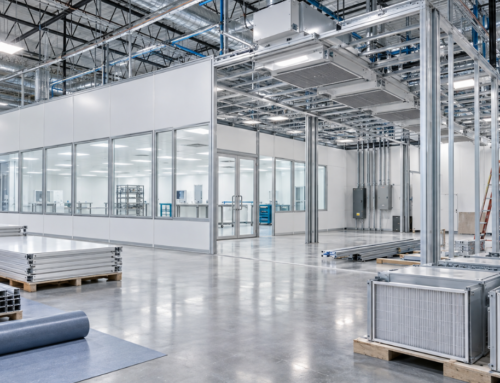
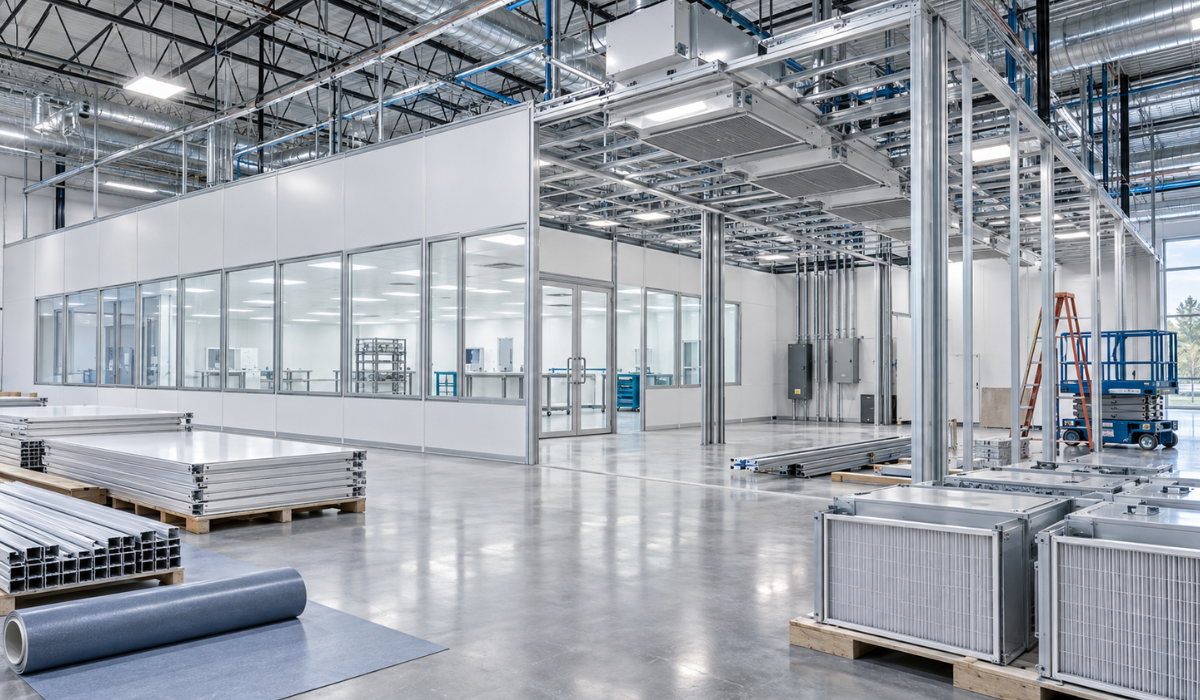
Modular cleanroom construction can shorten project timelines because many components are manufactured off-site while the facility is being prepared. This allows site preparation and cleanroom system production to happen at the same time instead of waiting for each stage to finish before the next begins.
Once the facility is ready, modular wall systems, ceiling systems, doors, windows, and other cleanroom components can be installed more efficiently. This can be especially valuable for manufacturers that need faster facility expansion, new production space, or controlled environments without long construction delays.
For companies that must keep operations moving, modular cleanroom installation can also reduce disruption compared with some traditional builds.
Modular Cleanroom Construction vs Traditional Cleanroom Construction
Choosing between modular and traditional cleanroom construction depends on the facility, industry, process, ISO classification, timeline, budget, and long-term production goals. The best cleanroom construction company should not force one method. It should help evaluate which approach best fits the project.
Traditional Cleanroom Construction
Traditional cleanroom construction typically uses fixed building methods, such as permanent framing, drywall or hardwall assemblies, site-built finishes, and fully integrated building systems. This approach can be appropriate when the cleanroom layout is unlikely to change and the facility requires permanent structural integration.
Traditional builds may make sense for:
- New facilities designed around the cleanroom from the beginning
- Highly customized spaces with unusual structural needs
- Long-term layouts that are unlikely to change
- Projects with complex building integration requirements
- Facilities where permanent construction is preferred
However, traditional cleanroom construction may involve longer timelines, more site labor, more disruption, and less flexibility if production needs change later.
Modular Cleanroom Construction
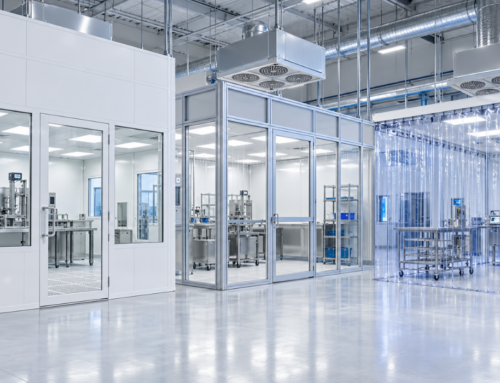
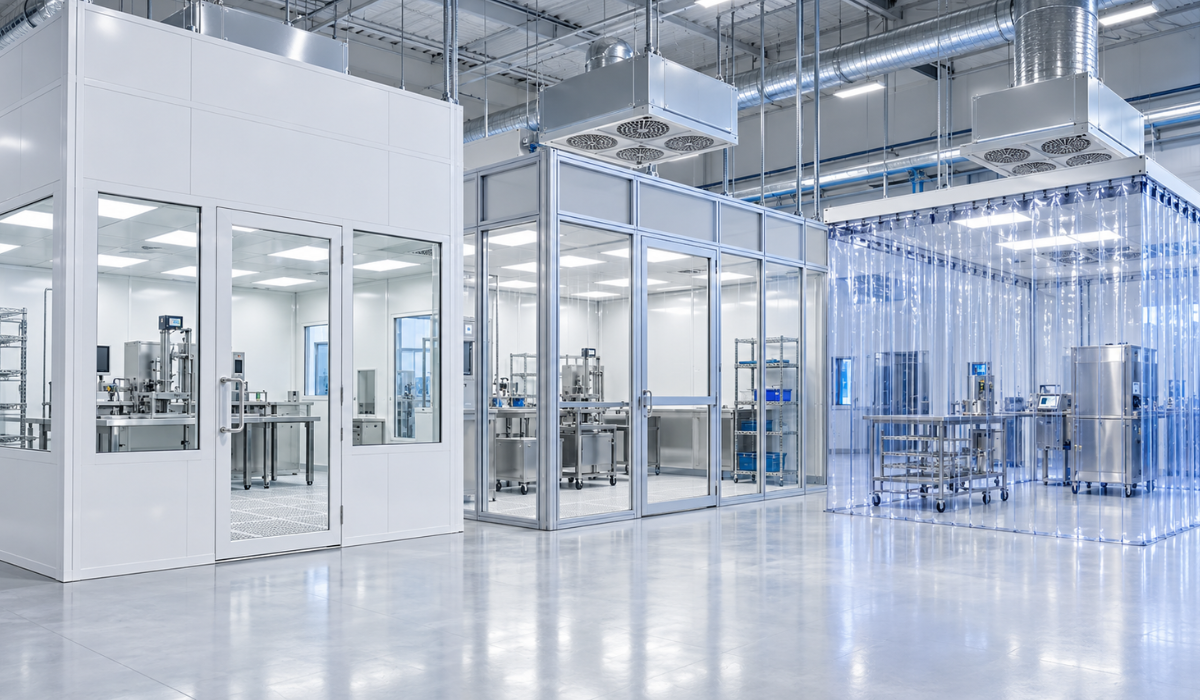
Modular cleanroom construction uses pre-engineered wall panels, ceiling systems, doors, windows, and other components designed for cleanroom environments. These systems are built to support clean installation, controlled finishes, and future flexibility.
Modular cleanrooms may be used for ISO class cleanrooms, controlled environments, production suites, laboratories, packaging areas, assembly spaces, and support rooms. They can be configured for different cleanroom classifications, airflow needs, pressure relationships, and industry requirements.
Modular cleanroom construction may be a strong option when a facility needs:
- Faster installation
- Reduced disruption
- Future expansion options
- Reconfiguration flexibility
- Cleaner installation conditions
- Predictable panel and surface quality
- Scalable cleanroom design
- Controlled environment upgrades
Prefabricated vs Modular Cleanrooms
Prefabricated and modular cleanrooms are related, but they are not always the same. Prefabricated cleanrooms use factory-built components that are assembled on-site. Modular cleanrooms also use pre-engineered components, but they are usually designed with greater flexibility for reconfiguration, expansion, relocation, or phased growth.
In simple terms, many modular cleanrooms use prefabricated components, but not every prefabricated cleanroom is truly modular. A cleanroom construction company should explain whether the system can be expanded, modified, relocated, or adapted as production needs change.
This distinction matters because some facilities need a fast installation, while others need long-term flexibility. Modular cleanroom systems are often selected when both speed and adaptability are important.
Why Modular Cleanroom Construction Is Outpacing Traditional Builds
Modular cleanroom construction is not growing because it is trendy. It is growing because many facilities need practical advantages that traditional builds do not always provide as easily.
Faster Cleanroom Construction Timeline
Speed is one of the biggest reasons manufacturers consider modular cleanroom construction. Since many components are produced off-site, project teams can often reduce the amount of work required inside the facility.
A shorter cleanroom construction timeline can help companies begin production sooner, reduce downtime, and respond faster to new product demand. This is especially important for pharmaceutical, medical device, biotech, electronics, and advanced manufacturing facilities where delays can affect production schedules.
Less Disruption to Active Facilities
Many cleanroom projects happen inside existing buildings. These projects require careful planning because construction activity can interfere with production, warehousing, personnel movement, utilities, and facility operations.
Modular cleanroom installation can reduce some of that disruption by limiting the amount of messy site-built work. Because wall and ceiling systems are manufactured in advance, there may be less cutting, sanding, painting, and finishing inside the facility.
For brownfield projects, active manufacturing spaces, R&D labs, and production expansions, this can be a major advantage.
Better Scalability for Growing Operations
Production needs change. A company may start with one cleanroom and later need more space, higher capacity, new equipment, or a different workflow. Traditional construction can make future modifications more difficult, especially when walls, utilities, and finishes are fully permanent.
Modular cleanroom systems are often easier to expand or reconfigure. Panels, doors, windows, and components may be adjusted more efficiently than traditional construction in many applications.
This flexibility is especially useful for companies planning growth, new product lines, pilot production, or phased facility expansion.
Cleaner Installation Process
Cleanroom construction must be managed carefully because construction activity can create contamination. Traditional construction often involves more on-site cutting, sanding, painting, and finishing. These activities can create dust and debris that must be controlled before the cleanroom can be tested and used.
Modular cleanroom construction can support a cleaner installation process because many components arrive ready for assembly. This can help reduce construction-related contamination concerns and simplify final cleaning before certification or validation support.
More Predictable Material Quality
Factory-manufactured modular cleanroom components can provide consistent quality across wall systems, ceiling systems, doors, panels, and finishes. This consistency can support cleanability, durability, sealing, and long-term performance.
In regulated or contamination-sensitive facilities, predictable material quality matters. Surfaces must be cleanable, non-shedding, durable, and compatible with the intended use of the cleanroom.
Where Traditional Cleanroom Construction Still Makes Sense
Although modular cleanroom construction offers many advantages, traditional construction is still useful for certain projects. A balanced cleanroom construction strategy should compare both methods.
Stable Long-Term Layouts
Traditional construction may be suitable when the cleanroom layout is permanent and unlikely to change. If the equipment, workflow, room size, and production process are fixed for the long term, traditional construction may be a reasonable option.
This is common in purpose-built facilities where the cleanroom is part of the original building design.
Complex Structural Integration
Some projects require deeper integration with the building structure. If a cleanroom must connect with complex utilities, specialized architectural conditions, heavy equipment, or unique structural requirements, traditional construction may still be necessary for some portions of the project.
The right cleanroom builder should evaluate the building, process, and technical needs before recommending modular, traditional, or hybrid construction.
Hybrid Cleanroom Construction Approaches
Some facilities benefit from a hybrid approach. For example, a project may use modular cleanroom systems for production areas while relying on traditional construction for support spaces, utility areas, or structural modifications.
Hybrid cleanroom construction can balance speed, flexibility, customization, and long-term performance. This is why working with a cleanroom design and build provider is valuable. The provider can recommend the right mix of construction methods instead of treating every project the same way.
Key Design Factors in Modular Cleanroom Construction
Modular cleanroom construction must still meet the same performance expectations as any other cleanroom. A modular approach does not remove the need for ISO classification, cleanroom HVAC planning, filtration, pressure control, contamination control, and validation support.
Required ISO Classification
The required ISO classification should be defined early. ISO class cleanrooms have different particle control requirements, and those requirements influence filtration, airflow, air changes per hour, room pressure, materials, and monitoring.
A cleanroom construction company should help determine whether the project requires ISO 8, ISO 7, ISO 6, ISO 5, or another level of control based on industry, product, process, and contamination risk.
Cleanroom HVAC and Filtration
Cleanroom HVAC is one of the most important systems in modular cleanroom construction. It affects airflow, particle control, temperature, humidity, pressure, operator comfort, and energy use.
Important HVAC and filtration considerations include:
- HEPA or ULPA filtration
- Air changes per hour
- Return air placement
- Supply air distribution
- Airflow direction
- Room pressure
- Heat load from equipment
- Temperature and humidity requirements
- Maintenance access
A modular cleanroom must be designed so HVAC and filtration systems work with the room layout, not against it.
Pressure Cascade and Room Relationships
Pressure cascade helps control airflow between clean and less-clean areas. In many cleanroom designs, cleaner spaces are kept at higher pressure than adjacent lower-cleanliness spaces. This helps reduce the movement of contaminants into critical areas.
Room relationships should be planned before construction begins. Gowning rooms, pass-throughs, airlocks, doors, production rooms, and support spaces all affect pressure control.
Cleanroom Wall and Ceiling Systems
Modular wall and ceiling systems should support cleanability, durability, sealing, and future access. Panels should be selected based on ISO classification, cleaning methods, chemical exposure, fire rating needs, and facility use.
A cleanroom construction company should also evaluate seams, joints, penetrations, access panels, ceiling grid systems, and transition details. Poor installation can create cleaning challenges or performance issues.
Cleanroom Flooring and Surface Selection
Flooring must support cleanroom operations. It should be durable, cleanable, and compatible with traffic, equipment, cleaning chemicals, and contamination control goals.
Depending on the application, cleanroom flooring may need to support static control, chemical resistance, seamless finishes, coved edges, or heavy equipment loads. Surface selection should be part of early cleanroom project planning.
Utilities, Equipment, and Monitoring Integration
Cleanrooms often require electrical service, compressed air, process utilities, data connections, lighting, monitoring sensors, alarms, and equipment connections. These items should be integrated into the cleanroom design before panels and systems are installed.
A modular cleanroom construction project should also consider equipment layout and maintenance access. Poor utility planning can lead to field changes, delays, or difficult maintenance after the cleanroom is operational.
Industries Benefiting from Modular Cleanroom Construction in 2026
Modular cleanroom construction is useful across many industries that require controlled environments.
Pharmaceutical Cleanrooms
Pharmaceutical cleanrooms require strong contamination control, cleanable surfaces, controlled airflow, and attention to GMP expectations. Modular cleanroom systems can help pharmaceutical facilities expand or adapt production areas while maintaining focus on cleanroom compliance.
Medical Device Cleanrooms
Medical device cleanrooms may support assembly, packaging, inspection, testing, or controlled manufacturing. Modular cleanroom construction can help medical device manufacturers add ISO class cleanrooms faster while planning for workflow, validation, and future growth.
Biotechnology Cleanrooms
Biotechnology companies often need flexible spaces for research, development, pilot production, or scale-up. Modular cleanroom systems can support changing process needs and future expansion without requiring a fully permanent layout from the start.
Microelectronics and Semiconductor Cleanrooms
Microelectronics and semiconductor facilities are highly sensitive to airborne particles. Cleanroom airflow, filtration, pressure control, and surface quality are critical. Modular cleanroom construction can support controlled environments for precision manufacturing and testing.
Aerospace and Advanced Manufacturing Cleanrooms
Aerospace and advanced manufacturing cleanrooms may support clean assembly, component production, optics, sensitive materials, and precision processes. Modular systems can provide controlled environments that support production quality while allowing facility adaptation over time.
What to Ask Before Hiring a Cleanroom Construction Company
Before choosing a cleanroom construction company, manufacturers should ask questions that reveal whether the provider understands both construction and cleanroom performance.
Do You Provide Cleanroom Design and Build Support?
A cleanroom project requires coordination between design, construction, HVAC, utilities, equipment, certification, and operations. Working with a cleanroom design and build provider can reduce gaps between project phases.
A design-build approach can help align the cleanroom layout, materials, airflow, filtration, pressure control, and construction details from the beginning.
Can You Build Modular and Traditional Cleanrooms?
A strong cleanroom builder should be able to explain when modular cleanroom construction makes sense and when traditional construction may be better. If a provider only promotes one method, the recommendation may not fully match the facility’s needs.
The best cleanroom construction company should evaluate the project first, then recommend modular, traditional, or hybrid construction based on the application.
How Do You Plan for ISO Compliance and Validation?
Cleanroom compliance should be planned before installation begins. The project should account for ISO classification, testing requirements, documentation, monitoring, cleanroom validation, and certification support.
Ask how the cleanroom contractor plans for particle testing, airflow testing, pressure testing, filter integrity testing, temperature and humidity monitoring, and final documentation.
How Do You Coordinate HVAC, Filtration, and Utilities?
HVAC, filtration, and utilities must be coordinated early. If these systems are treated as afterthoughts, the cleanroom may not perform properly or may require costly changes later.
Ask how the cleanroom construction company coordinates mechanical systems, electrical connections, process utilities, compressed air, environmental monitoring, and equipment placement.
What Is the Expected Cleanroom Construction Timeline?
The cleanroom construction timeline depends on room size, ISO classification, modular system availability, site readiness, utilities, equipment, industry requirements, and testing needs.
Modular cleanroom construction may shorten timelines in many cases, but the final schedule still depends on planning, approvals, material lead times, installation complexity, and validation requirements.
Why Local Project Support Matters in Suwanee, GA
Cleanroom construction requires planning, communication, and coordination. For manufacturers in Suwanee, GA, Atlanta metro, and the Southeast, working with a regional cleanroom construction company can support smoother site evaluation, project meetings, field coordination, installation oversight, and long-term service.
Faster Site Coordination and Communication
Local project support can help reduce delays during planning and construction. Site visits, design reviews, field coordination, and issue resolution may be easier when the cleanroom company understands the regional market and can support the project directly.
Cleanroom Construction Company Near Atlanta, GA
Manufacturers searching for a cleanroom construction company near Atlanta, GA should look for more than proximity. They should evaluate experience, cleanroom design and build capabilities, modular cleanroom systems, ISO cleanroom knowledge, controlled environment expertise, and project execution.
For regulated industries, local support should be paired with technical depth.
Ultrapure Technology’s Role in Modular Cleanroom Construction
Ultrapure Technology provides cleanroom construction, cleanroom design and build, modular cleanroom systems, custom modular cleanrooms, ISO class cleanrooms, and controlled environment solutions. Based in Suwanee, GA, Ultrapure Technology supports manufacturers that need cleanroom project planning, installation, and performance-focused cleanroom construction.
For companies comparing modular and traditional builds, Ultrapure Technology can help evaluate the right path based on ISO classification, industry requirements, facility conditions, timeline, scalability, and contamination control needs.
Ready to Plan a Modular Cleanroom Construction Project?
Modular cleanroom construction is outpacing traditional builds because many manufacturers need faster timelines, cleaner installation, reduced disruption, and greater flexibility. However, the best construction method depends on the facility, process, ISO class, compliance expectations, and long-term growth plans.
Ultrapure Technology helps manufacturers plan cleanroom construction projects that support controlled environments, ISO cleanrooms, modular cleanroom systems, and industry-specific production needs. Whether your project requires modular cleanroom construction, traditional construction, or a hybrid approach, the right planning can improve performance from day one.
Contact Ultrapure Technology to discuss your cleanroom construction project in Suwanee, GA, Atlanta metro, or the surrounding Southeast region.
FAQs About Modular Cleanroom Construction
What is modular cleanroom construction?
Modular cleanroom construction uses pre-engineered wall panels, ceiling systems, doors, windows, and cleanroom-compatible components to create controlled environments. These systems are designed for efficient installation, cleanable surfaces, and future flexibility. Modular cleanrooms can support many ISO class cleanroom applications when properly designed and installed.
How is modular cleanroom construction different from traditional cleanroom construction?
Traditional cleanroom construction usually relies on more permanent site-built methods, while modular cleanroom construction uses pre-engineered components assembled on-site. Modular systems often support faster installation, less disruption, and easier future expansion. Traditional builds may still be useful for highly permanent or structurally complex projects.
Why is modular cleanroom construction faster?
Modular cleanroom construction can be faster because many components are manufactured off-site while site preparation happens at the facility. This reduces the amount of on-site construction work and can shorten installation time. The final timeline still depends on size, ISO classification, utilities, HVAC, and validation requirements.
Can modular cleanrooms meet ISO standards?
Yes, modular cleanrooms can meet ISO standards when designed around the required classification, airflow, filtration, pressure control, and testing requirements. The cleanroom construction company should evaluate the process, contamination risk, and industry needs before designing the modular system.
Is modular cleanroom construction suitable for regulated industries?
Modular cleanroom construction can be suitable for regulated industries such as pharmaceutical, medical device, biotechnology, microelectronics, semiconductor, aerospace, and advanced manufacturing. The key is proper design, documentation, cleanroom HVAC coordination, contamination control, and validation planning.
What industries benefit most from modular cleanroom construction?
Industries that need controlled environments, faster facility expansion, and flexible layouts often benefit from modular cleanroom construction. This includes pharmaceutical manufacturing, medical device production, biotechnology, electronics, semiconductor, aerospace, and precision manufacturing facilities.
How long does modular cleanroom construction take?
The timeline depends on cleanroom size, ISO classification, utility needs, HVAC complexity, material availability, site readiness, and certification requirements. Modular construction may reduce the overall schedule because components can be fabricated off-site while the facility is prepared.
Is modular cleanroom construction more flexible than traditional construction?
Yes, modular cleanroom systems are often more flexible because panels, doors, windows, and room layouts can be modified or expanded more easily than many traditional builds. This can help facilities adapt to new processes, equipment, production volume, or future cleanroom requirements.
What should I ask before hiring a cleanroom construction company?
Ask whether the company provides cleanroom design and build support, modular and traditional options, ISO classification guidance, HVAC coordination, validation planning, documentation, and post-installation support. You should also ask about experience in your industry and ability to support future expansion.
Can modular cleanroom systems be expanded later?
Many modular cleanroom systems can be expanded or reconfigured later when they are designed with future growth in mind. Expansion planning should consider airflow, pressure cascade, utilities, monitoring, equipment layout, and certification requirements before the original cleanroom is built.