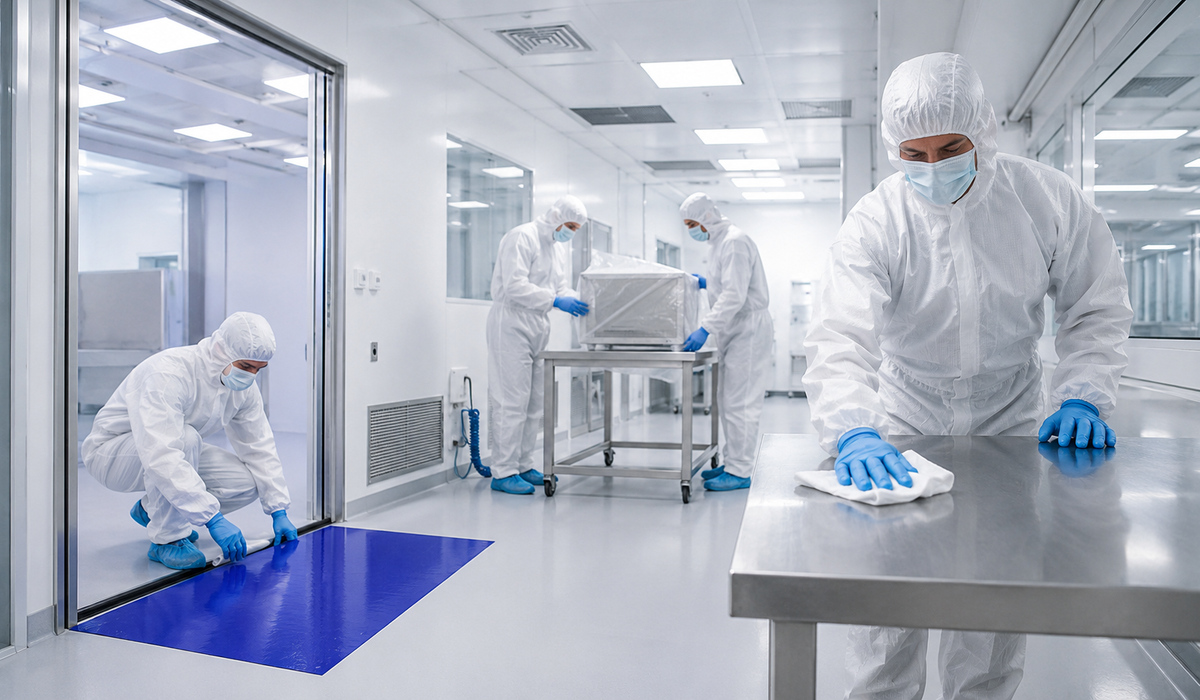
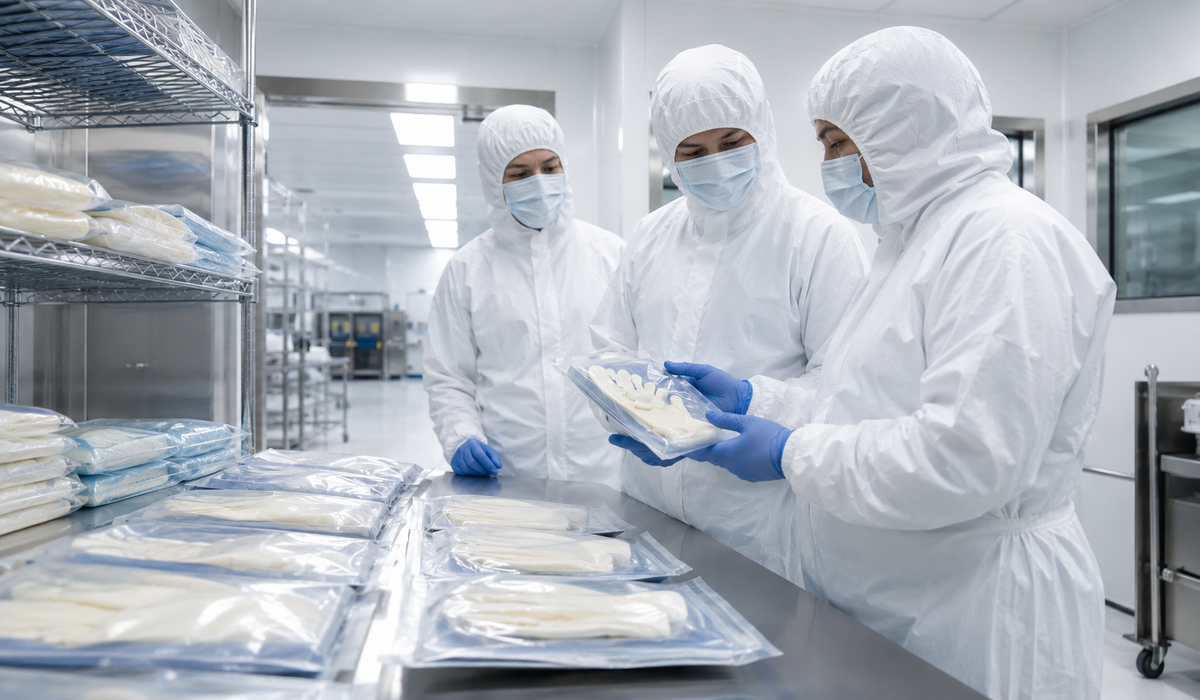
Gloves may look like a small part of cleanroom operations, but they play an important role in contamination control.
In pharmaceutical facilities, biotech labs, electronics manufacturing spaces, healthcare environments, and industrial cleanrooms, hands can transfer particles, microbes, oils, residues, and chemicals into sensitive areas.
That is why glove selection should not be treated as a simple purchasing decision.
Facilities in Suwanee, GA need more than gloves alone. They need a cleanroom environment designed to support proper PPE use, safe workflows, hand hygiene, material movement, and contamination control.
Expert cleanroom construction companies help businesses understand how glove use fits into the larger cleanroom construction process.
Cleanroom construction companies help facilities select and use cleanroom gloves more effectively by planning gowning areas, PPE storage, workflow paths, hand hygiene stations, material transfer zones, and contamination control procedures.
This ensures gloves support the cleanroom’s design, classification, process requirements, and long-term cleanliness goals.
Why Gloves Matter in Cleanroom Contamination Control
Gloves matter in cleanroom contamination control because workers are one of the most common sources of contamination.
Even when employees follow proper procedures, hands can transfer skin particles, oils, moisture, microorganisms, residues, and chemical traces onto surfaces, tools, products, or equipment.
Cleanroom gloves create a protective barrier between the worker and the controlled process.
In sensitive environments, this barrier helps reduce the chance of contamination moving from the operator to the product or from one surface to another.
This is especially important for facilities that handle pharmaceuticals, medical devices, biotechnology samples, electronics, precision parts, or laboratory materials.
Cleanroom gloves are not only about worker protection. They are also about product protection and process protection.
A glove that works well in a general workplace may not be appropriate for a controlled environment if it sheds particles, contains powder, lacks chemical compatibility, or is packaged in a way that introduces contamination.
For Suwanee, GA facilities, this is why glove selection should be connected to cleanroom planning.
The right glove needs to match the cleanroom process, industry requirements, operator tasks, and contamination risks inside the room.
How Cleanroom Construction Companies Support Better PPE Planning

Cleanroom construction companies support better PPE planning by designing spaces that make proper glove use easier to follow.
A cleanroom may require gloves, gowns, masks, shoe covers, sleeve covers, hair covers, or other protective equipment depending on its use and classification.
However, PPE works best when the facility layout supports the correct process.
A cleanroom construction team can help plan where workers put on gloves, where gloves are stored, where hand hygiene takes place, and how employees move from less controlled areas into cleaner spaces.
These details affect how consistently staff can follow gowning procedures.
For example, if gloves are stored too far from the gowning area, workers may handle other surfaces before putting them on.
If hand hygiene stations are poorly located, workers may skip or rush an important step.
If material transfer areas are not planned correctly, gloves may become contaminated while handling packaging, carts, or supplies.
Experienced cleanroom companies look at the full workflow. They consider how people enter, how PPE is used, how materials are transferred, how waste exits, and how the room is cleaned.
This makes gloves part of a larger contamination control system instead of a separate purchasing issue.
What Makes Cleanroom Gloves Different from Standard Gloves
Cleanroom gloves are different from standard gloves because they are made, processed, cleaned, and packaged for controlled environments.
A standard glove may protect hands in a general setting, but it may not be suitable for a cleanroom if it releases particles, contains powder, or introduces unwanted residues.
Cleanroom nitrile gloves are commonly used because nitrile is latex-free, durable, and resistant to many chemicals.
Nitrile can also provide good puncture resistance and flexibility for tasks that require both protection and hand movement.
For many cleanroom applications, powder-free gloves are important because glove powder can introduce particles into the environment.
Cleanroom gloves may also be selected based on sterility.
Some applications may use clean non-sterile gloves when particle control is the primary concern.
Other applications may need sterile gloves for aseptic processes, pharmaceutical work, sterile compounding, or sensitive biomedical tasks.
Packaging also matters. Cleanroom gloves may be packaged to support cleaner transfer into controlled areas.
This can include cleanroom-compatible packaging, double-bagging, or other packaging formats that reduce contamination risk during entry and storage.
The right glove depends on the process.
A facility should consider cleanliness level, sterility needs, chemical exposure, ESD requirements, glove thickness, grip, comfort, and how often gloves must be changed.
Why Cleanroom Design Affects Proper Glove Use
Cleanroom design affects proper glove use because the room layout determines how workers prepare, move, and perform tasks.
A glove can only support contamination control if it is used correctly within a controlled workflow.
Cleanroom design and construction decisions influence gowning procedures, material transfer, equipment placement, storage, cleaning access, and worker movement.
If these areas are not planned well, employees may unintentionally contaminate gloves before reaching critical work zones.
For example, a facility may need a gowning room where workers can wash or sanitize hands, put on PPE in the right order, and enter the cleanroom through a controlled path.
If the gowning area is too small or poorly organized, workers may touch walls, benches, packaging, or other items after gloving.
This increases contamination risk. Material transfer points also affect glove use.
Workers may need to handle supplies, samples, tools, or packaging before entering the main cleanroom.
Cleanroom construction companies can help design transfer areas that reduce unnecessary contact and support cleaner movement.
The goal is to create a layout where glove use is practical, repeatable, and aligned with the cleanroom’s contamination control plan.
Good cleanroom design does not only tell workers what to do. It makes the correct process easier to follow.
How Modular Cleanroom Construction Supports PPE Workflows
Modular cleanroom construction can support PPE workflows by creating controlled zones with flexible, efficient layouts.
For facilities in Suwanee, GA, modular systems can help build cleanroom spaces that include gowning areas, storage zones, transfer spaces, and clean transitions.
Because modular components are often prefabricated, they can reduce the amount of field construction required on-site.
This may help limit dust generation, disruption, and installation time compared with more intensive traditional construction methods.
For PPE planning, modular cleanroom construction can be especially useful when a facility needs a cleanroom layout that supports specific worker movement.
Modular wall systems, doors, pass-throughs, windows, and partitions can help define clear zones for changing staging, storage, and controlled access.
This matters because glove use depends on sequence. Workers may need to wash or sanitize hands, put on gowning items, apply gloves, inspect PPE, and then enter the cleanroom without touching uncontrolled surfaces.
A modular layout can be planned around this sequence.
Modular cleanroom construction can also support future adjustments.
If a facility’s process changes, the cleanroom may need modified access points, additional gowning space, or improved material handling areas.
A cleanroom company with modular experience can help plan for those needs without losing focus on contamination control.
What Cleanroom Companies Review Before PPE Procedures Are Set
Cleanroom companies review several factors before PPE procedures are set.
They do not look at gloves in isolation. They consider the cleanroom classification, industry, process sensitivity, worker tasks, chemical exposure, equipment use, material flow, and contamination risks.
A pharmaceutical cleanroom may require different glove procedures than an electronics assembly cleanroom.
A sterile compounding environment may have different requirements than a research laboratory.
A facility handling chemicals may need gloves with stronger chemical resistance.
A microelectronics facility may need gloves that support electrostatic discharge control.
The cleanroom classification also matters.
A cleaner environment usually requires tighter control over gowning, glove changes, packaging entry, and worker movement.
The more sensitive the process, the more important it becomes to match PPE procedures to the room’s contamination control strategy.
Cleanroom companies may also consider how long workers wear gloves, how often gloves need to be changed, whether double gloving is needed, and where used gloves should be discarded.
These details affect both cleanliness and daily efficiency. The best PPE plan is not just strict.
It should be realistic for the people who work in the cleanroom every day.
When procedures are practical and aligned with the room design, workers are more likely to follow them consistently.
How a Cleanroom Company Helps Reduce Contamination Risks
A cleanroom company helps reduce contamination risks by connecting design, construction, PPE use, airflow, pressure control, and cleaning procedures into one system.
Gloves are only one part of that system. The cleanroom itself must be designed to control how contaminants enter, move, and leave the space.
- Airflow helps manage airborne particles.
- Filtration helps remove particles from supplied air.
- Pressure control helps prevent less clean air from entering cleaner zones.
- Cleanable surfaces help reduce particle buildup and make cleaning more effective.
- Properly located gowning areas help workers enter the room with less risk.
A cleanroom company can also support contamination control by helping facilities plan storage, pass-throughs, waste handling, equipment placement, and worker routes.
Each of these details affects how gloves and other PPE are used.
If the room layout forces workers to touch doors, carts, cabinets, or packaging after putting on gloves, contamination control becomes harder.
If PPE storage is not protected, gloves may be compromised before use.
If waste disposal is poorly located, workers may carry used PPE through clean zones unnecessarily.
Cleanroom construction companies help identify these risks during planning, so the final space supports cleaner operations.
Common Glove Selection Factors for Cleanroom Environments
Facilities should consider several factors before buying cleanroom gloves because each cleanroom has different contamination risks, worker tasks, and process requirements.
The right glove should support cleanliness, protection, comfort, and proper workflow inside the controlled environment.
Glove Material
The glove material should match the type of work being performed.
Nitrile gloves are commonly used because they are latex-free, durable, and resistant to many chemicals.
Latex gloves may provide flexibility and fit for certain applications, while vinyl gloves may be used for lower-risk tasks.
Chemical gloves, coated gloves, inspection gloves, and finger cots may also be needed depending on the process and level of protection required.
Sterility Requirements
Some cleanroom processes require sterile gloves, especially in pharmaceutical, biotech, healthcare, or aseptic environments.
Other cleanroom applications may only need clean non-sterile gloves.
The right choice depends on the product, cleanroom classification, process sensitivity, and contamination control requirements.
Particle Control
Particle control is one of the most important factors in cleanroom glove selection.
Cleanroom gloves should be low-linting and low-shedding, so they do not introduce unnecessary particles into the controlled environment.
Powder-free gloves are usually preferred because glove powder can create contamination risks inside cleanroom spaces.
Chemical Resistance
Chemical resistance should be reviewed when workers handle solvents, cleaning agents, reagents, disinfectants, or production materials.
A glove that is not compatible with the chemicals being used may weaken, tear, or fail during work.
Facilities should choose gloves based on the actual substances handled inside the cleanroom.
Fit and Comfort
Fit and comfort also affect contamination control.
If gloves are too tight, too loose, or uncomfortable, workers may adjust them frequently or avoid wearing them properly.
Good sizing, flexibility, cuff design, and comfort help workers follow PPE procedures more consistently.
Grip and Dexterity
Grip and dexterity matter when workers handle tools, samples, components, equipment, or delicate materials.
A glove should allow workers to perform tasks safely without losing control or touching surfaces unnecessarily.
The right thickness and texture can support both protection and precise handling.
Packaging and Storage
Packaging should also be considered before buying cleanroom gloves.
Gloves should be packaged and stored in a way that supports cleanroom entry and protects cleanliness before use.
Proper storage also helps prevent gloves from being exposed to dust, moisture, or uncontrolled handling before they reach the cleanroom area.
Process Compatibility
The selected glove should match the cleanroom’s process, not just the general industry.
A laboratory, electronics facility, pharmaceutical cleanroom, and industrial controlled environment may all need different glove features.
This is why cleanroom construction companies and cleanroom companies often consider glove use as part of the larger cleanroom workflow, PPE planning, and contamination control strategy.
Why Suwanee, GA Facilities Need Expert Cleanroom Construction Support
Suwanee, GA facilities that rely on controlled environments need cleanroom construction support because contamination control depends on both products and infrastructure.
Buying the right gloves is important, but gloves cannot solve design, airflow, storage, access, or workflow problems by themselves.
Facilities in industries such as life sciences, healthcare, electronics, laboratories, and industrial manufacturing often need spaces where cleanliness is planned from the ground up.
Cleanroom construction companies help create these spaces by aligning cleanroom construction with operational needs.
Local support can also be valuable when a facility needs site evaluations, project coordination, installation planning, or future cleanroom service.
A cleanroom company familiar with controlled environment construction can help businesses think through layout, gowning areas, transfer zones, pressure relationships, and long-term maintenance needs.
For Suwanee businesses, this means glove planning can be part of a larger cleanroom strategy.
Instead of only asking which gloves to buy, the better question is how the cleanroom should be designed so gloves, PPE, workflows, airflow, and cleaning procedures work together.
That broader approach helps reduce contamination risks and supports more consistent cleanroom performance.
How Cleanroom Construction and PPE Planning Work Together
Cleanroom construction and PPE planning work together because both support the same goal: contamination control.
A cleanroom can have high-quality gloves, but if the workflow is poorly designed, gloves may become contaminated before workers reach critical areas.
A cleanroom can also have strong airflow and filtration, but poor gowning procedures may still introduce particles into the space.
This is why glove selection should be considered during cleanroom design and construction.
The construction team should understand where gloves are stored, where workers put them on, how they move through the room, and how often gloves are changed during work.
PPE planning also affects facility maintenance. Storage cabinets, hand hygiene stations, gowning benches, waste containers, and pass-throughs should be placed where they support the correct sequence.
The easier the sequence is to follow, the more reliable the contamination control process becomes.
Cleanroom construction companies can help connect these details.
They can plan a cleanroom where PPE procedures are supported by the physical environment.
This gives facility managers and quality teams a stronger foundation for daily operations.
Cleanroom Gloves Available Through UltraPure Technology
UltraPure Technology offers different types of gloves to support cleanroom, laboratory, industrial, and controlled environment needs.
Glove selection depends on the type of work being performed, the level of contamination control required, chemical exposure, comfort, durability, and the cleanroom process.
Available glove options include chemical gloves, coated gloves, finger cots, inspection gloves, latex gloves, nitrile gloves, and vinyl gloves.
Chemical gloves may be used when workers handle cleaning agents, solvents, or other substances that require added protection.
Coated gloves can support grip and handling needs in certain controlled work areas.
Finger cots may be useful for precision work where full-hand coverage is not required but fingertip protection is important.
Inspection gloves can help reduce direct contact with sensitive parts, tools, or finished materials.
Latex gloves may offer flexibility and fit for certain applications, while nitrile gloves are often selected for durability, chemical resistance, and latex-free use.
Vinyl gloves may be suitable for lower-risk tasks where basic hand protection is needed.
Because each cleanroom environment has different requirements, gloves should be selected based on the facility’s process, cleanliness expectations, worker tasks, and contamination control goals.
Conclusion
Glove selection is an important part of cleanroom contamination control, but it should not be handled separately from cleanroom planning.
The right gloves must match the cleanroom classification, process sensitivity, chemical exposure, sterility needs, worker tasks, and packaging requirements.
At the same time, the cleanroom itself must support proper glove use through smart layout, controlled entry, gowning areas, clean storage, airflow, pressure control, and material transfer planning.
Expert cleanroom construction companies help businesses bring these elements together.
For facilities in Suwanee, GA, this means PPE planning becomes part of a complete cleanroom construction strategy rather than a simple supply decision.
When gloves, workflows, airflow, and cleanroom design work together, the facility is better prepared to support contamination control and long-term performance.
Plan Cleaner PPE Workflows with UltraPure Technology
If your facility needs cleanroom construction, modular cleanroom construction, PPE workflow planning, or complete cleanroom solutions in Suwanee, GA, UltraPure Technology can help you plan a controlled environment that supports proper glove use and contamination control.
Work with an experienced cleanroom construction team to create a space designed for cleaner workflows, safer material movement, and long-term cleanroom performance.
FAQs
Why are gloves important in cleanroom environments?
Gloves are important because hands can transfer particles, oils, microbes, residues, and chemicals into controlled areas. Cleanroom gloves create a barrier between workers and sensitive products, tools, or surfaces. They help reduce contamination risks during cleanroom operations.
What type of gloves are used in cleanrooms?
Cleanrooms often use powder-free nitrile gloves because nitrile is latex-free, durable, and resistant to many chemicals. Some environments may require sterile gloves, while others may use clean non-sterile gloves. The right choice depends on the cleanroom classification and process requirements.
How do cleanroom construction companies help with PPE planning?
Cleanroom construction companies help plan gowning areas, PPE storage, hand hygiene stations, glove use zones, and workflow paths. They make sure the cleanroom layout supports proper PPE procedures. This helps reduce contamination risks during daily operations.
Why are cleanroom gloves different from regular gloves?
Cleanroom gloves are processed and packaged for controlled environments. They are designed to reduce particle shedding, residues, and contamination transfer. Regular gloves may protect hands, but they may not meet the cleanliness requirements of cleanroom operations.
How does cleanroom construction affect glove use?
Cleanroom construction affects glove use by shaping where workers put on gloves, where gloves are stored, and how workers move through the space. A poor layout can cause gloves to become contaminated before work begins. A better design supports cleaner and more consistent PPE procedures.
Can modular cleanroom construction improve PPE workflows?
Yes, modular cleanroom construction can improve PPE workflows when it is planned correctly. It can create defined gowning areas, transition zones, storage spaces, and controlled access points. This helps workers follow proper glove and PPE procedures more easily.
What should facilities consider before buying cleanroom gloves?
Facilities should consider glove material, sterility, particle control, powder-free design, chemical resistance, size, thickness, grip, comfort, and packaging. They should also consider where and how gloves will be used inside the cleanroom. The glove should match the process and contamination risk.
Why work with a cleanroom company in Suwanee, GA?
Working with a cleanroom company in Suwanee, GA helps local facilities plan cleanroom construction around their actual operations. A qualified team can help with layout, workflow, PPE planning, modular cleanroom construction, and contamination control. This supports a cleaner and more practical controlled environment.