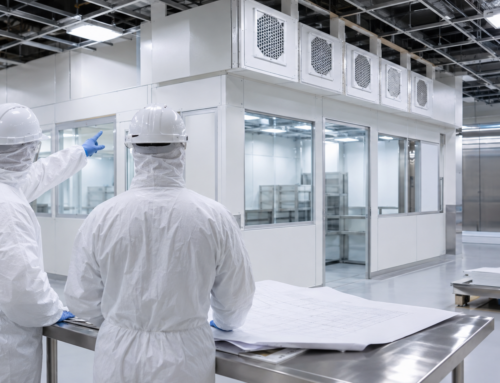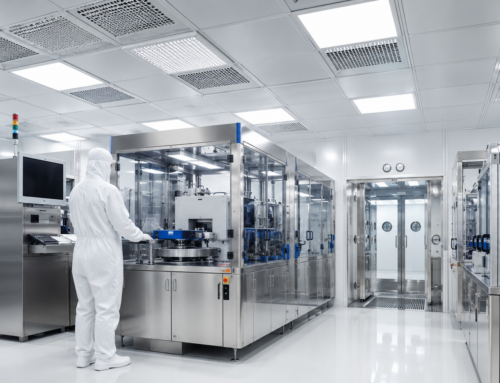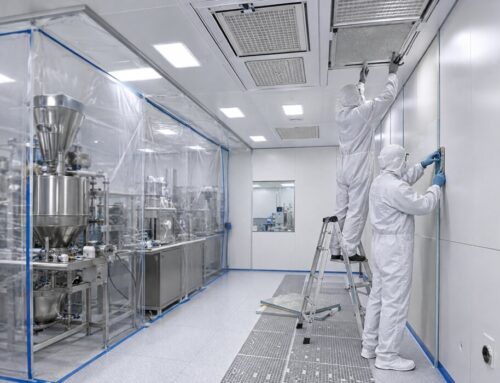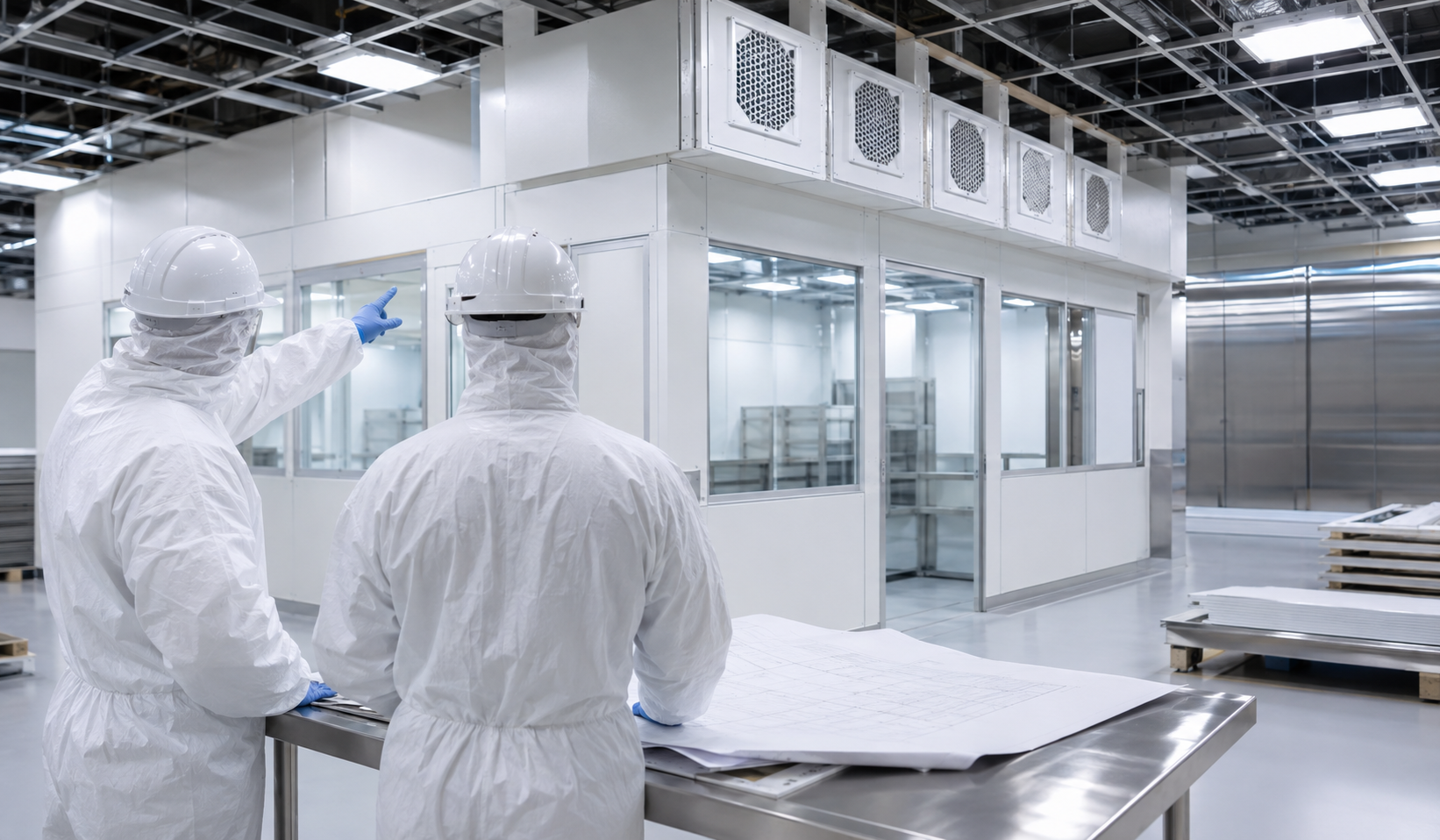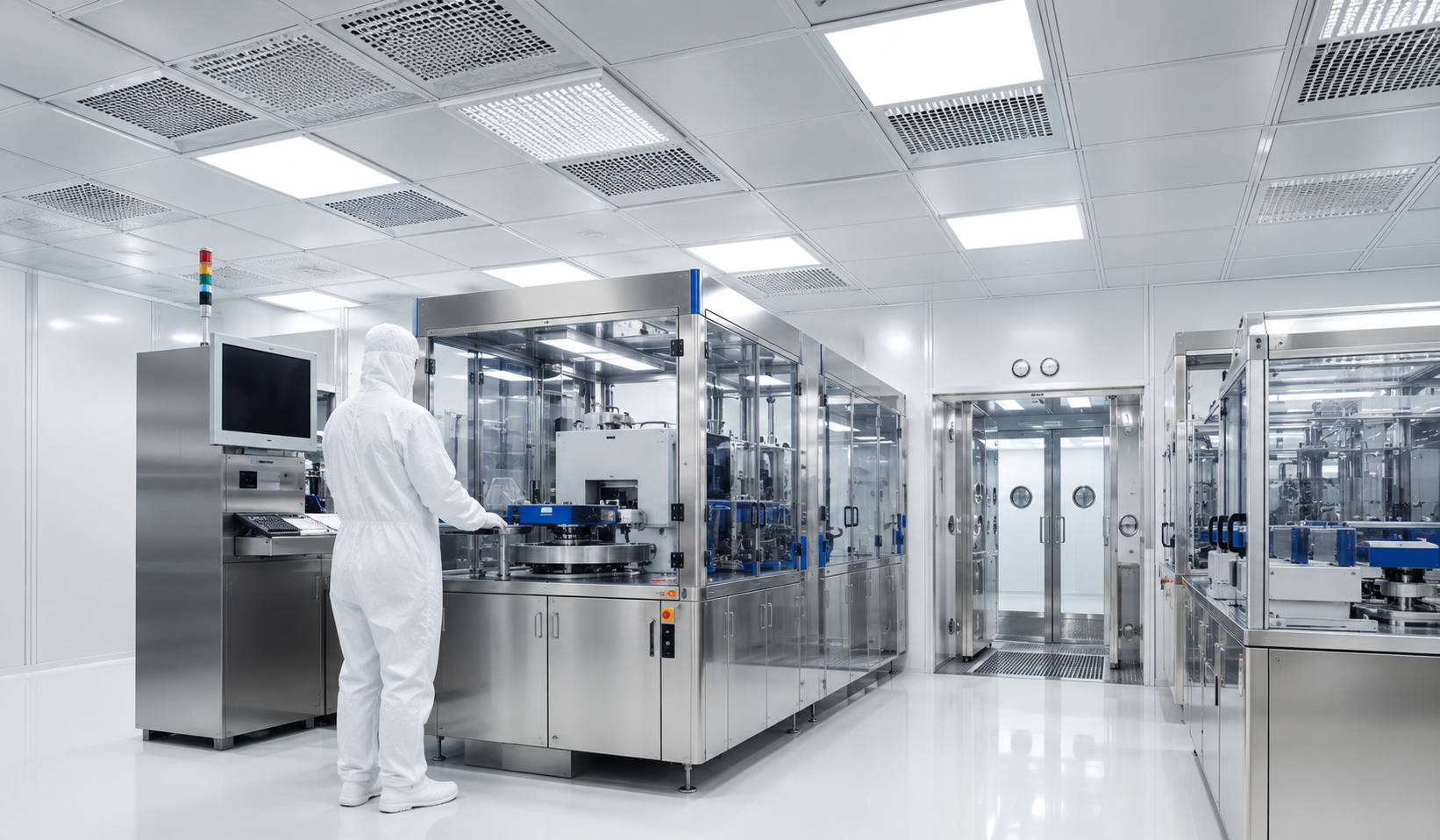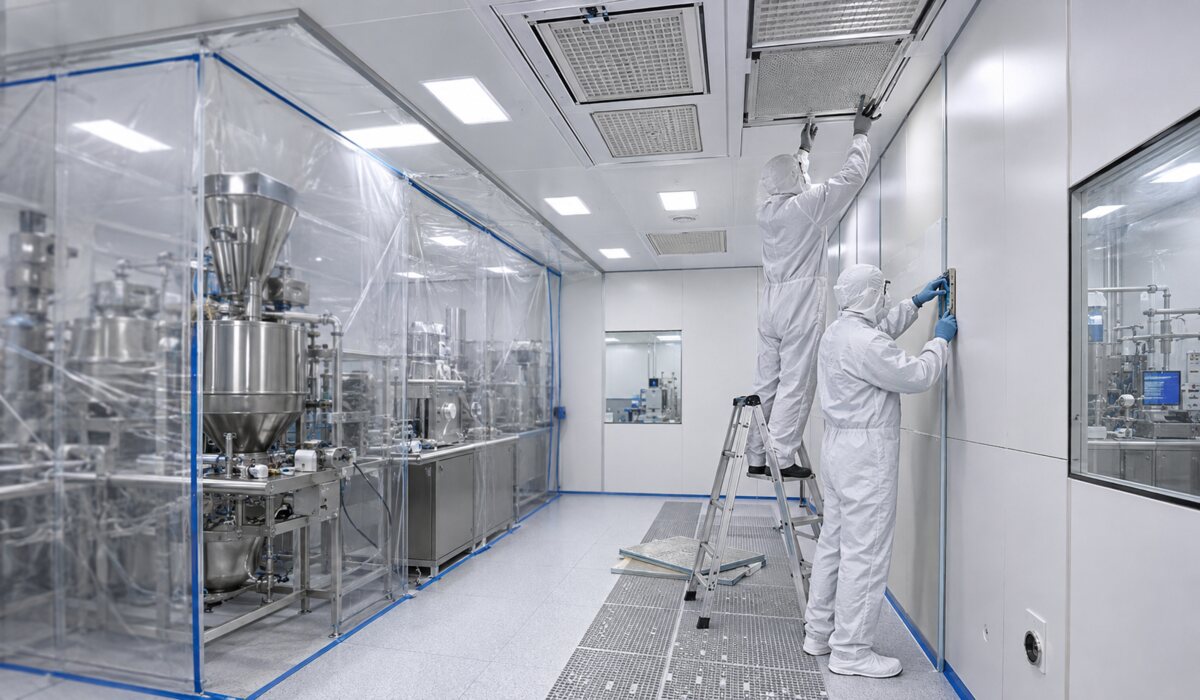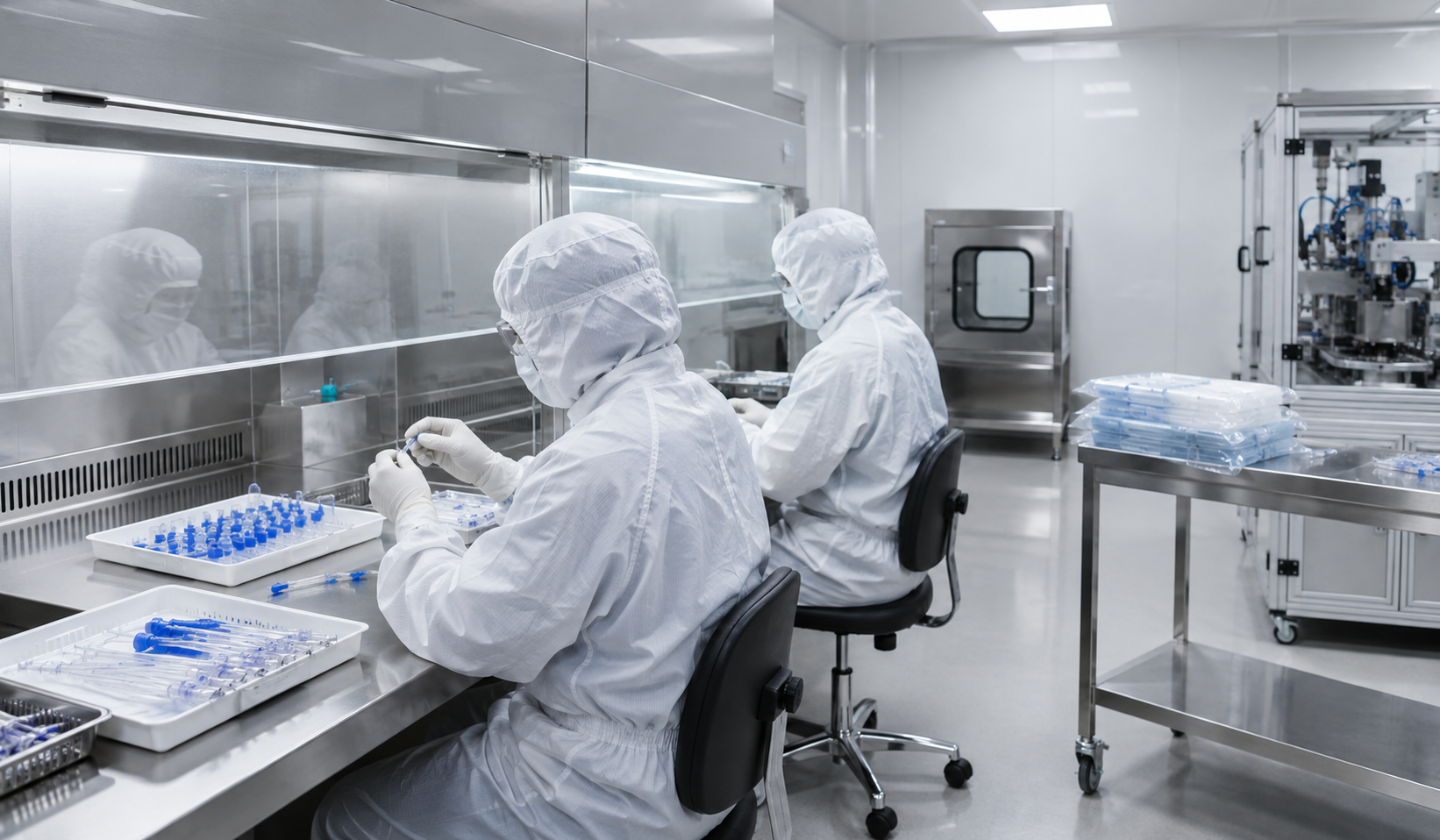
People are one of the main sources of contamination inside a cleanroom. Particles can cling to clothing, cleanroom garments, shoes, and personal items.
Carts, tools, equipment, and packaging may also carry contamination from surrounding spaces into controlled areas.
Cleanroom air showers can provide an additional layer of protection at entry points.
They use filtered air to remove some loosely attached particles before a person or material enters the cleanroom.
However, not every facility needs one. The decision depends on the process, product sensitivity, entry traffic, cleanliness goals, facility layout, and existing contamination controls.
An air shower should support a larger cleanroom contamination control plan rather than replace gowning, cleaning, filtration, pressure control, or proper operating procedures.
What Is a Cleanroom Air Shower?
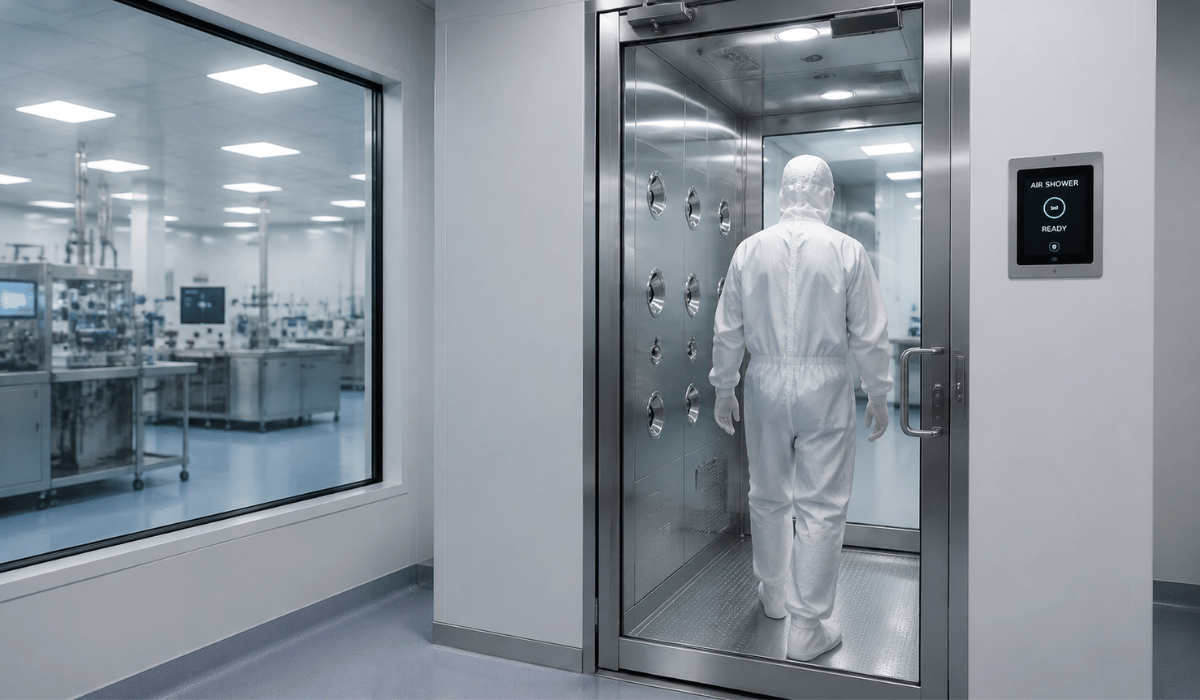
A cleanroom air shower is an enclosed chamber installed between areas with different cleanliness levels.
It may be used for people, materials, carts, or equipment entering a controlled space.
After the user enters, the doors lock and filtered air is released through multiple nozzles.
These nozzles direct high-velocity air toward the person or object from different angles. The air helps dislodge some particles resting on garments or exterior surfaces.
Return grilles, typically positioned near the floor or lower walls, capture the particle-containing air.
The system then sends the air through a high-efficiency particulate air, or HEPA, filter before recirculating it.
Most systems have interlocked doors. This means both doors cannot normally be opened at the same time.
Door interlocks help maintain controlled movement and reduce the direct transfer of air between adjacent spaces.
After the programmed cycle ends, the cleanroom-side door unlocks.
Cycle duration, airflow, chamber size, and nozzle arrangement should be selected according to the intended use instead of relying on one standard configuration.
What Is the Purpose of an Air Shower?
The main purpose of an air shower is to reduce the number of loose particles carried into a cleanroom.
A personnel air shower may help remove particles from cleanroom garments, shoe covers, and other exterior clothing surfaces.
A material air shower performs a similar function for carts, tools, containers, packaged supplies, and equipment.
Air showers can also support controlled entry by:
Effective controlled entry and exit procedures can reduce the transfer of contaminants between uncontrolled and cleanroom environments.
- Creating a defined transition between spaces
- Directing personnel and materials through an approved route
- Preventing both doors from opening together
- Adding a repeatable step to the entry procedure
- Reducing some contamination near busy entrances
An air shower does not sterilize a person, garment, or object.
It may remove some surface particles, but it does not reliably eliminate microorganisms, chemical residues, oils, or contamination trapped inside packaging and fabric.
Items that require disinfection or sterilization need separate, validated procedures.
Are Cleanroom Air Showers Effective?
Cleanroom air showers can be effective when they are correctly designed, placed, operated, and maintained.
Their actual performance depends on more than simply having a chamber at the entrance.
Important performance factors include:
- Air velocity and distribution
- Number and position of nozzles
- Coverage around the user or material
- Cycle duration
- Condition of the HEPA filters
- Chamber size and occupancy
- User position and movement
- Placement within the entry route
- Cleaning and maintenance practices
For example, turning slowly or raising the arms during a personnel cycle may expose more of the garment to the air.
However, the required behavior must be clearly explained in the facility’s standard operating procedure.
Performance can decline when too many people enter at once, carts block return grilles, filters become loaded, or nozzles do not cover important surfaces.
Users bypassing the cycle or opening doors incorrectly can also weaken the entry-control process.
Facilities should define what the air shower is expected to achieve and establish a way to verify its performance.
It should not be treated as automatically effective simply because it is running.
Do All Cleanrooms Need an Air Shower?
No. Cleanroom air showers are not automatically required for every cleanroom.
ISO 14644-1 classifies air cleanliness according to the concentration of airborne particles. It does not assign an air shower to every ISO class. Therefore, a lower ISO class number alone is not enough reason to install one.
The decision should be based on a documented contamination-risk assessment and the facility’s overall cleanroom design.
- Where contaminants originate
- How people and materials enter
- How sensitive the product or process is
- Whether existing controls are effective
- What industry-specific requirements apply
- Whether an air shower will provide a measurable benefit
Pharmaceutical and medical-device facilities may have different concerns from electronics, aerospace, optical, or laboratory environments.
Each facility must consider its products, processes, standards, and regulatory obligations.
Signs Your Facility May Benefit from a Cleanroom Air Shower
An air shower may be worth evaluating when people, materials, or equipment create a significant contamination risk at the cleanroom entrance.
Possible signs include:
- Personnel enter and leave the cleanroom frequently.
- The surrounding area has a high particle load.
- Cleanroom garments have folds that may retain particles.
- Sensitive products are exposed during manufacturing.
- Carts, tools, or equipment regularly enter the room.
- Particle levels rise near the entrance.
- Existing entry procedures are difficult to control.
- The facility needs clearer separation of personnel and material routes.
- A risk assessment identifies clothing or surface particles as a concern.
For example, an electronics manufacturer handling particle-sensitive components may benefit if loose particles enter on garments.
A precision-manufacturing facility may use a larger chamber for mobile equipment. In an aseptic pharmaceutical facility, however, an air shower cannot replace the required methods for disinfecting or sterilizing materials.
When an Air Shower May Not Be Necessary
Some facilities can control entry-related contamination without an air shower.
A properly designed cleanroom airlock may maintain pressure separation between adjoining spaces.
During cleanroom construction, airlocks, gowning areas, pass-throughs, pressure relationships, and controlled entry points can be planned together to reduce contamination transfer.
Gowning rooms, sticky mats, controlled traffic, pass-through chambers, surface cleaning, material wipe-down procedures, and properly designed cleanroom airflow may already manage the identified risk.
An air shower may offer limited value when:
- Very few people enter the cleanroom.
- Materials move through a separate pass-through.
- Existing controls consistently maintain required conditions.
- Loose surface particles are not a major contamination source.
- The available space cannot support correct installation.
- The facility cannot maintain or test the equipment.
- The expected improvement cannot be clearly defined.
Installing additional equipment without identifying its purpose can add cost, consume floor space, slow personnel movement, and create another system that requires maintenance.
Personnel Air Showers vs. Material Air Showers
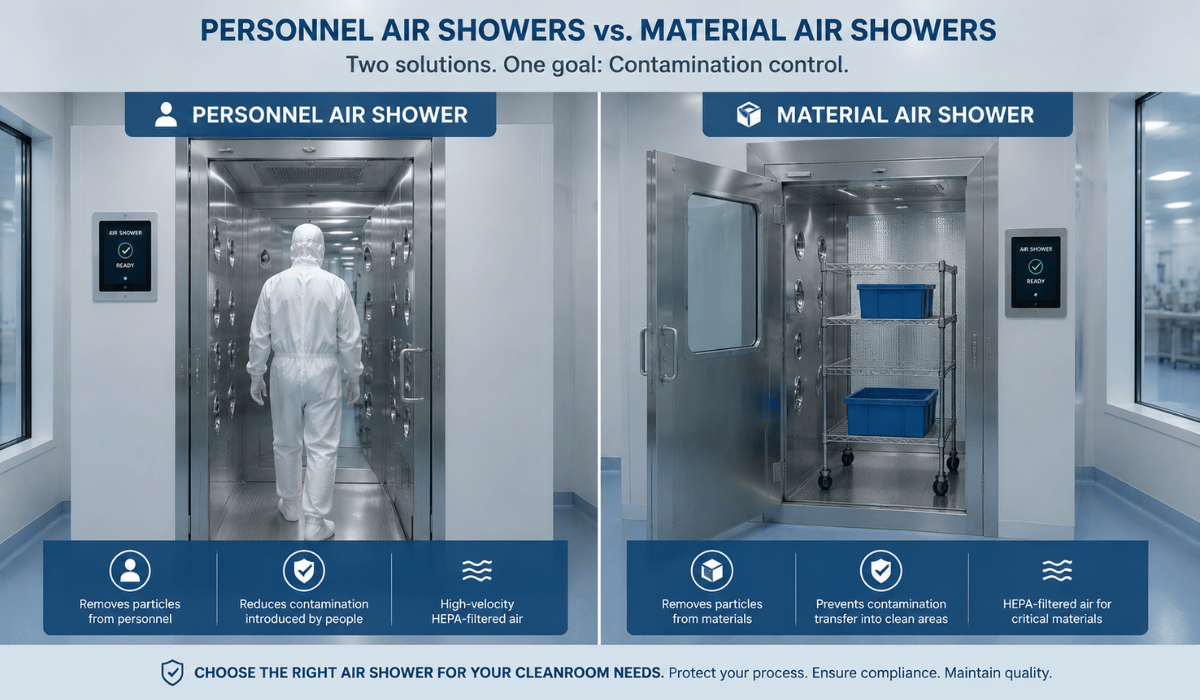
A personnel air shower is designed around the size, movement, and safety of people.
It usually includes nozzles positioned to reach different parts of a cleanroom garment.
The chamber must provide enough room for users to turn or follow the required cycle procedure.
A material air shower is designed for carts, tools, packaged supplies, components, or equipment. It may require:
- A wider or taller chamber
- Additional nozzles
- Different return-grille positions
- Durable flooring
- Ramps or flush thresholds
- Doors sized for the intended load
- Sensors suited to material movement
A standard personnel unit should not automatically be used for pallets, carts, or large machines. Large objects can block airflow and prevent particles from reaching the return grilles.
The chamber should be designed around the actual load size and transfer process.
Conclusion
You may need a cleanroom air shower if people, garments, carts, or equipment create a meaningful particle risk that existing controls do not adequately manage.
However, an air shower is not necessary for every cleanroom and should not be selected solely according to ISO class.
The right decision comes from assessing contamination sources, traffic, process sensitivity, current controls, available space, maintenance needs, and expected performance.
When the benefit is clear and measurable, an air shower can become a useful part of a well-planned cleanroom entry system.
Get Help Planning Your Cleanroom Entry System
A cleanroom specialist can review the entire entry process before recommending equipment.
This review may include the target classification, product sensitivity, personnel routes, material transfers, room pressures, gowning practices, and sources of contamination.
Ultrapure Technology can help facilities in Suwanee, GA, evaluate whether an air shower, airlock, pass-through, or another contamination-control measure suits their operational needs.
The goal should be a coordinated cleanroom entry system based on risk and measurable performance.
Frequently Asked Questions
What are the requirements for a cleanroom facility?
Requirements depend on the industry, product, process, and applicable standards. Common elements include filtered airflow, pressure control, cleanable surfaces, controlled entry, cleaning procedures, environmental monitoring, testing, and personnel training.
What is the airflow in a cleanroom?
Cleanroom airflow may be unidirectional, non-unidirectional, or a combination of both. The required airflow volume and pattern depend on room classification, size, occupancy, equipment, particle load, process activity, and recovery goals.
Does every cleanroom need an air shower?
No, ISO classification does not automatically require an air shower. The need should be determined through contamination-risk assessment and applicable industry requirements.
Can an air shower replace cleanroom gowning?
No, an air shower does not replace correct gowning or garment selection. It may remove some loose surface particles after gowning, but users must still follow the facility’s complete entry procedure.
How long does a cleanroom air shower cycle take?
Cycle length varies according to the chamber design, airflow, user or material load, and performance objective. The setting should be established through manufacturer guidance and facility-specific qualification instead of using one universal duration.
How often should cleanroom air shower filters be replaced?
Filters should be monitored and replaced based on pressure drop, airflow performance, filter condition, manufacturer recommendations, and facility procedures. Replacement should not depend only on a fixed calendar schedule.