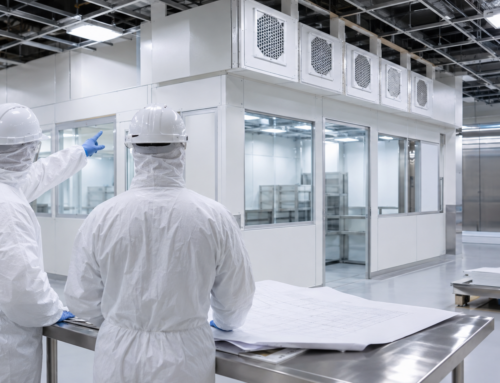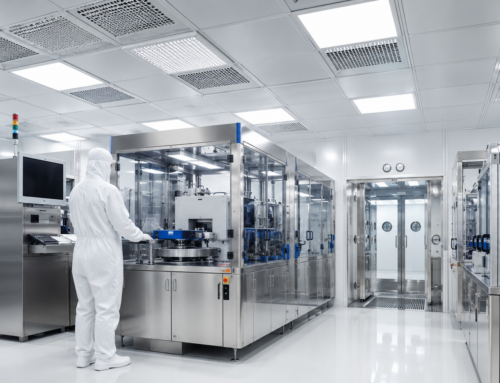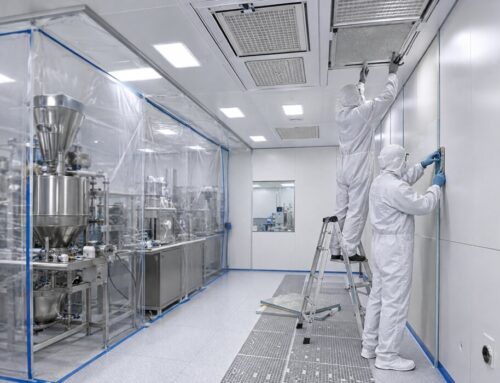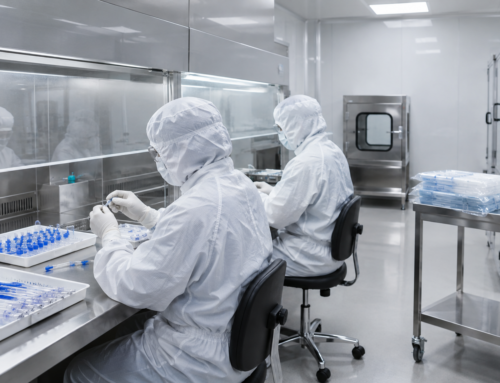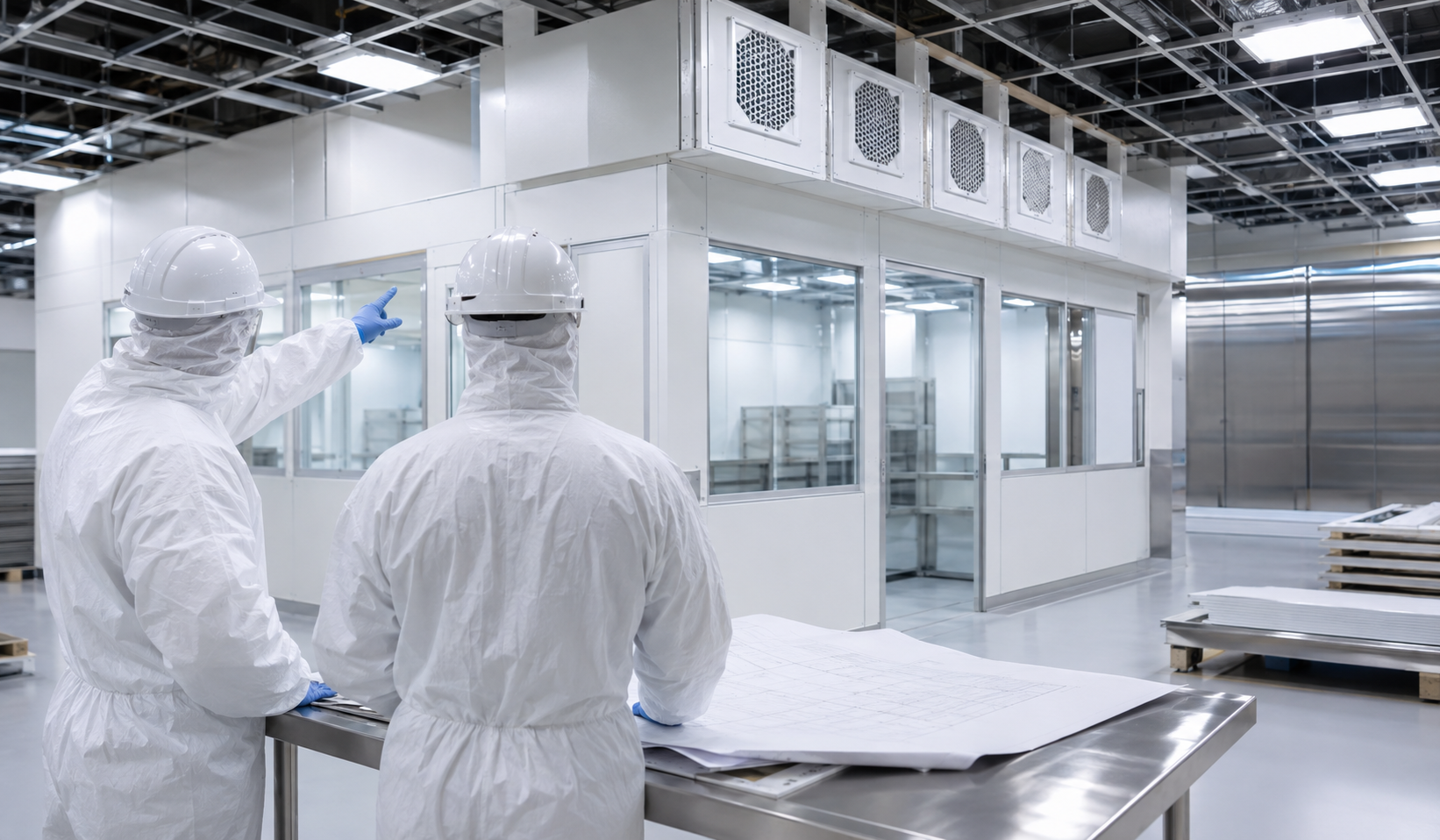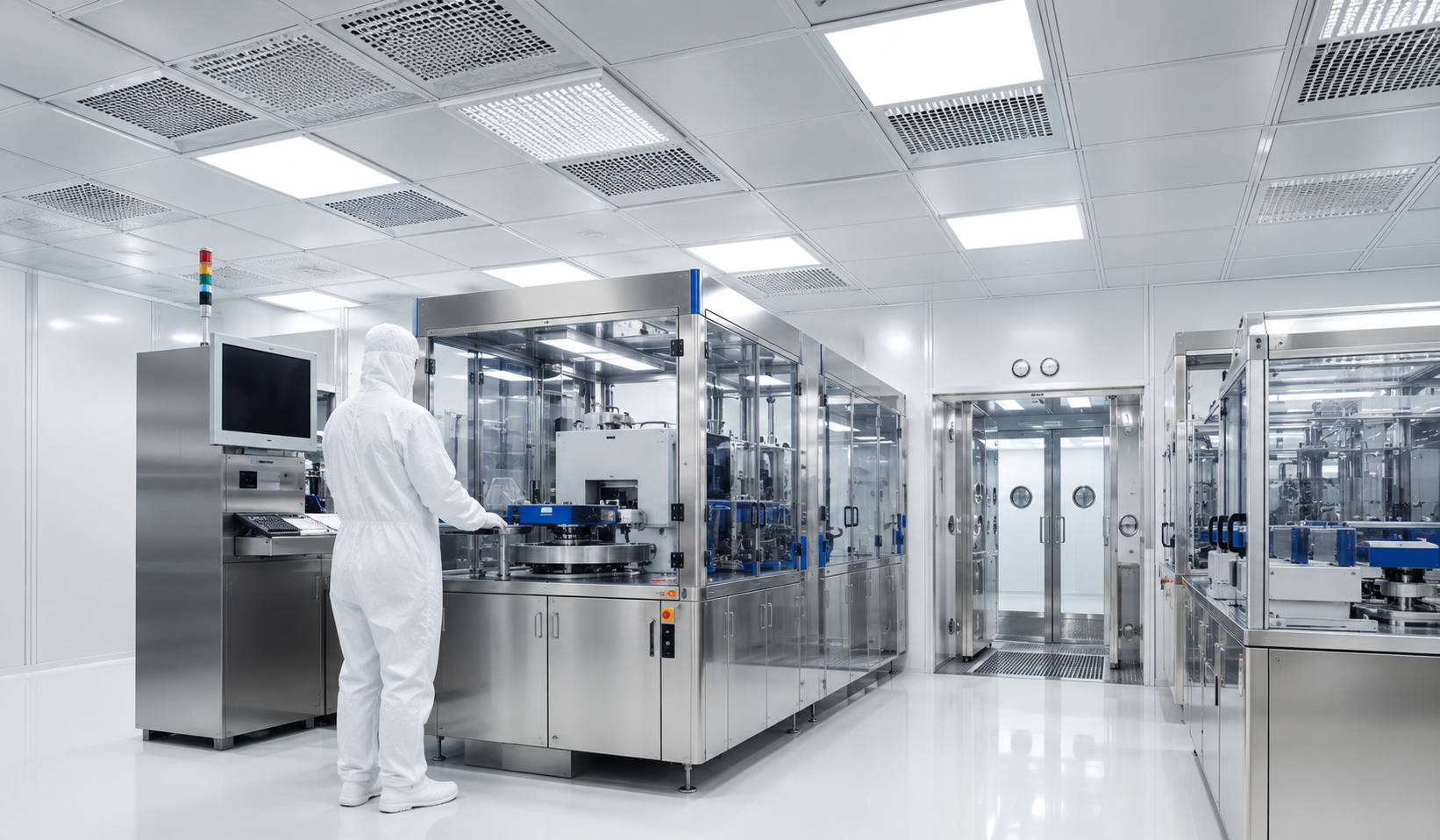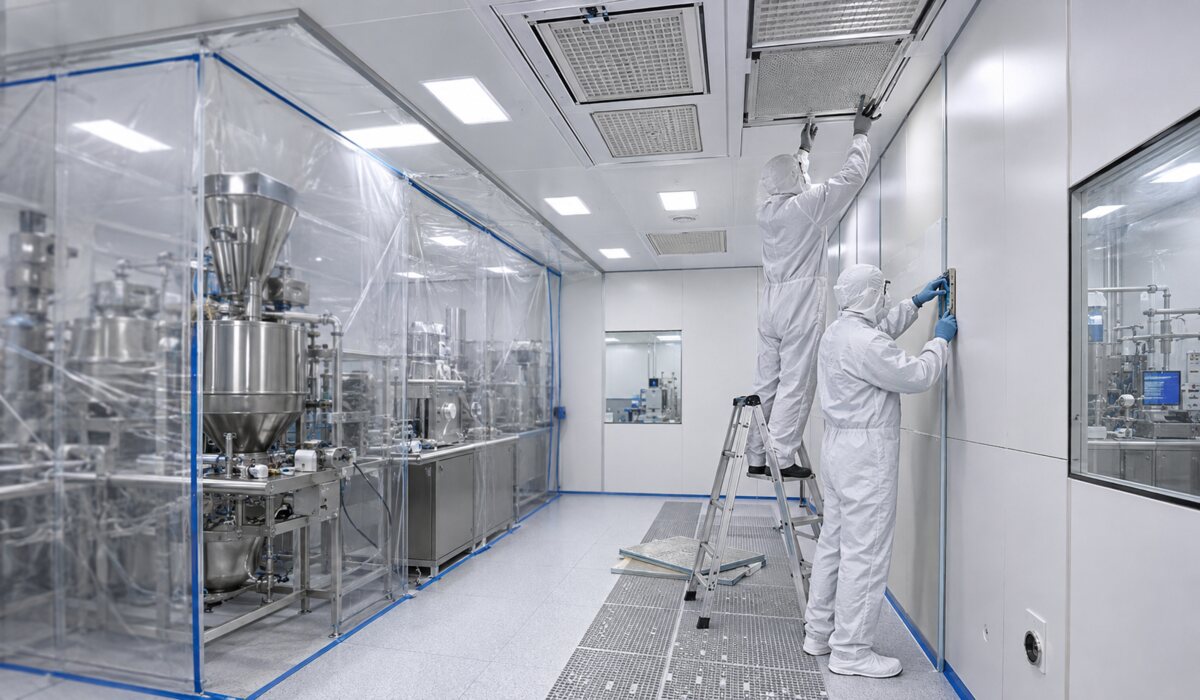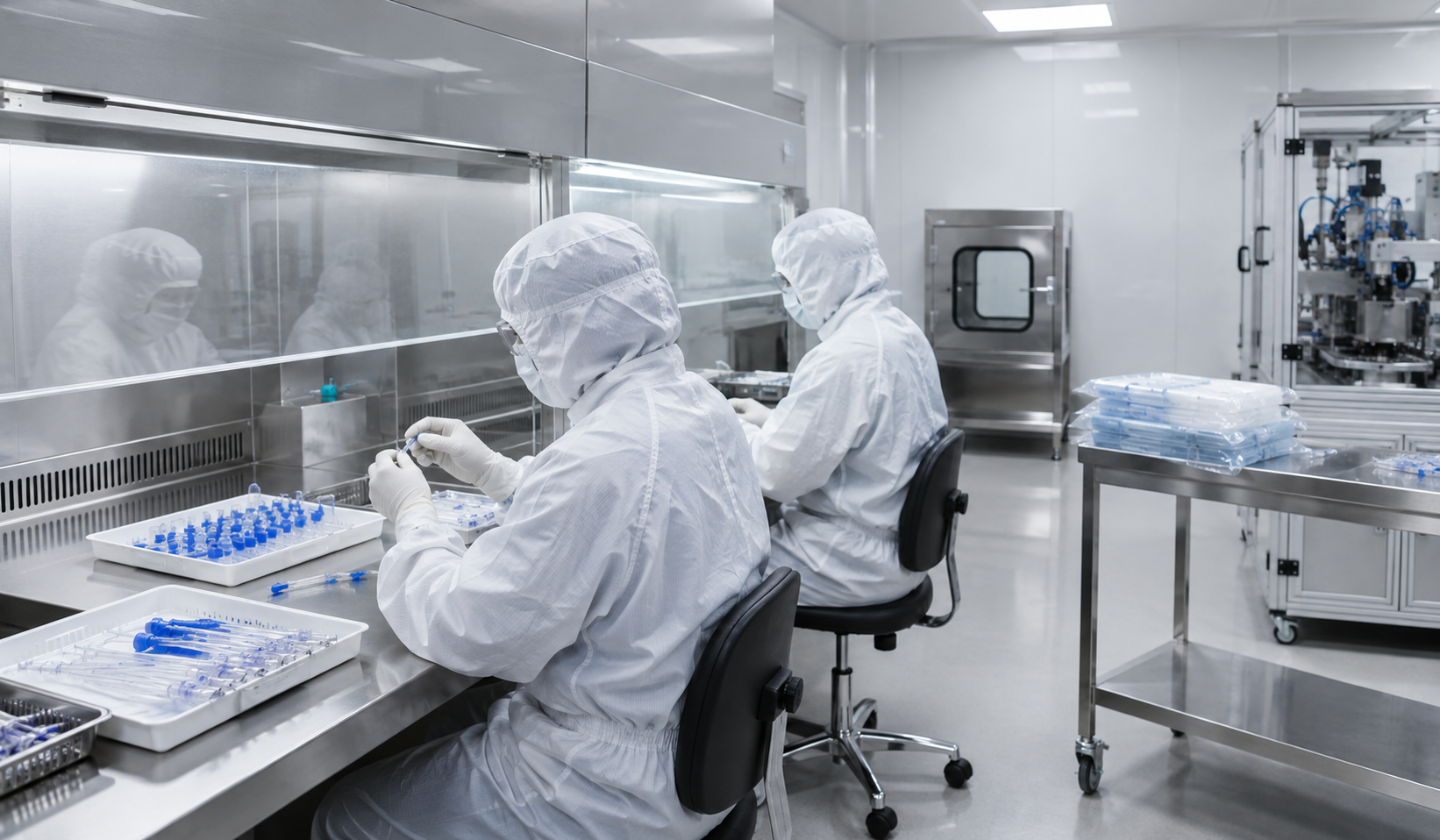
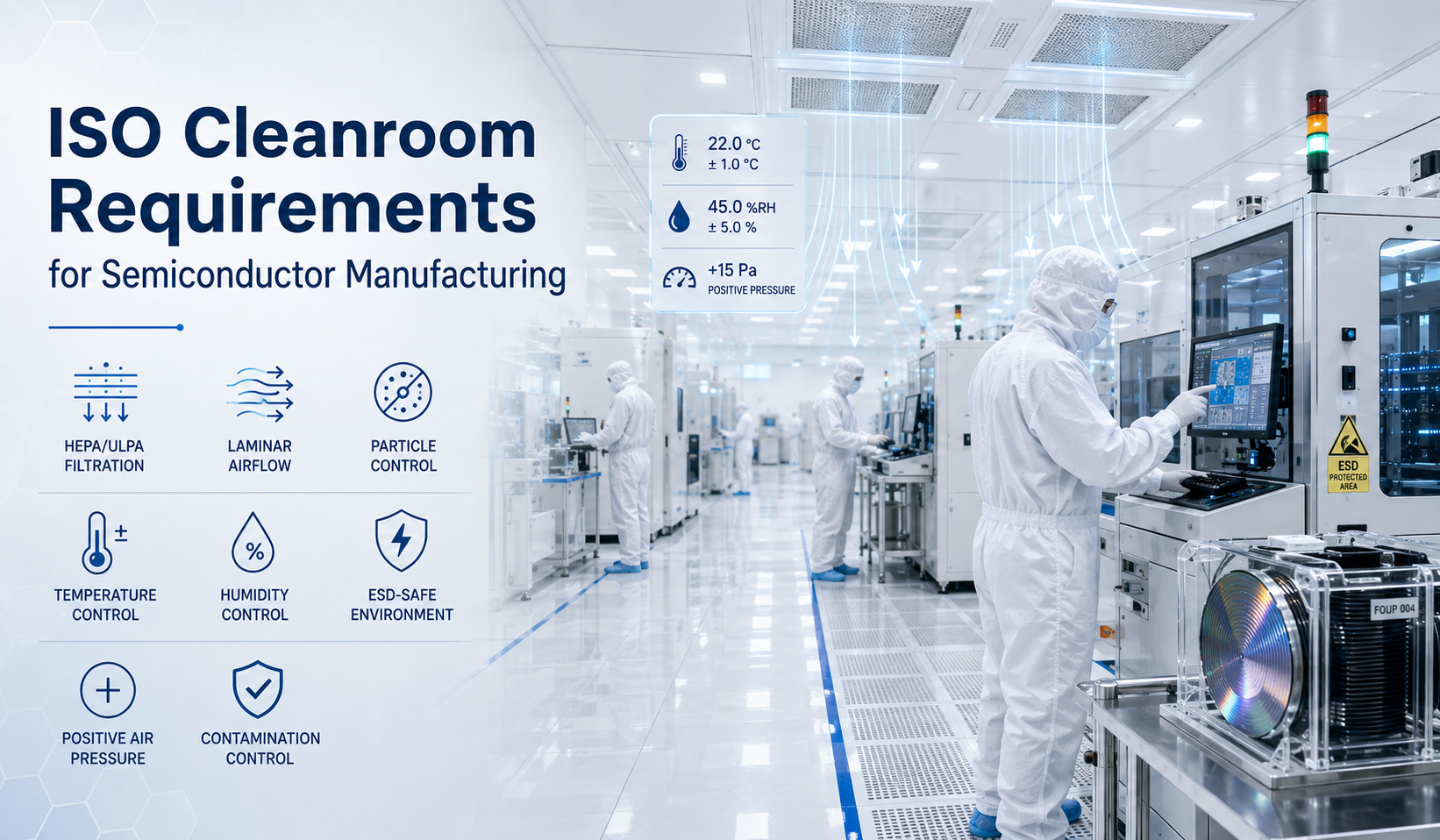
Semiconductor cleanroom construction must support airborne particle control at a level suited to the product and manufacturing process.
An ISO Class 3 cleanroom may be specified for highly sensitive work, but it is not required in every production area.
Engineers must also consider temperature, humidity, electrostatic discharge (ESD), molecular contamination, process utilities, personnel practices, and equipment conditions.
ISO 14644-1 provides a method for classifying air cleanliness based on particle concentration. It does not provide a complete semiconductor-facility design.
Each manufacturer must define the conditions needed to protect exposed wafers, components, and critical process steps.
What ISO Cleanroom Requirements Apply to Semiconductor Manufacturing?
ISO 14644-1 sets maximum airborne particle concentrations for each cleanliness class.
Semiconductor manufacturers combine the selected classification with process-specific controls for airflow, temperature, humidity, static electricity, surfaces, utilities, equipment, and personnel.
The required conditions depend on the product, manufacturing stage, contamination risks, and acceptance criteria.
Classification is one part of contamination control. Chemical vapors, static, dirty materials, unstable conditions, or poorly managed equipment can still threaten production.
Why Does Semiconductor Manufacturing Need Contamination Control?
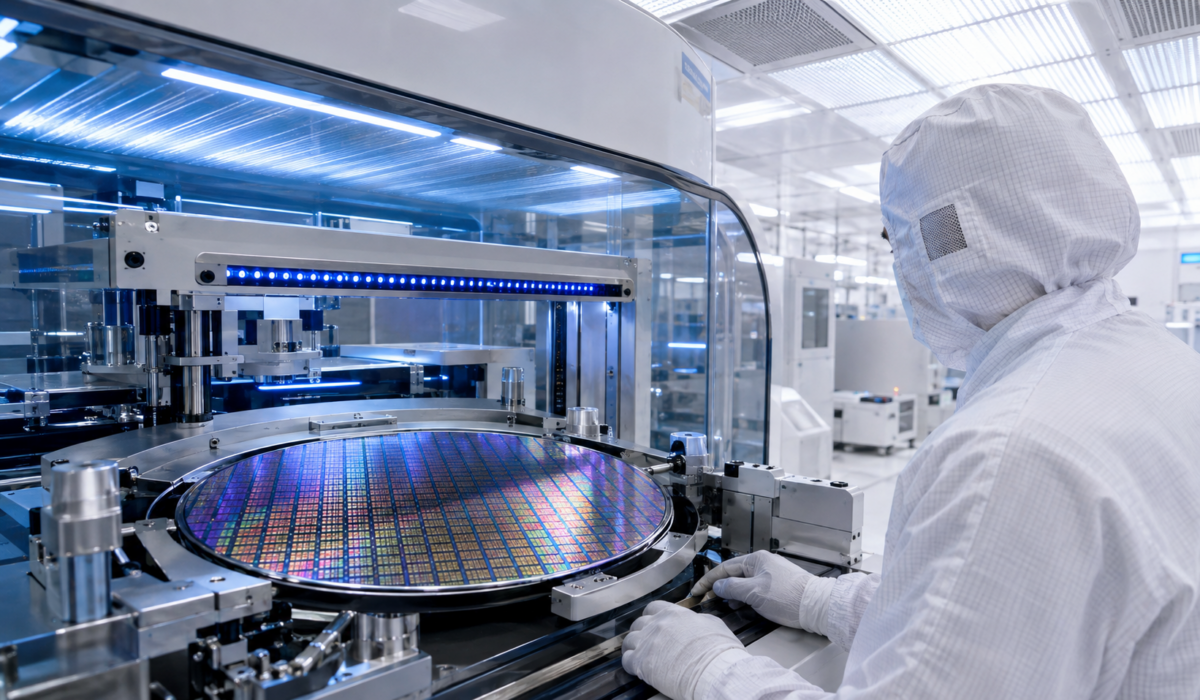
Semiconductor features can be extremely small. A particle on an exposed wafer may obstruct a pattern, interfere with deposition or etching, or leave unwanted material on a surface.
Chemical contamination can contribute to corrosion or alter sensitive process results. Static electricity may damage electronic structures and attract particles.
A comprehensive semiconductor contamination control strategy should consider particles alongside airflow, filtration, pressure, temperature, humidity, materials, and process-specific contamination sources.
Does Every Semiconductor Facility Need ISO Class 3 Conditions?
Semiconductor facilities often contain multiple zones with different cleanliness requirements.
Exposed-wafer processes may need stricter particle control than assembly, packaging, testing, gowning, or support areas.
The appropriate ISO class depends on process sensitivity, contamination risks, equipment design, and documented production requirements.
Some tools use mini-environments to maintain highly controlled conditions around exposed materials while the surrounding room operates under a different classification.
Even in these facilities, appropriate air quality, material-transfer controls, cleaning procedures, and maintenance practices remain essential.
What Are the ISO Class 3 Particle Limits?
Under ISO 14644-1, an ISO Class 3 space must not exceed the following airborne particle concentrations:
| Particle size | Maximum permitted concentration per m³ |
| ≥0.1 µm | 1,000 |
| ≥0.2 µm | 237 |
| ≥0.3 µm | 102 |
| ≥0.5 µm | 35 |
Lower ISO numbers represent cleaner air. Classification documents should state the particle sizes and occupancy state: as-built, at-rest, or operational. ISO Class 3 is not the same as “Class 3” under the withdrawn Federal Standard 209E.
Which Contaminants Must Be Controlled?
Airborne and surface particles
People, packaging, equipment wear, and material movement can release dust, fibers, or other debris. Filtration removes airborne material, while approved tools, cleaning methods, containers, and transfer procedures limit surface contamination.
Airborne molecular contamination
Acids, bases, condensable substances, dopants, and organic compounds may affect certain processes. Controls can include low-outgassing materials, chemical filtration, source capture, or dedicated exhaust, depending on the substances present.
Electrostatic discharge
Static electricity can harm sensitive components and attract particles. An ESD program may include grounding, compatible surfaces, garments, footwear, humidity management, and handling practices.
Process and utility sources
Water, gases, compressed air, vacuum systems, chemicals, and production tools can introduce contamination. Their purity, routing, maintenance access, and connections should be addressed during design.
What Airflow and Filtration Are Needed?
An ISO Class 3 design must deliver particle concentrations within the specified limits, but ISO 14644-1 does not prescribe one air-change rate, filter coverage percentage, or airflow velocity.
Engineers determine these features by assessing room size, heat loads, equipment, occupancy, contamination sources, and the location of exposed work.
The design may use HEPA or ULPA filters. Unidirectional airflow is often evaluated for critical zones because it can carry particles away from sensitive surfaces.
Supply and return locations must prevent machinery from creating stagnant or disruptive air patterns.
Pressure relationships also require careful planning. Positive pressure may help protect a clean area from adjacent, less-clean spaces.
However, rooms handling hazardous materials may need containment strategies that change the pressure approach. Safety and process risks must be considered together.
How Should Temperature and Humidity Be Managed?
Temperature and humidity can affect dimensional control, equipment operation, condensation, corrosion, photoresist behavior, comfort, and static generation.
ISO 14644-1 does not specify universal temperature or humidity values. Setpoints should come from process, equipment, material, ESD, and facility requirements.
Which Materials and Finishes Are Appropriate?
Cleanroom walls, ceilings, floors, doors, sealants, and utility penetrations should have smooth, durable, low-shedding surfaces that can withstand routine cleaning.
Material selection must account for the chemicals, cleaning agents, moisture levels, and physical wear expected within the semiconductor facility.
Walls and ceilings may use coated metal panels, fiberglass-reinforced panels, or other cleanroom-compatible systems.
Flooring options may include seamless epoxy, vinyl, or other nonporous materials selected for chemical resistance, durability, and electrostatic discharge (ESD) control.
Coved floor-to-wall transitions can reduce hard-to-clean corners where contamination may collect.
Joints, openings, and utility penetrations should be properly sealed to limit debris buildup and uncontrolled air movement.
During cleanroom construction, these enclosure details must be coordinated with filtration, mechanical, electrical, and process systems to maintain the intended controlled environment.
Doors, windows, lighting fixtures, and service connections should also integrate with the room envelope without creating unnecessary ledges or gaps.
The project team should evaluate each material for particle shedding, outgassing, moisture resistance, chemical compatibility, static-control requirements, cleaning methods, and long-term maintenance.
No single finish is suitable for every semiconductor process, so selections should reflect the contaminants and operating conditions present in each area.
How Do Process Tools and Mini-Environments Affect the Design?
Production tools can release heat, particles, gases, vibration, and chemical exhaust. Placement must be coordinated with airflow, utilities, material routes, and maintenance access.
A mini-environment can provide cleaner localized conditions, but the surrounding room must still support safe access, clean transfers, and stable operation.
What Personnel and Material Controls Are Necessary?
People and supplies enter the room from less-controlled areas, so the entry process matters. A contamination-control program may include:
- Controlled access and trained personnel
- Gowning rooms and airlocks
- Cleanroom-compatible clothing and supplies
- Material wipe-down and transfer procedures
- Pass-through chambers
- Scheduled cleaning
- Maintenance controls
Procedures should fit the facility and be practical enough to follow consistently.
How Is a Semiconductor Cleanroom Tested?
Construction alone does not establish an ISO classification. Airborne particle counting confirms whether the room meets its specified class under the defined occupancy state. Supporting tests may include:
- Filter-integrity testing
- Airflow volume or velocity measurements
- Room-pressure differential checks
- Airflow visualization
- Temperature and humidity verification
- Recovery testing
- Leakage or containment testing, when applicable
The test package depends on the project specification, relevant standards, equipment, and process.
How Is Performance Maintained After Classification?
Certification records conditions at a particular time; it is not permanent proof of performance.
ISO 14644-2 addresses monitoring used to provide evidence that particle-cleanliness performance continues as intended.
Facilities may trend particle data, monitor pressure, service filters, verify cleaning, review ESD controls, investigate deviations, and retest after significant changes. Monitoring should follow a risk-based plan.
What Should Manufacturers Define Before Design Begins?
Before selecting equipment or construction details, document:
- Products, manufacturing steps, and exposed materials
- Critical particle sizes and contaminants
- Target ISO class for each zone
- Required occupancy state
- Molecular and surface-contamination risks
- Temperature, humidity, and ESD criteria
- Tool heat, exhaust, vibration, and utility loads
- Personnel and material flows
- Maintenance and expansion needs
- Monitoring, commissioning, and acceptance criteria
Defining these requirements early helps ensure the cleanroom design accounts for airflow, filtration, pressure, utilities, equipment layout, temperature, humidity, and future production needs.
How Can Cleanroom Specialists Support the Project?
Qualified cleanroom specialists can evaluate the facility, translate process needs into room criteria, coordinate HVAC and utilities, recommend finishes, and plan commissioning and maintenance.
Ultrapure Technology, Inc. works with owners, process engineers, equipment manufacturers, safety professionals, and other stakeholders to assess cleanroom design, construction, testing, and facility-service needs.
Plan the Cleanroom Around the Semiconductor Process
Semiconductor cleanroom requirements extend beyond choosing an ISO class.
Effective facilities combine particle control with suitable airflow, stable environmental conditions, compatible utilities, ESD measures, cleanable materials, operating procedures, and verified performance.
An ISO Class 3 cleanroom may support certain sensitive processes, but it is not automatically necessary throughout a semiconductor plant.
Contact Ultrapure Technology, Inc. in Suwanee, GA, to discuss a controlled-environment solution based on your facility and production requirements.
Frequently Asked Questions
What ISO class is required for semiconductor manufacturing?
There is no single required class for every semiconductor operation. The correct classification depends on the process, product sensitivity, exposure, equipment enclosure, and contamination risk. Different areas within one facility may use different ISO classes.
Does an ISO Class 3 cleanroom require ULPA filters?
ISO 14644-1 sets particle-concentration limits but does not require a specific filter type. ULPA filtration may be selected when the performance analysis supports it. Some designs may use other high-efficiency filtration arrangements capable of achieving the specified conditions.
Does ISO 14644 specify temperature and humidity?
ISO 14644-1 does not establish one temperature or humidity range for all classified rooms. Setpoints and tolerances should reflect the manufacturing process, equipment, materials, static-control strategy, and documented facility requirements.
Can one semiconductor facility use several ISO classes?
Yes. A facility can assign classifications by zone according to the sensitivity of each operation. Cleaner mini-environments may also operate around critical tools inside a room with a less stringent background classification.
How often should a semiconductor cleanroom be retested?
There is no single interval appropriate for every facility. Retesting and monitoring frequency depend on the applicable standards, risk assessment, customer requirements, internal procedures, room performance, and changes to equipment or layout.